

According to a report published by the Pew Research Center, AI chatbots are now a significant part of American teenagers’ lives. The primary uses among teens include searching for information (57%) and schoolwork assistance (54%). However, teenagers also turn to AI for roles normally filled by loved ones, with 16% using chatbots for casual conversations and 12% for emotional support or advice.
While some teenagers find comfort in chatting with bots, mental health experts express concern. Tools like ChatGPT, Claude, and Grok are not intended for this use and may pose psychological risks in extreme situations. Stanford professor Dr. Nick Haber highlighted the potential isolating effect of these systems, warning of detachment from reality and social connections.
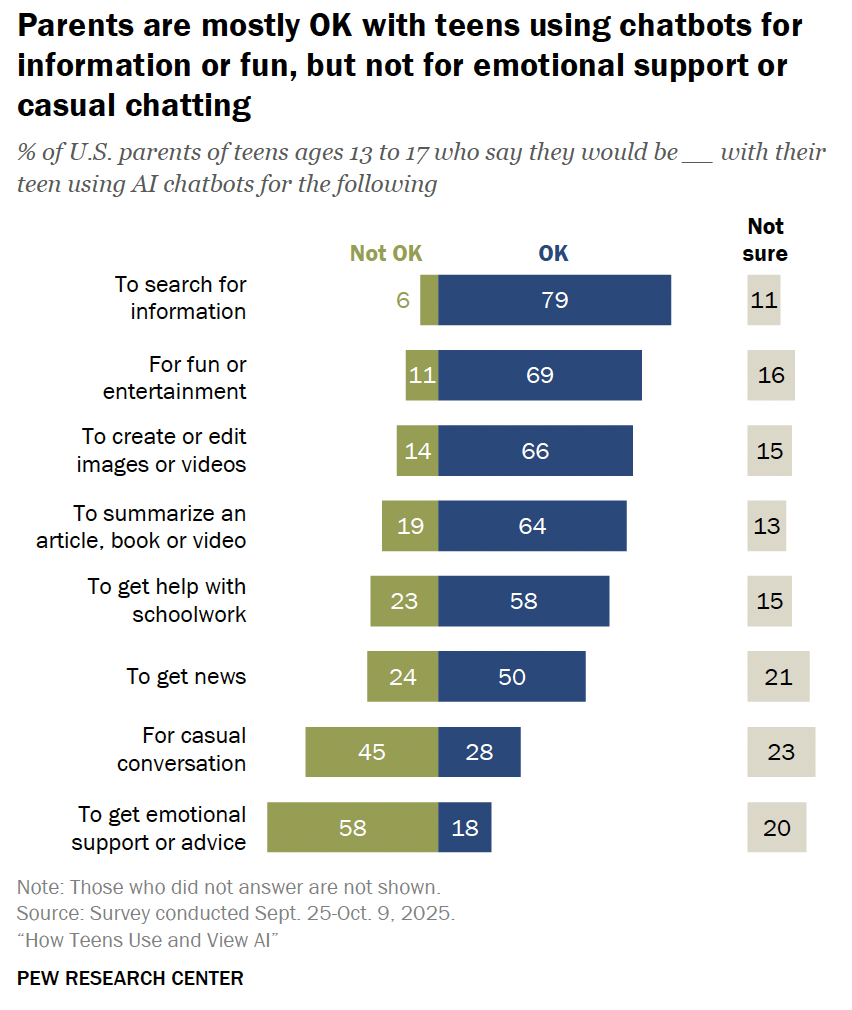
Pew’s survey reveals a gap between teenagers’ reported AI usage and parents’ perceptions. While 51% of parents believe their teens use chatbots, 64% of teens reported doing so. Most parents favor AI use for information and schoolwork, but fewer support usage for conversation (28%) or emotional support (18%). Notably, 58% disapprove of the latter use.
AI safety remains a debated issue among tech companies. Character.AI decided to disable chatbots for users under 18 after legal cases linked prolonged sessions to two teenagers’ suicides. OpenAI also retired its GPT-4o model used for emotional support, which faced criticism despite its popularity for this purpose.
A majority of teens use AI chatbots but have mixed views on their future societal impact. When asked, 31% expect a positive impact in the next 20 years, while 26% anticipate negative effects.