Unlike a vibe-coded product built by a college dropout, Eridu’s co-founder, Drew Perkins, has been inventing networking tech since the dawn of the internet.

Sandbar Raises $23M Series A for AI-Powered Note-Taking Ring
Sandbar aims to ship the Stream, which can be used to take notes, chat with an AI assistant, and for media playback, this summer.

SpaceX Veteran Predicts Satellite Retrieval as the Next Big Leap in Space
The company’s first demonstration mission is expected in early 2027.

Hyperscale Power Emerges to Challenge 140-Year-Old Transformer Technology
Startup Hyperscale Power is developing technology that promises to shrink power transformers, freeing up precious space within data centers.

Recovery of the Initial Transatlantic Internet Cable Following Almost 40 Years
how you can effortlessly transform outdated telephone wiring into Ethernet. Nevertheless, TAT-8 was ultimately decommissioned in 2002 following an irreparable fault — irreparable due to the prohibitive cost of repairs. Even so, it remains on the ocean floor to this day.
Subsea Environmental Services is presently extracting the cable from the seabed, after which it will be recycled. The overarching goal, however, is to clear the seabed where the TAT-8 cable lay for years to allow for new cables — utilizing an established cable route for any forthcoming, essential communication cables is the objective.
Although it might appear to be a straightforward task, the cable must be coiled manually to safeguard the fragile components inside, such as the glass fibers, making it quite a slow, deliberate process. The materials of the cable hold significant value, particularly the copper conductors, which are becoming increasingly critical in light of an anticipated copper shortage in the upcoming years. It certainly makes sense to recycle TAT-8 rather than discard it completely.
No TAT transatlantic cables are currently in operation
<div class="slide-key image-holder gallery-image-holder credit-image-wrap" data-post-url="https://www.bgr.com/2116741/worlds-first-transatlantic-internet-cable-tat-8-pulled-from-ocean/" data-post-title="The First Transatlantic Internet Cable Ever Is Being Pulled From The Ocean After Almost 40 Years" data-slide

Five Cutting-Edge iPhone Add-Ons from External Developers
popular iPhone accessories you should evade, the products listed here have a certain flair while still offering something useful. Naturally, they boast their own distinct style as well. Adorning your iPhone goes beyond mere physical items, as many of the same principles for selecting iPhone gadgets can also be applied to the Apple App Store. This is why you might want to explore 10 of the top free iPhone applications you’ve yet to discover.
LvShuLiangPin Anteel Silicone Suction Case Mount
Priced at $6.99 on Amazon, the LvShuLiangPin Ante
The Explanation for Why Keyboards Come with Two USB Cables

Martina Rigoli/Getty Images
If you’ve recently acquired a new keyboard and observed that it includes two cables rather than one, it may have seemed unusual. The majority of keyboards are equipped with a single cable, and even those that have two can function properly with just one connected. That second cable isn’t a backup meant for when the first one fails; it’s connected to extra features on the keyboard such as USB passthrough or RGB lighting.
Typically, the dual-cable configuration is seen in higher-end gaming or mechanical keyboards, like the Logitech G513 Carbon or Corsair K70, both of which are loaded with features. One cable transmits keystrokes and commands related to the keyboard to the computer, while the other cable supplies power or connectivity for the additional features. This is why the second cable might appear unnecessary — the keyboard still operates without it, at least for its fundamental purpose. However, if you invested more in a feature-rich keyboard, you’ll likely want to utilize the second cable to ensure you are maximizing your investment.
The other cable powers RGB lighting or USB passthrough

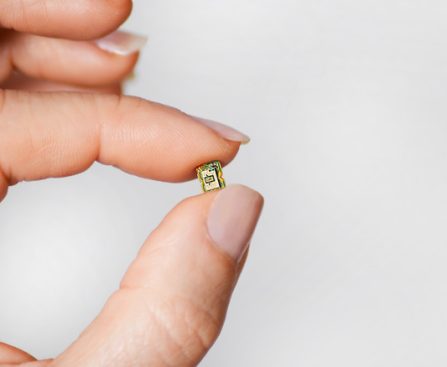
Washington Suggests Prohibition on Microchipping Technology
The Washington State House has enacted legislation that prohibits microchipping when mandated by employers. HB 2303 (downloads a PDF to your device) stipulates that businesses and employers must not “request, require, or coerce” employees into having microchips embedded in their bodies “for any reason.” If this seems somewhat dystopian, the legislation appears to be more of a precaution than a response—currently, there are no reports of companies enforcing such a requirement on their employees.
Subdermal human microchips do exist and can be utilized for various purposes. They can assist in identity verification or medical information, akin to how pet microchips function. These microchips can monitor vital signs, connect with prosthetic devices such as artificial retinas, unlock smart gadgets, facilitate contactless payments, provide access to restricted or secured areas, and much more. Notably, one Tesla owner had a key embedded in his hand (an NFC-enabled chip) to unlock his vehicle. Additionally, there are businesses that offer DIY microchip implant kits, although these are not officially sanctioned by any regulatory bodies or health organizations.
Naturally, opting to microchip oneself is entirely different from employers compelling this action. This legislation would prevent businesses from doing so and enact a minimum fine of $10,000 for a first violation and $20,000 for subsequent offenses. One might contend that this is a modest cost for a multi-billion-dollar company to maintain its own group of microchipped sales employees. The bill has already cleared both the House and Senate, and is now headed to the governor.
Washington is not the first and may not be the last
<div class="slide-key image-holder gallery-image-holder credit-image-wrap " data-post-url="https://www.b
Devices Inappropriate for Rechargeable Batteries: Leading 5 List
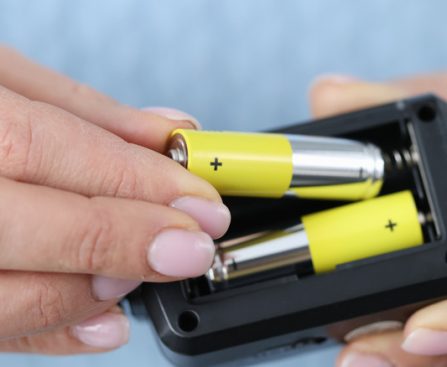
Rechargeable batteries are gaining popularity, and for valid reasons. They are more efficient, cost-effective over time, and less harmful to the environment. Nonetheless, there are appliances in the home that still require traditional disposable batteries. Utilizing rechargeable batteries in these instances is not only inefficient but can also compromise the device’s performance and longevity. There are primarily two reasons for this. First and foremost, rechargeable batteries exhibit a higher self-discharge rate. This implies that, even when not in use, the battery will consistently lose charge and deplete faster than single-use batteries.
The discharge rate is largely influenced by the chemical makeup inside the battery. For example, NiMH (Nickel-Metal-Hydride) rechargeable batteries have a higher self-discharge rate compared to their NiCD (Nickel-Cadmium) counterparts. Secondly, commonly found rechargeable batteries have a lower voltage rating of 1.2V as opposed to single-use alkaline batteries that can provide 1.5V. Consequently, many devices that depend on a 1.5V supply may either malfunction or not operate at all with rechargeable batteries. Now that you are aware of the typical drawbacks of rechargeable batteries, it’s time to discover the devices for which they tend to be unsuitable.
### Smoke and Security Alarm Systems
Smoke and security alarm systems in your home are essential devices. They are designed to function for extended periods without activation, but when the time comes, you expect them to operate immediately. Hence, rechargeable batteries are not ideal for these devices due to their elevated self-discharge rate. If you install rechargeable batteries in alarm systems, they might deplete after just a few months, much quicker than disposable batteries. Another reason is that these devices require low energy, making single-use alkaline batteries a more suitable choice.
Rechargeable batteries, conversely, are better suited for gadgets where increased power directly correlates with enhanced performance, such as game controllers. Remember that for devices like smoke alarms and security systems, it’s advisable to consult the product’s user manual before selecting a battery. Some models even come with integrated lithium batteries that can last up to ten years.
### Wall Clocks
Wall clocks do not require rechargeable batteries because they consume minimal power, something that an alkaline battery can easily support. Moreover, wall clocks are often placed at heights, making access a bit tricky. Therefore, you naturally prefer a battery that lasts longer, rather than one that runs out of charge in a few months. With rechargeable batteries, you’d need to recharge them more often, which means you’ll have to retrieve your ladder sooner than you would like.
There’s also the cost aspect to consider. Rechargeable batteries, while initially more costly, ultimately become a more economical choice due to their capacity to be recharged hundreds of times. However, this only proves beneficial if they are recharged consistently, say monthly, rather than every two years. In the latter scenario, it would take a significantly longer time to recoup the higher initial expense. Thus, it is more practical to utilize non-rechargeable, single-use alkaline batteries in wall clocks, from both a functional and financial perspective.
### TV and AC Remote Controls
Remotes for TVs, air conditioners, and similar devices consume very little energy. Most of the time, the remote is idle, resting in a corner of the room. If rechargeable batteries are used in this context, they will lose their charge over time, regardless of how frequently the remote is employed. Additionally, remote controls may report inaccurate charge levels with rechargeable batteries, since they assess battery health based on voltage curves. As rechargeable batteries operate at a lower voltage, some remotes, particularly those calibrated for alkaline batteries, may display false battery status.
Moreover, the cost consideration is also relevant here, making rechargeable batteries an unpractical choice for the majority. If a device can run for six months to a year without needing a battery change, it’s wiser to choose non-rechargeable batteries. The inconvenience of frequently recharging the battery significantly outweighs the minor cost savings you might observe in the long run.
### Backup Emergency Lights and Flashlights
Emergency or backup lights are another category of devices that do not gain from rechargeable batteries. These devices are typically used only once or twice a year, and you expect them to function without delay. Due to their high self-discharge rate and faster voltage drop, rechargeable batteries are unreliable for backup lights. In contrast, alkaline batteries experience a gradual voltage decrease. Thus, even when the charge is low, they can still activate emergency lights and flashlights.
For devices that remain inactive for weeks or months, single-use alkaline batteries are generally the superior option over rechargeable batteries. With alkaline batteries, the emergency light or flashlight will slowly dim as the battery drains, while rechargeable batteries can abruptly shut off when needed because of the sharper voltage drop. Note that some emergency lights come with built-in rechargeable batteries, in which case, continuing to use them is advisable, as per the manufacturer’s recommendation.
Leak Indicates Minor Adjustments for Pixel 11 Pro Fold, No Significant Redesign Anticipated
It’s likely time for us to start hearing some conjectures regarding Google’s upcoming foldable, wouldn’t you agree?
What you need to be aware of:
– Speculations have emerged, hinting at the design of Google’s Pixel 11 Pro Fold.
– It seems the device might feature a somewhat slimmer profile and minor alterations to its camera housing, integrating its LED flash and microphone into the assembly.
– Previous rumors indicate Google could enhance the battery repairability of the Pixel 11 Pro Fold, as a patent revealed a “metal frame” and springs for securing it, instead of adhesive.
The week is off to a rapid start with a report claiming to have uncovered renderings of Google’s Pixel 11 Pro Fold.
Social media insider OnLeaks allegedly discovered the renderings for Google’s Pixel 11 Pro Fold and partnered with Android Headlines to share the information. According to the insider’s findings, the next book-style foldable from Google appears to be gearing up to launch with a comparable design. The cover display looks largely the same in these pictures of the phone in a (potential) Moonstone colorway. It appears that consumers can still expect generously rounded corners and a centered punch-hole selfie camera.
Within the device, the images indicate a selfie camera located to the right, tucked into the corner. This maintains consistency with past Fold models. However, subtle modifications emerge as the insider “reveals” the rear panel of the Pixel 11 Pro Fold. Google may adapt its raised camera housing by widening it to accommodate the phone’s LED flash and a microphone, as stated in the report.
Moreover, the Pixel 11 Pro Fold’s pill-shaped camera housing appears slightly elevated—at least for the lenses. The lenses of the 10 Pro Fold are flush with the housing; however, OnLeaks suggests that these could be somewhat raised, providing a tiered appearance. Finally, Google’s aiming for a slimmer profile for its upcoming foldable. Allegedly, the Pixel 11 Pro Fold will be thinner than its predecessor, reducing from 10.8mm to 10.1mm.
Early days:
Rumors regarding the Pixel 11 Pro Fold have been quite scarce, yet a report from last year indicated that we might expect a design shift. Top executives from Google were interviewed, confirming that changes to Pixel designs could occur in 2026 and 2027. What has been speculated for the Pixel 11 Pro Fold aligns with this (if accurate). However, the company also mentioned a greater emphasis on its software and AI capabilities within its Pixel lineup, rather than aesthetics.
A more focused leak on the Pixel 11 Pro Fold from January suggests Google may have addressed its battery problems. Specifically, this leak discussed improvements in the foldable’s battery repairability, potentially made possible by a “metal frame” that will support its batteries, rather than the previous glue approach. This was revealed in a patent, so it should be taken with caution.
Android Central’s Perspective:
Google’s foldable already possesses a rather sleek, attractive design—in my view. Naturally, we’d like to see some changes, simply because it’s a new phone being released, so there has to be some differences, right? I feel that—despite being rumors—the changes look promising. Moving certain camera elements into the housing streamlines the space. Regarding the thinner aspect, that perhaps was to be expected. Google aims to keep up with its rivals (consider Samsung). I believe that will work fine, as long as Google doesn’t compromise on what makes its Fold valuable.