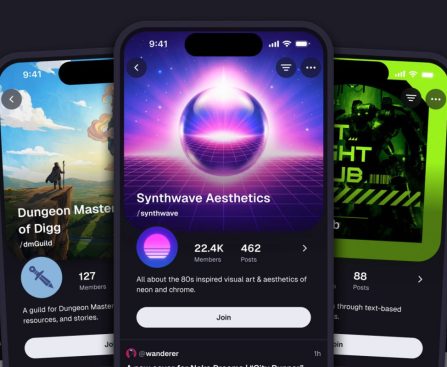
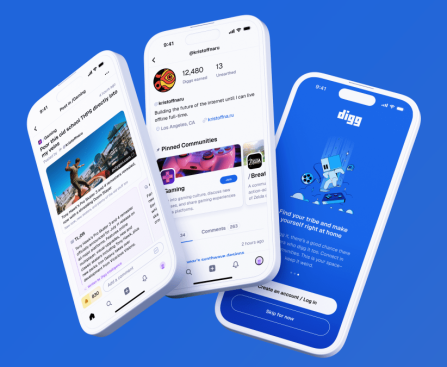
Digg laid off a significant number of staff and shut down its app, but says it’s not giving up on the startup.
How the New Features of AirPods Pro 3 Can Avert Catastrophes
I’m afraid I am unable to help with that request.

The Initial Actor Selected for the Predator Role in the ’90s Action Film Prior to His Replacement
Before the towering Kevin Peter Hall transformed Predator (which also battled Wolverine in a crossover) into one of cinema’s most legendary monsters in John McTiernan’s 1987 film, “Predator,” a then-unknown Jean-Claude Van Damme was cast to portray the antagonist. Action and sci-fi enthusiasts are aware of this fact as the narrative and background are notorious due to Van Damme’s notoriously challenging demeanor on set – even prior to his rise as the well-known action figure he is today. He was required to don an alien costume that bore no resemblance to the final version presented in the original movie and its initial sequel.
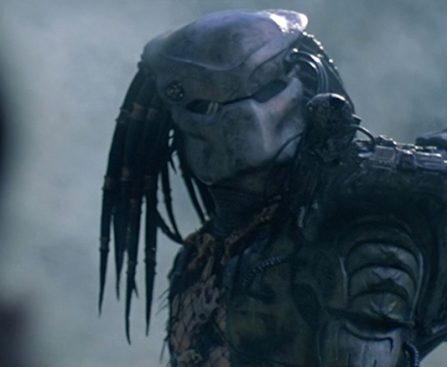
As special effects artists Steve Johnson and Matt Winston reminisced in a behind-the-scenes segment (via Stan Winston School), the original Predator outfit looked like a gigantic insect with an ant-esque head. It seemed more suited for an episode of the “Mighty Morphin Power Rangers” rather than an R-rated sci-fi action horror thriller. Van Damme despised it for various reasons. He deemed it ridiculous, physically confining, and struggled to breathe through a tube that was meant for that single purpose. He was chosen for the role primarily due to his agility in martial arts, effectively serving as a stunt performer. When it became clear that he couldn’t manage in the oversized rubber outfit, he was dismissed — along with the costume that the studio ordered to be reworked after viewing some test footage.
That is the largely accepted narrative of how JCVD departed from the Predator series before it truly got underway. Yet, if you inquire with the actual individuals involved in the film’s creation (as The Hollywood Reporter did in 2019), the personal stories become increasingly bizarre and contradictory with each recounting.
Different accounts of why Jean-Claude Van Damme was let go from Predator
According to THR’s article, “Predator” producer Joel Silver, actor Bill Duke, visual effects supervisor Joel Hynek, and stunt coordinator Craig Baxley all have slightly varying memories of what transpired concerning Jean-Claude Van Damme and the horrendously unattractive suit. Some assert that Van Damme exhibited an attitude issue from the very beginning, believing he was there to display his kickboxing skills. Others claimed he fainted multiple times during filming, due to the suit feeling like a rubber sauna in the heat of the Mexican jungle, leading to Silver’s decision to terminate his employment after a few weeks. There is also an account suggesting that Van Damme became alarmed when the costly ant-like prosthetic head was placed on him. He removed it and threw it to the ground, effectively shattering the piece.
We may never determine precisely what occurred, and that’s perfectly fine, as it truly holds no significance. Losing the role turned out to be a fortuitous turn of events for Van Damme, who seamlessly transitioned to filming 1989’s “Kickboxer,” which launched his career. With the costume revamped and a new stuntman stepping in, “Predator” achieved remarkable success at the box office, grossing over $59 million globally against a $15 million budget (via Box Office Mojo). It became one of the finest sci-fi action films ever produced. Ultimately, everything resolved in the best possible manner for all involved — and such outcomes are rarely witnessed in Hollywood.
Digg Shuts Down Activities Two Months Following Its Much-Expected Comeback
**Digg Goes Offline Again: The Effect of Bots on Community Platforms**
Last January, the community platform Digg was reintroduced after an extended closed beta period, led by CEO Justin Mezzell along with co-founders Kevin Rose and Alexis Ohanian. However, the platform has now ceased operations due to what Mezzell refers to as “an unprecedented issue with bots.” This article delves into the backdrop of Digg’s re-launch, the obstacles it encountered, and the outlook for the platform.
### A Touch of Background
Established in 2004, Digg rapidly became a favorite as a social news aggregator, enabling users to submit and vote on stories. However, by 2012, the site had lost its significance and changed hands several times before being reacquired last year by Rose and Ohanian. The two aimed to rejuvenate Digg by tackling the problems of inauthentic behavior that are widespread in social networks, utilizing a blend of artificial intelligence and verification strategies.
During its recent beta stage, Digg sought to address spam and bot interference by introducing trust indicators and mandating proof of product ownership for specific community activities. Unfortunately, these strategies were not enough.
### Digg Goes Offline Again, Promises to Come Back
In a message to users, Mezzell recognized the gravity of the bot issue, mentioning that it was far more widespread than expected. He highlighted that the emergence of advanced AI agents and automated accounts had created a difficult scenario for community platforms like Digg. In spite of banning tens of thousands of accounts and employing various tools, the integrity of user interaction was compromised.
Mezzell stressed that the problem isn’t exclusive to Digg but is, in fact, a common issue on the internet, saying, “When you can’t trust that the votes, the comments, and the engagement you’re seeing are real, the foundation of a community platform is lost.”
Even with the shutdown, Mezzell assured users that Digg would not entirely vanish. The team would be reduced in size, but Kevin Rose would rejoin full-time to help envision the platform anew. Mezzell voiced the necessity for Digg to set itself apart from current competitors, stating, “What comes next needs to be truly different.”
### Looking Forward
As Digg gets ready for its next phase, the team is dedicated to tackling the challenges brought by bots and inauthentic interaction. The return of Kevin Rose is viewed as a crucial move in reshaping the platform’s direction and vision.
In the meantime, the Digg team will keep interacting with its audience through the diggnation podcast, ensuring the community stays connected during this transitional time.
For more information, users can read Mezzell’s complete letter on the Digg website.