German Biotech Kupando Raises €10M to Advance Its Innate Immunity Drug to Clinical Trials

An extension to the company’s Series A brings total funding to €23 million and clears the path for the first human trial of KUP101, a dual TLR agonist targeting solid tumours and drug-resistant infections. Most immunotherapy research in oncology has concentrated on the adaptive immune system, the learned, antibody-generating machinery that checkpoint inhibitors like pembrolizumab […]

This story continues at The Next Web

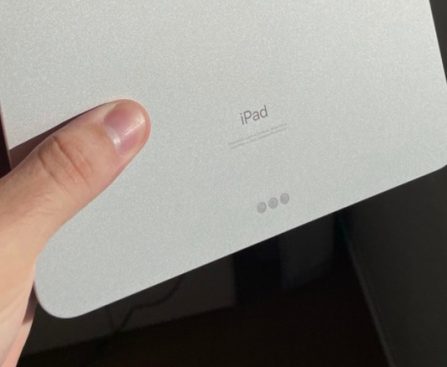
Grasping the Restricted Variety of Accessories that Work with the iPad’s Smart Connector

This connector is frequently utilized by Apple in its Magic Keyboard and Magic Keyboard Folio offerings, and the sole Apple tablet that does not accommodate these accessories is the iPad Mini, likely due to its compact size.

There are multiple factors contributing to the limited selection of iPad Smart Connector accessories, despite the expectation that accessory manufacturers would test out innovative products that leverage the system. The primary obstacles for acceptance appear to be that Apple reveals little about the underlying technology, along with the connector’s restricted capabilities for power and data transfer. Consequently, many brands opt to focus on creating products that utilize the USB-C port, such as Satechi with its recently launched OntheGo Foldable Stand Hub.

While there exists a practically limitless range of accessories that leverage the iPad’s USB-C port, as it currently stands, the iPad’s Smart Connector is limited to just two categories of accessories: keyboards and chargers. Apple itself provides Smart Connector keyboards, and several third-party accessory manufacturers do as well, alongside a few brands that market Smart Connector-compatible chargers.

iPad’s Smart Connector may never evolve beyond its current state

Ikea’s Smart Home Difficulties Underscore Major Problems with Matter Protocol

### Difficulties with Ikea’s Matter-Over-Thread Smart Home Solutions

Ikea has positioned itself as a preferred label for budget-friendly smart home items, attracting both beginners and experienced tech fans. The company’s focus on user-friendliness, especially through physical remotes, has simplified the integration of smart technology into households. Nevertheless, recent ventures into economical Matter-over-Thread gadgets have resulted in considerable connectivity problems, with Apple Home users being particularly impacted.

#### Connectivity Problems

A plethora of grievances has surfaced from users encountering challenges in adding Ikea’s latest Matter devices to their smart home ecosystems. These issues prompted Ikea to admit to the connectivity challenges, signaling that they are diligently investigating the concerns. In a company statement, they underscored their dedication to resolving customer issues and working alongside ecosystem partners and the Connectivity Standards Alliance to enhance user satisfaction.

#### Shortcomings of the Matter Standard

Reports indicate that the difficulties Ikea is experiencing are indicative of larger problems with the Matter standard as a whole. Initially introduced with optimistic expectations for device interoperability, Matter’s rollout has shown that major tech giants—Apple, Google, and Amazon—are now favoring their distinct objectives over collaborative initiatives. This evolution has led to a deficiency in the promised seamless integration, putting the responsibility on manufacturers to guarantee compatibility with each platform before launch.

#### User Experiences and Remedies

Jennifer Tuohy from The Verge, who faced these challenges directly, sought remedies and realized that there isn’t a universal solution for the issues. A video by A Smarter House showcased multiple troubleshooting techniques, indicating that devices in Apple Home might freeze during setup and time out. Users mentioned that repeatedly removing and re-adding devices could leave residual states within the system, which occasionally resolves after a pause. Moreover, when utilizing the DIRIGERA hub as a connector, newly integrated devices may not show up until both the hub and Apple border router devices are rebooted.

#### Final Thoughts

The initial expectation of Matter as a universal standard for smart home devices is wavering. Although the conflicting interests of leading tech companies may obstruct advancement, it remains vital for them to confront these challenges. A cohesive standard is critical for making smart home technology approachable and mainstream. As Ikea maneuvers through these obstacles, the anticipation is that enhancements will emerge, ultimately serving users and elevating the smart home experience.

Apple’s 50th Anniversary Festivities in China Impacted by Government Influence

Apple’s 50th Anniversary Festivities: A Complex Mood in China

Apple has recently celebrated its 50th anniversary, starting in New York and then moving to China, where CEO Tim Cook was spotted at an event in Chengdu. However, the celebrations have been clouded by ongoing strains with the Chinese government.

Ahead of the anniversary, Apple revealed a decrease in its typical commission on App Store transactions in mainland China, lowering it from 30% to 25%, a change linked to talks with Chinese regulators. This action was likely aimed at alleviating tensions, but reports indicate that it may fall short.

After the announcement, a major Chinese state-run newspaper criticized Apple, advocating for further relaxation of App Store limitations and raising alarms about monopolistic behaviors. This commentary illustrates the ongoing examination Apple undergoes regarding its App Store practices, especially in the context of past disputes with large Chinese firms like Tencent and ByteDance.

In Europe, antitrust authorities have pressured Apple to allow third-party app stores and to make its NFC chip accessible to competitors. There are signs that China may pursue comparable concessions, urging Apple to permit third-party payments and external links for digital transactions. The Chinese antitrust agency is presently reviewing Apple’s regulations on in-app purchases and limitations on external payment options.

What should have been a festive occasion in China has instead highlighted Apple’s intricate connection with the Chinese government. Officials may be signaling their discontent with Apple’s growing efforts to lessen its manufacturing dependence on China, potentially utilizing this moment to express their grievances.

As Apple confronts these obstacles, the company’s anniversary festivities act as a reminder of the fragile equilibrium it must uphold in its global operations, especially in a market as crucial as China.

The X-Wing Design Stemmed from Its Creator’s Muse at a British Pub

The X-wing stands out as one of the most well-known vehicles in the realm of science fiction. While some may contend that the Millennium Falcon is more legendary, these crafts would not be the sci-fi symbols they are today without their creators and, more significantly, the inspirations they drew upon. In the case of the X-wing, designer Colin Cantwell found his muse in an unexpectedly ordinary setting: a British pub.

A few years back, Cantwell initiated an AMA discussion on Reddit, where one of the initial inquiries focused on the inspiration behind the X-wing’s design. He remarked that it needed to be “ultracool and distinct from all other aircraft associations,” but the initial spark came from a simple dart aimed at a target within a British pub. From that point, he developed the design further. One iteration featured a significantly larger wing-to-nosecone ratio, but he eventually chose the version that fans recognize and cherish today.

Cantwell’s contributions extended beyond merely crafting the X-wing’s iconic appearance; he also played a crucial role in determining the ship’s operational elements, particularly its trademark folding wings. Instead of looking to more conventional British hobbies for inspiration, Cantwell found his muse in the old Wild West gunfighters. He envisioned the ship “drawing its guns like in a Western,” leading to what became a staple of sci-fi cinema.

It takes a collection of creative minds to design a starship

Colin Cantwell boasts numerous credits throughout his career. He was also responsible for the designs of the Y-Wing, TIE fighter, and Star Destroyer for “Star Wars,” and contributed to “Close Encounters of the Third Kind” (a remarkable film you should definitely watch). He even advanced modern OLED computer monitors by developing a program to enhance Hewlett-Packard screens’ color displays. Nevertheless, several other visionaries played a role in bringing ships like the X-wing to fruition.

One of the most significant contributors associated with “Star Wars” — besides George Lucas, of course — was renowned artist Ralph McQuarrie. He converted many of Lucas’ descriptions into illustrations that acted as storyboards and a visual guide. However, regarding the vehicles, he primarily refined Cantwell’s concepts. Another key figure was art director Joe Johnston, who supervised visual effects. Johnston took Cantwell’s designs and made slight adjustments to accommodate the requirements of the special effects team during filming.

While a majority of Cantwell’s ideas transitioned to the big screen with minimal alterations, some underwent considerable modifications. For example, Cantwell originally conceived the Millennium Falcon, which later served as the blockade runner ship attacked by a Star Destroyer in the opening sequence of “Episode IV: A New Hope.” Nonetheless, remnants of Cantwell’s initial design can still be traced in the final design of the Millennium Falcon. Although Johnston is credited with creating Han Solo’s iconic starship, the original cockpit Cantwell envisioned was repurposed for the Millennium Falcon that appeared in the film.