Extra Functions of a Kindle: 4 Tasks Apart from Reading

Amazon Prime also includes a concealed benefit for Kindle users, allowing you to receive one complimentary book each month from a range of unreleased options. This means you can read a book ahead of the crowd.

While reading is the main attraction of a Kindle, it actually offers several other features as well. You can utilize your Kindle for marking up documents or surfing the internet just like you would on a regular tablet. Additionally, you can leverage its built-in tools to monitor your reading habits or enhance your vocabulary.
Annotate work/school documents

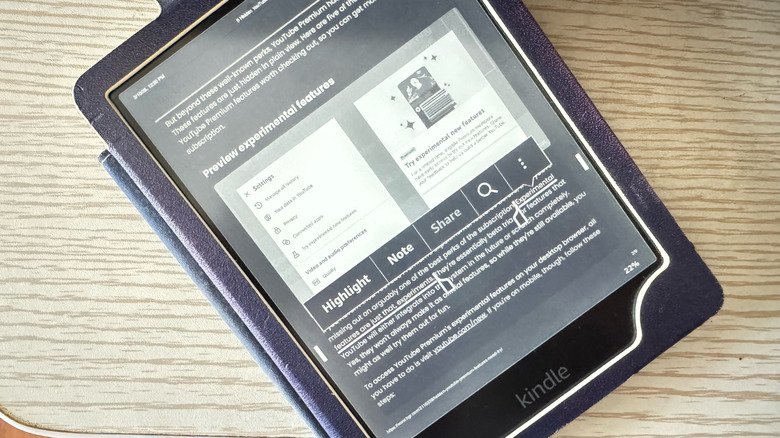
In case you weren’t aware, Kindle accommodates personal documents and manages them just like any other book you download. This means you can annotate them similarly to a standard book. This feature is particularly useful when you’re annotating lengthy and tedious documents for work or studies. Your highlights and notes are saved in a separate file, thus conserving your time and effort. To work with personal documents on your Kindle, follow this guide:

  1. Navigate to amazon.com/sendtokindle using your desktop browser.
  2. Sign in to your Kindle account if you haven’t done so already.
  3. Click Select files from device.
  4. Select the PDF you wish to access on your Kindle. Remember that you can only send documents that are sized

Benchmarks Suggest MacBook Neo Rivals High-Performance Cloud Servers for Database Tasks

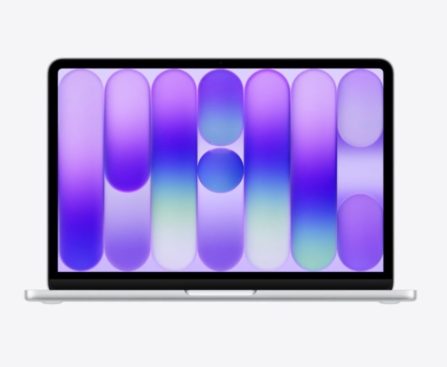
In an intriguing experiment, DuckDB’s Gábor Szárnyas assessed the 512GB MacBook Neo alongside various cloud servers to evaluate how Apple’s latest budget laptop handles demanding database tasks. Here’s the outcome.

### MacBook Neo faces off against cloud servers with up to 4× greater memory

In a blog entry titled [Big Data on the Cheapest MacBook](https://duckdb.org/2026/03/11/big-data-on-the-cheapest-macbook) (via [Boing Boing](https://boingboing.net/2026/03/13/apples-cheapest-laptop-beat-a-cloud-server-with-4x-the-memory.html)), Szárnyas details how he evaluated the [MacBook Neo](https://amzn.to/47vJmkn) using two benchmarks: ClickBench and TPC-DS:

> ClickBench consists of 43 queries concentrating on aggregation and filtering tasks. These operations execute on a single extensive table containing 100M rows, which uses approximately 14 GB when serialized into Parquet and 75 GB when kept in CSV format.

> TPC-DS involves 24 tables and 99 queries, many of which are more intricate and feature elements like window functions. Although TPC-H has been excessively optimized, TPC-DS results still hold some degree of significance.

In every test, the [MacBook Neo](https://amzn.to/47vJmkn) was compared against two cloud instances:

– c6a.4xlarge featuring 16 AMD EPYC vCPU cores and 32 GB RAM.
– c8g.metal-48xl equipped with an exceptional 192 Graviton4 vCPU cores and 384 GB RAM.

For the ClickBench benchmark, they executed two tests: a cold run, assessing performance with empty caches, and a hot run, measuring performance once the system benefits from caching.

In the cold run, the [MacBook Neo](https://amzn.to/47vJmkn) significantly outperformed both cloud instances, completing all queries in under a minute, achieving speeds up to 2.8 times faster than its competitors.

While this is remarkable, DuckDB clarifies that:

> Naturally, if we examine the setups more closely, an explanation emerges. The cloud instances utilize network-attached disks, and accessing the database on these influences the overall query durations. The MacBook Neo employs a local NVMe SSD, which, while not top-tier, still offers fairly rapid access during the initial read.

The scenario shifted during the hot run test: c8g.metal-48xl completed the test in 4.35 seconds, c6a.4xlarge followed as a distant second at 47.86 seconds, and the [MacBook Neo](https://amzn.to/47vJmkn) came in last at 54.27 seconds, about 10% quicker than in the cold run.

Notably, regarding median query durations, the [MacBook Neo](https://amzn.to/47vJmkn) can still outperform the c6a.4xlarge, which is a mid-range cloud instance. Additionally, the total runtime of the laptop is only roughly 13% slower, despite the cloud instance possessing 10 additional CPU threads and four times the RAM.

Concerning the TCP-DS benchmark, DuckDB provides somewhat less comparative information but indicates that the [MacBook Neo](https://amzn.to/47vJmkn) still performed admirably given its specifications:

> At SF100, the laptop navigated most queries effortlessly with a median query runtime of 1.63 seconds and a total runtime of 15.5 minutes.

> At SF300, the limitations of memory began to surface. Although the median query runtime remained impressive at 6.90 seconds, DuckDB occasionally consumed up to 80 GB of space for disk spilling, and it became apparent that some queries would require extended time. Notably, query 67 took 51 minutes to finish. However, hardware and software continued to collaborate effectively, ultimately completing all queries in 79 minutes.

Interestingly, this was not the first instance of testing the A19 Pro chip. When the iPhone 16 Pro was released, they [conducted the TCP-H benchmark](https://duckdb.org/2024/12/06/duckdb-tpch-sf100-on-mobile#a-song-of-dry-ice-and-fire) with the device submerged in a bucket of dry ice at -50ºC, where it finished the run in 478.2 seconds.

To discover more about DuckDB’s benchmarks on the MacBook Neo, [follow this link](https://duckdb.org)

The Initial Pair of Episodes of Imperfect Women Currently Available on Apple TV

**Flawed Women: A Fresh Psychological Thriller on Apple TV**

Apple has just debuted its latest psychological thriller series, “Flawed Women,” featuring an impressive ensemble cast that includes Kerry Washington, Elisabeth Moss, and Kate Mara. The first two episodes are currently available for streaming, with additional episodes scheduled to air every Wednesday until April 29.

**Debut and Marketing**

To promote the series, Apple has hosted various promotional events, including a unique “Today at Apple” session at Apple The Grove and a world premiere gala at the Academy Museum of Motion Pictures in Los Angeles. The show also includes performances from prominent actors such as Corey Stoll, Leslie Odom Jr., Sheryl Lee Ralph, and Joel Kinnaman.

**Synopsis**

“Flawed Women” is adapted from Araminta Hall’s novel of the same title. The series examines a crime that disrupts the lives of three women intertwined by a friendship that spans decades. It investigates themes of guilt, vengeance, affection, treachery, and the sacrifices that can permanently alter lives. As the investigation progresses, the truth about the essence of their friendship emerges, implying that even the strongest ties may not be as solid as they seem.

**Reviews and Anticipations**

Initial reviews suggest that “Flawed Women” could appeal to viewers who enjoy the murder-mystery genre. Critics have praised its captivating storyline and character complexity, implying it might emerge as a major success for Apple TV.

**Watching the Series**

“Flawed Women” is streamable on Apple TV, which offers a subscription service costing $12.99 per month. The platform features a range of acclaimed shows and films, including “F1 The Movie,” “Severance,” and “The Morning Show.”

For those keen on learning more about the series, the trailer and the opening scene can be found online, providing a sneak peek into the exciting narrative that awaits audiences.

**Final Thoughts**

With its engaging plot and powerful performances, “Flawed Women” is set to captivate the interests of thriller aficionados and drama enthusiasts alike. As new episodes are released weekly, viewers can anticipate a fascinating journey into friendship and the murkier aspects of human nature.

Impacts of Keeping Your Android Phone Powered On Constantly

things you definitely shouldn’t do with your Android device.

An Android phone is generally meant to be powered on around the clock, keeping you in touch with your news, social media, and everything else. Similar to other electronic devices in your home, particularly your PC, an Android smartphone functions somewhat like a living entity. It requires regular breaks to remove old data and protect itself from potential threats. Your device can run for days without needing a complete shutdown, certainly, but if you remember to give it a decent pause at least weekly, you might notice your phone operates a bit more reliably. Occasionally rebooting may also contribute to your phone’s overall lifespan.

Remaining powered can result in memory leaks and security vulnerabilities

Incredible Characteristics of a 1930s ‘Smart Home’ Uncovered

In the beginning of 2025, the History Channel reality program “American Pickers” highlighted what might be termed a “smart home” from the 1930s. It provides an intriguing look not only at the progression of technology but also at the ingenuity of the homeowner in that era. Previously owned by telecommunications pioneer W.J. Moore, the residence situated in Caro, Michigan, boasts a distinctive design and arrangement. The show’s hosts referred to it as the “wizard’s castle,” labeling it “without a doubt the most customized home I’ve ever visited in America.” Most notably, it includes features that today, nearly a century later, could be recognized as early examples of the smart home concept.

Given Moore’s background in the formative periods of technological advancement, having established Moore Telephone Manufacturing Company and Moore Telephone System in the late 1800s, it’s understandable that the residence would incorporate what people of that time might have labeled high-tech innovations. Today, however, they seem basic compared to our AI-enhanced smart home environment. Nevertheless, it offers a captivating look into the past and the preliminary developments in smart management for lights, locks, even a home security system and garage door opener.

Preliminary automation

The automation of chores using fundamental smart home devices is at the heart of modern smart homes, and Moore devised an analog approach to achieve this long before this century. For instance, the carriage house, which functioned as his workshop, contains a pulley system that operates like a primitive version of an automatic garage door opener. Another pulley system was constructed for a zipline that extended over the backyard pool, enabling him to drop in from a model plane, with the homeowner sharing an image of Moore using it in the ’50s.

Within the house, there’s hardwiring that manages everything from door locks to lighting, arguably the earliest recognized form of smart lights and remotely controllable locks. Although he couldn’t rely on voice commands or applications to illuminate the lights or secure the door, he devised an intricate control panel — akin to smart control hubs or smart displays, similar to devices like the Amazon Echo Hub and tablets like the Google Pixel Tablet and Apple iPad, all of which can serve as gateways to manage smart home devices. It was designed so he could complete tasks with a simple button press. He configured what could be seen as zones with titles such as “south hall” to manage only the connected devices in that region. The family’s notes outlining instructions that Moore typed are still preserved, offering insight into how he organized everything and how it functioned at one point.

A glimpse into the future

Moore was evidently ahead of his era, extending beyond mere automation with a self-created alarm system. A clever interpretation of a smart security setup or smart alarm, it had the ability to lock doors, activate lights, and notify emergency services through a connection to his telephone line in case of a break-in. No fees or subscriptions were necessary. The control panel also included light indicators to convey the status of water pumps, an impressive alternative to push notifications and other mobile alerts for its time. Comparable indicator lights were established in other parts of the house, such as near the fireplace, so he could be aware when a door was ajar, for example. Essentially, he had his own rendition of a Ring video doorbell or smart lock application through physical, illuminating buttons.

While the devices and mechanisms in the home no longer operate, there are efforts in place to restore it to its initial condition. From a technological viewpoint, it offers a remarkable look back at how the notion of automating tasks and developing smart devices in the home isn’t as recent as we believed. The technology is certainly dwarfed by today’s advancements, but during that time, they would have been considered equally revolutionary. You can view the segment of “American Pickers” Season 23, Episode 19, on the History Channel or YouTube.

Musi Streaming Application Fails in Legal Dispute as Judge Confirms Apple’s Authority to Remove Apps from App Store

In 2024, when Apple took down the free music streaming application Musi from the App Store, the developers initiated legal action. This week, a federal judge dismissed the case with prejudice, potentially setting a significant precedent regarding App Store delistings. Here are the specifics.

Apple achieved nearly a total legal victory. US District Judge Eumi Lee in the Northern District of California ruled to dismiss Musi Inc.’s lawsuit against Apple in 2024 with prejudice.

In summary, Musi was a free music streaming service that sourced songs from YouTube, which was removed from the App Store following Google’s claim that it infringed its video platform’s terms of service. Conversely, Musi refuted this claim from the beginning, stating that its operation was akin to users accessing YouTube via a web browser.

After the app was removed, Musi Inc. filed a lawsuit, claiming that Apple had acted in bad faith, admitting “that it knowingly relied on false evidence” to remove Musi from the App Store.

Today, Judge Lee determined that Apple is permitted to remove apps from the App Store “with or without cause,” as outlined in the Apple Developer Program License Agreement.

The clear language of the DPLA applies as it is straightforward and unequivocal: Apple may “cease marketing, offering, and allowing download by end-users of the [Musi app] at any time, with or without cause, by providing notice of termination.” […] Based on this wording, Apple had the authority to stop offering the Musi app without cause, provided that Apple gave notice to Musi. The complaint states, and Musi does not contest, that Apple provided the necessary notice to Musi. […] Therefore, Apple’s choice to remove the Musi app from the App Store did not violate the DPLA.

Alongside the dismissal of the lawsuit, Judge Lee also partially approved Apple’s motion for Rule 11 sanctions against Musi Inc.’s legal team, criticizing its lawyers for making the “bad faith” claim without any factual basis.

In her ruling, Judge Lee remarked that “this is one of the rare cases in which Rule 11 sanctions are necessary and appropriate,” leading to Musi Inc.’s law firm being ordered to cover Apple’s legal fees and expenses related to the sanctions motion.

Given that the lawsuit was dismissed with prejudice, Musi Inc. is barred from refiled the same claim in court.

You can view Judge Lee’s order that granted Apple’s motion to dismiss the lawsuit [here](https://storage.courtlistener.com/recap/gov.uscourts.cand.437479/gov.uscourts.cand.437479.96.0.pdf), and her order that partially granted Apple’s motion for Rule 11 sanctions [here](https://storage.courtlistener.com/recap/gov.uscourts.cand.437479/gov.uscourts.cand.437479.97.0.pdf).