Prettier: Opinionated Code Formatting with James Long

Developer tooling shapes how software gets written day to day, but the best tools often disappear into the background once they succeed. Formatting, linting, and build systems can either create friction and endless debate, or quietly remove entire classes of problems from a team’s workflow. Over the past decade, the JavaScript ecosystem has wrestled with

The post Prettier and Opinionated Code Formatting with James Long appeared first on Software Engineering Daily.


New Bill Could Shield International Students from Trump’s Threats

A bipartisan duo is pushing back on President Donald Trump’s attempts to end a program that lets hundreds of thousands of foreign students work in the US for a year after graduation. Reps. Sam Liccardo (D-CA) and Jay Obernolte (R-CA) introduced a bill that would codify Optional Practical Training (OPT), which allows international students to […]

eternal.ag Raises €8M for Autonomous Harvesting Robots in Greenhouses

The Cologne startup’s simulation-first approach trains robots in virtual greenhouses before deploying them in real ones, aiming to crack a deployment problem that has frustrated the industry for years. The market for greenhouse automation has accumulated a graveyard of credible-sounding startups. The engineering problem is genuinely hard: harvesting tomatoes or cucumbers requires handling irregular, delicate, […]

This story continues at The Next Web

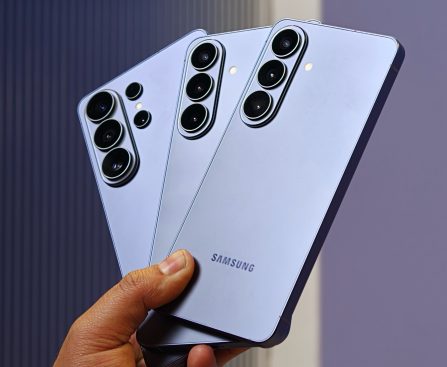
Obstacles in Realizing 25W Wireless Charging on the Galaxy S26 Ultra

Users of the Galaxy S26 Ultra are facing difficulties in attaining the advertised 25W wireless charging speeds. Even though Samsung asserts that it supports up to 25W wireless charging, numerous users indicate that they find it challenging to consistently attain these speeds. The problem arises from the phone’s absence of integrated Qi2 magnets, necessitating users to depend on specific chargers and magnetic cases for optimal results.

Samsung recommends utilizing its proprietary magnetic wireless charger paired with a 45W travel adapter and official magnetic cases to reach the desired charging speeds. Nevertheless, tests indicate that even with these suggested accessories, charging speeds frequently peak at around 15W instead of the promised 25W. This inconsistency is ascribed to Samsung’s implementation of ‘proprietary Qi2.2 magnets’ in its official cases, which third-party manufacturers cannot entirely mimic.

Users have voiced their frustration over the unpredictability, as even Samsung’s own cases, like the Silicone Magnet and Clear Magnet cases, do not provide the anticipated charging speeds. The problem is compounded by Samsung referring to both 15W and 25W charging as ‘Super Fast Wireless Charging,’ which complicates users’ ability to assess the actual charging speed.

The absence of built-in Qi2 magnets on the Galaxy S26 Ultra has caused confusion and dissatisfaction among users, who believe that Samsung could have circumvented these challenges by integrating the magnets directly into the device. Consequently, users are left with an inconsistent and aggravating charging experience. Samsung has not yet offered a clear resolution or explanation for the disparity in charging speeds.

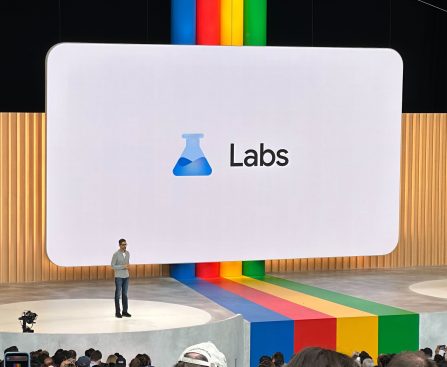
Google Labs’ Stitch: A Creative Platform Converting Voice Commands into Applications

Google’s Stitch AI: A Quick Path to App Design, But at What Expense?

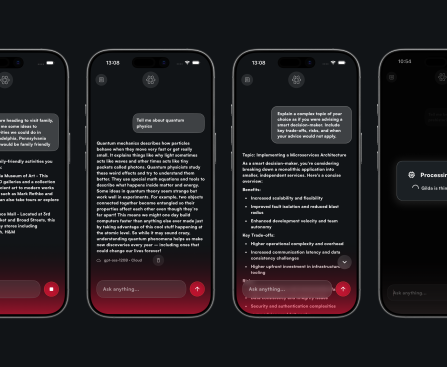
Google’s newest development, Stitch AI, is set to transform app design by simplifying the user interface (UI) assembly process. This experimental tool, created by Google Labs, presents a groundbreaking method termed “vibe design,” which empowers users to construct interfaces using straightforward text cues. Fueled by Google’s cutting-edge Gemini models, Stitch AI can comprehend both textual and visual signals, allowing users to modify, enhance, and change styles in real-time.

The platform produces editable design documents and front-end code, seamlessly blending into existing professional engineering workflows. This feature removes the necessity for designers to draft in Figma or developers to manually code front-end components. Instead, users can generate interactive UI screens by merely typing a prompt, such as “a sleek finance dashboard with dark mode and charts,” and Stitch AI will create a workable layout.

Stitch AI signifies a notable transformation from conventional UI design workflows, which typically see designers crafting static layouts and developers converting them into code. By merging these phases into a single process, Stitch AI seeks to hasten the design timeline, potentially facilitating more regular app updates and a more refined user experience.

Nevertheless, this advancement prompts concerns about the possible repercussions of such a simplified method. While Stitch AI offers promise in terms of efficiency and user-friendliness, it might also result in a uniformity of app visuals. The danger lies in the dependence on familiar designs that could hinder creativity, leading to apps that lack individuality and flair.

Google envisages Stitch AI as more than merely a design instrument; it sees it as an all-encompassing AI-driven UI platform that fosters quick prototyping, iteration, and collaboration between non-designers and engineers. Despite its promise, Stitch AI is still in the experimental stage within Google Labs and is not yet broadly accessible.

As the technology progresses, the challenge will be to strike a balance between efficiency and creativity, ensuring that the designs generated by Stitch AI are not just practical but also inventive and distinctive. The trajectory of app design may very well hinge on how effectively this equilibrium is maintained.

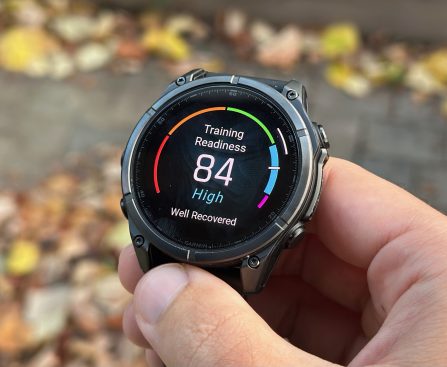
WhatsApp Now Accessible for Garmin Fenix and Forerunner Smartwatch Owners

Assistance that will make a significant impact.

Parallel Raises €20M to Deploy AI Agents for Hospital Administrative Work Across Europe

Every patient discharge in a European hospital triggers a paperwork cascade. Clinical information from the stay must be converted into standardised codes, the ICD classifications and procedure codes that determine what a hospital gets paid. Someone has to navigate the legacy software, pull the right records, select the right codes, and enter them correctly. In […]

This story continues at The Next Web

Industrial RS-485/Modbus Raspberry Pi HAT Compatible with OpenPLC, Supports 7V-32V DC Input – CNX Software

Industrial RS485 Modbus HAT for Raspberry Pi

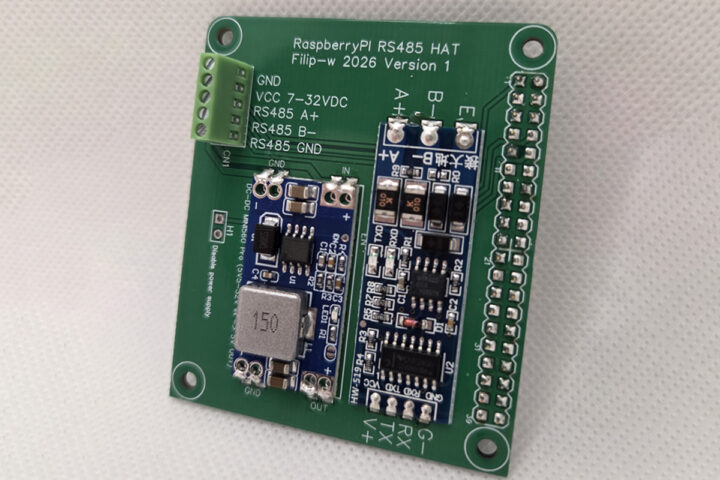
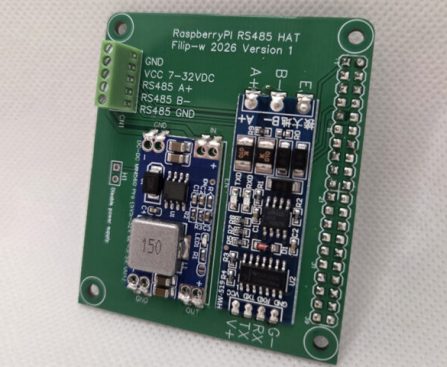
We have previously written about various industrial Raspberry Pi systems and gateways that come with RS-485 built in, but we had yet to cover a dedicated RS-485 Raspberry Pi HAT. To fill this gap, EngineElectronicAccessories, a developer based in Sweden, has introduced the “Industrial RS485 / Modbus HAT” designed for industrial automation, monitoring, and the OpenPLC open-source PLC suite. The board features an onboard RS-485 transceiver with TVS diode protection and supports long-distance communication over the RS-485 standard. It uses the Pi’s hardware UART interface and includes Tx/Rx LEDs for diagnostics. The board also accepts 7V to 32V DC input, so you can power both the HAT and the Raspberry Pi directly from a standard 24V rail, eliminating the need for a separate USB power supply in a control cabinet. Industrial RS-485/ Modbus HAT specifications: Compatibility – All Raspberry Pi boards with 40-pin GPIO header (Pi 3, Pi 4, Pi […]

The post Industrial RS-485/Modbus Raspberry Pi HAT works with OpenPLC, supports 7V-32V DC input appeared first on CNX Software – Embedded Systems News.