iOS 26.4 to Activate Automatic Strict Security Functionality for All iPhones

### iOS 26.4: Primary Security Feature Activated by Default

iOS 26.4 is about to be launched shortly, introducing significant enhancements for iPhone users. One of the key updates is the debut of the Stolen Device Protection feature, which will now be activated by default for every user.

#### What is Stolen Device Protection?

Introduced in early 2024, Stolen Device Protection aims to bolster the security of iPhones, especially in cases of theft. Once an optional feature, it will now automatically enable with the forthcoming iOS update. This function enacts further security protocols when the device is outside known locations, such as home or workplace.

#### Main Features of Stolen Device Protection

As per Apple’s support documentation, Stolen Device Protection comprises the following security criteria:

– **Biometric Authentication**: Actions like accessing saved passwords and credit cards will necessitate Face ID or Touch ID. There will be no alternative passcode option, ensuring that only the device owner can retrieve these sensitive features.

– **Security Delay**: Certain security actions, such as altering your Apple Account password, will require a one-hour waiting period, followed by another biometric authentication. This delay aims to thwart unauthorized modifications by anyone who might have stolen the device.

#### Modifications in Implementation

Apple’s strategy regarding Stolen Device Protection has advanced. Initially, with iOS 17.3, the feature was completely opt-in, which likely led to low user uptake. However, with iOS 26.4, Apple has opted to make it a default setting, while still providing users the choice to turn it off if they prefer.

#### Conclusion

As iOS 26.4 is launched, users will gain from strengthened security measures designed to safeguard their devices against theft. The automatic activation of Stolen Device Protection showcases Apple’s dedication to user security, even if it entails some trade-offs in convenience. Users are urged to reflect on the ramifications of this feature and determine whether to keep it activated or disable it according to their individual preferences.
WhatsApp for iPhone to Launch Automatic Message Translation Across 21 Languages

iPhone users might soon have the ability to use WhatsApp for communication with individuals who speak different languages. Here are the specifics.

## Functionality operates via Apple’s language translation packs

As noted by WABetaInfo, the newest beta version of WhatsApp on TestFlight contains mentions of a per-chat “Translate messages” option, which will automatically translate all new incoming messages when enabled.

After activating the feature, users can select the language from which messages should be translated and the language into which they should be translated. In the showcased example, messages are automatically converted to English.

At present, WhatsApp necessitates that users tap and hold the message they wish to translate, then tap “More…”, followed by selecting the source and target languages.

Although the new functionality is not yet available to beta testers, WABetaInfo indicates that users will have the capability to translate the complete conversation by default, noting that it will function in both one-on-one and group chats (as long as all participants are sending messages in the same language).

Similar to the per-message translation feature, this relies on Apple’s local language packs. This indicates that translations are carried out on-device, preserving end-to-end encryption on chats.

Currently, Apple supports Arabic, Dutch, English (United Kingdom), English (United States), French (France), German (Germany), Hindi, Indonesian, Italian (Italy), Japanese, Korean, Mandarin Chinese (China mainland), Mandarin Chinese (Taiwan), Polish, Portuguese (Brazil), Russian, Spanish (Spain), Thai, Turkish, Ukrainian, and Vietnamese.

As Apple incorporates additional supported languages into its Translate App, support will also grow on WhatsApp.

As with any feature in WhatsApp’s TestFlight version, there is no confirmed release schedule at this time.

To find out more about the feature, follow this link.

Apple’s Future iPhone Plan Suggests Major Design Alterations

# The Progression of Apple’s iPhone Series: A Fresh Wave of Creativity

The framework for Apple’s yearly iPhone launches has largely stayed the same throughout the years, but recent indications signify a change in direction. With the unveiling of new models and a shifting release timeline, Apple seems to be exploring new frontiers.

## Fresh iPhone Variants and Launch Timelines

Commencing with the iPhone 16e and iPhone Air revelations in early 2025, Apple has started to break away from its conventional iPhone schemes. Since 2020, the company has generally unveiled four flagship iPhones each autumn: two standard editions and two Pro versions. The iPhone SE, a more affordable alternative, was also included in the lineup but received sporadic updates.

The iPhone 16e represented a noteworthy alteration, debuting in February instead of the typical September period. Distinct from the iPhone SE, the 16e is part of a new yearly rhythm, as further marked by the follow-up launch of the iPhone 17e. In the autumn of 2025, the iPhone Air was unveiled, further disturbing the established offering of two standard iPhones and two Pro editions.

These alterations signify a calculated gamble for Apple, considering the iPhone’s pivotal role in the company’s business framework. Nevertheless, speculations hint at even bolder risks ahead.

This fall, Apple is projected to introduce just two or three new iPhones:

– iPhone 18 Pro
– iPhone 18 Pro Max
– iPhone Fold (possibly launched later)

The emergence of the initial foldable iPhone is especially significant, as it indicates a new design approach for the brand. Analysts propose that the foldable variant might not surface until December, diverging further from Apple’s traditional release rhythm.

Looking forward to spring 2027, three more iPhones are expected:

– iPhone 18e
– iPhone 18
– iPhone Air 2

In autumn 2027, the rumored ‘iPhone 20’ is speculated to be launched alongside other devices. This new model is expected to feature a completely cutout-free display, with a screen that envelops the bezels. The details of how this model will integrate into the existing range are still uncertain. Moreover, reports suggest that Apple is experimenting with a flip-style folding iPhone, although such a product may take several years to materialize.

## iPhone Plan: Cutting-Edge Innovation or Overloaded and Confusing?

As Apple’s iPhone series progresses, it prompts inquiries about the effects of launching numerous new models annually. Presently, the forecasted lineup comprises:

1. iPhone e
2. iPhone
3. iPhone Air
4. iPhone Pro
5. iPhone Pro Max
6. iPhone Fold
7. ‘iPhone 20’ (possibly referred to as iPhone Ultra)
8. Potentially an ‘iPhone Flip’

These changes can be interpreted from two perspectives:

– They may lead to confusion and divides within Apple’s most crucial product line.
– Conversely, they could pave the way for essential innovation and variety after years of a more restricted and predictable sequence.

Views across this spectrum differ. Some users welcome the introduction of distinctive models like the iPhone Air, while others find the product narrative less clear compared to the standard iPhone 17 and iPhone 17 Pro.

Anticipation surrounds the imminent foldable model and the expected ‘iPhone 20,’ both of which promise to elevate the iPhone experience in groundbreaking ways. However, there is also unease about the likelihood of the iPhone lineup becoming overcrowded and perplexing.

Apple’s strategies may continue to adapt, but the current trend points to an exciting period for the iPhone series as it embraces a variety of new models.

What do you think about Apple’s expected iPhone framework? Share your perspectives and thoughts on this developing scenario.

What Happened at Nvidia GTC: NemoClaw, Robot Olaf, and a $1 Trillion Bet

CEO Jensen Huang took the stage at Nvidia’s GTC conference this week in his signature leather jacket to deliver a two-and-a-half-hour keynote, projecting $1 trillion in AI chip sales through 2027, declaring that every company needs an “OpenClaw strategy,” and closing with a rambling Olaf robot that had to get its mic cut. The message was hard to miss: Nvidia […]

Four Budget-Friendly Home Security Cameras Providing Outstanding Worth

smart home security devices that you can set up. Nevertheless, it’s usually wise to prioritize security cameras as one of your primary investments for safety. With appropriate cameras, you can monitor both the interior and exterior of your residence. The top models offer beneficial features, such as motion alerts, two-way audio capabilities, and broad viewing angles.

Nonetheless, security cameras can often seem like a pricey investment, particularly since many homes need multiple angles for sufficient coverage. Thankfully, manufacturers provide security cameras across various price ranges, including several budget-friendly models. Many of these economical security cameras actually offer significantly better value than their cost would suggest and can be an excellent option if you are working with a tight budget. Here, then, are some of our curated selections, compiled after reviewing expert assessments and customer feedback about budget security cameras from some leading brands.

Blink Mini 2K+

The Blink Mini 2K+ is an affordable security camera that is well-regarded for both indoor and outdoor surveillance, aided by an optional weather-resistant power adapter provided by the manufacturer. It can record 2K video with a 138-degree field of vision and includes all the fundamental features you require and more. For instance, it offers color night vision, a characteristic that’s not standard in budget cameras, features a built-in LED spotlight, and incorporates noise cancellation for improved sound quality. Additionally, it contains a built-in siren and is compatible with Alexa, facilitating smooth operation with the Alexa app, Fire TV devices, Alexa smart displays, and any other Alexa-integrated device.

Microsoft’s Plan to Fix Windows 11

Microsoft has faced a breakdown of trust in Windows 11 and a backlash over AI additions to its operating system in recent months. After promising to rebuild trust in Windows earlier this year, Microsoft’s Windows chief, Pavan Davuluri, is now revealing the company’s plan to fix Windows 11 – and there are a lot of […]

Windows 11 Introduces a Movable Taskbar

It’s taken almost five years, but Microsoft is finally bringing back the ability to move the Windows taskbar to the top or sides of your screen. The movable taskbar is part of some much bigger changes coming to Windows 11 this year in response to growing criticism of the operating system’s performance, reliability, and user […]

Apple Explains the Justification for the Three Main Types in M5 Chips in Recent Interview

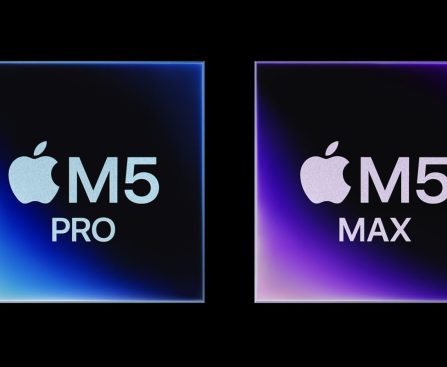
When Apple unveiled the M5 Pro and M5 Max chips this month, it also disclosed a new categorization of core types: efficiency, performance, and super. In a recent discussion, Apple shared insights into the rationale behind these alterations and the distinct functions of each core type.

### The Newly Introduced M5 Pro and M5 Max Chips

The M5 series of chips includes three unique core types:

– **M5**: Efficiency cores and super cores
– **M5 Pro and M5 Max**: Performance cores and super cores

The “super cores” signify Apple’s most potent CPU cores, previously referred to as “performance cores.” This rebranding coincided with the launch of new performance cores, which function as the intermediary category in the M5 chip framework, bridging power efficiency and multi-threaded capability. The performance core architecture is an innovative feature of the M5 Pro and M5 Max.

In a conversation with the German outlet *Mac & i*, Anand Shimpi, involved in Apple hardware technologies, detailed the three core types:

> “The super core is the fastest CPU core globally. It is optimized for single-core performance. The efficiency core is our CPU core known for its unmatched efficiency.” While the efficiency core may not reach the single-clock performance levels of a super core, it greatly minimizes power usage during background operations.

Shimpi underscored that the super core’s benefits extend beyond enhanced clock speeds, as it boasts a fully customized microarchitecture that sets it apart from both the super core and the efficiency core, achieving efficiencies that exceed those of the efficiency core.

The newly introduced performance core is crafted for multi-threaded execution, enabling users to reap the rewards of both high efficiency and robust processing power.

Doug Brooks, Apple’s Mac product manager, stated that the introduction of three core identifiers aims to effectively communicate their distinct performance traits.

When asked about the possible use of the new Fusion Architecture in a future M5 Ultra chip, Shimpi remained vague, remarking, “Currently, we have only revealed the M5 Pro and M5 Max.”

For more information, the complete interview can be found on the *Mac & i* website.