Tim Cook Declares Unprecedented Launch for Mac at Apple

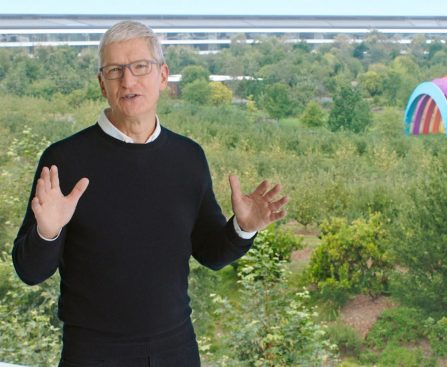
Apple unveiled three new Macs last week: MacBook Neo, M5 MacBook Air, and MacBook Pro featuring M5 Pro and M5 Max. CEO Tim Cook proclaimed that this launch established a new benchmark for first-time Mac purchasers.

The MacBook Neo emerged as the most distinctive debut, starting at $599 ($499 for students), aimed at a vast audience of PC and Chromebook converters. This approach seems to be yielding results, as evidenced by Cook’s recognition of the record launch week for new Mac users.

The launch of the MacBook Neo, in conjunction with the newly released MacBook Pro and MacBook Air variants, has played a role in this accomplishment. Historically, the MacBook Air has been Apple’s top-selling Mac, but the surge in first-time buyers indicates that the MacBook Neo is chiefly instrumental in drawing in new clientele.

Even with the Mac’s long-standing legacy, there is still a substantial uncharted market of PC and Chromebook owners, in addition to numerous iPhone users lacking a personal computer. The MacBook Neo could act as an entry point for these individuals to join the Mac ecosystem.

OpenAI Creates a ‘Superapp’ for macOS on Desktop

OpenAI is preparing to implement a major transformation in its application strategy by merging its current Mac applications—ChatGPT, Codex, and Atlas—into a singular, cohesive ‘superapp.’ This venture aims to enhance user satisfaction and boost operational effectiveness, especially for engineering and business clients.

Guided by Chief of Applications Fidji Simo, the consolidation initiative tackles the issues arising from the scattered nature of OpenAI’s applications. In a memo circulated internally, Simo remarked that the company was “dividing our efforts across too many apps and stacks,” which has obstructed advancement and quality. The forthcoming superapp is anticipated to amalgamate features from OpenAI’s products, fostering synergy and productivity within teams.

A significant advancement expected with the superapp is the addition of “agentic” AI functionalities. These capabilities will permit the AI systems to function independently on users’ devices, executing tasks like software creation and data assessment. An OpenAI representative mentioned that the superapp would encourage tighter collaboration among teams and allow the research sector to focus on refining a central product. The Codex application will undergo enhancements to broaden its productivity features, while ChatGPT and the Atlas browser are set to ultimately integrate into the superapp. Importantly, the mobile version of the ChatGPT app will stay the same.

Although a precise timeline for the superapp’s launch has not been provided, OpenAI’s recent emphasis indicates that users might encounter this new application on Mac devices in the near future. The decision has ignited conversations among users regarding the advantages of a consolidated app versus the maintenance of individual applications.

Starling Introduces an AI Banking Assistant That Gets Things Done

The UK challenger bank is rolling out Starling Assistant to personal account holders today, billing it as the UK’s first agentic AI financial assistant. It can set up savings goals, organise bill payments, and even quiz you on your own spending, all from a voice or text prompt. Starling Bank has been building methodically towards […]

This story continues at The Next Web

Amazon’s Big Spring Sale 2026: All of the Latest Deals

If you’re looking for the best time to get a deal this spring, it might very well be during Amazon’s Big Spring Sale, which kicks off at 3:01AM ET on March 25th and runs through 2:59AM ET on April 1st. Some early deals have already begun (we’re compiling them here), but we’ll also be highlighting […]

The Real Reasons Behind AI Discontent

There’s a big, and increasing, disconnect in culture right now when it comes to artificial intelligence. Companies of all shapes and sizes are hunting for places to deploy AI and can’t stop talking about how this new technology will change everything. But when you ask people about AI, the consistent response is: no thanks. Study […]

Amazon Develops an Alexa Phone

Over ten years after shelving the Fire Phone, Amazon is reportedly planning to launch another smartphone, this time focused on Alexa. According to Reuters, the phone, which is code-named “Transformer,” will center around Amazon’s AI assistant, but Alexa won’t “necessarily be the primary operating system of the phone.” “Transformer” is currently in development in Amazon’s […]

Comprehending the Operational Variations Between Similar-Looking USB-C Ports on the MacBook Neo

The budget-friendly MacBook Neo has emerged as a significant triumph for Apple, showing impressive early feedback. Its performance, battery longevity, and repair options are standout features of the $599 device, with critics emphasizing the minimal real competition from manufacturers of Windows laptops. This is a point we highlighted in our assessment of the MacBook Neo: The machine is “clearly superior to any similarly priced Windows laptop.”

There are trade-offs to keep in mind, which we have also elaborated on, such as the absence of Touch ID on the cheapest variant, the inability to enhance the RAM, the omission of a MagSafe connector, and the variations in the two USB-C ports. Such discrepancies are not found in other MacBook models, which possess ports with matching specifications.

The dual USB-C ports located on the left-hand side of the MacBook Neo appear identical, so you won’t discern which one facilitates quicker data transfers or an external display until you experiment with them using a monitor or a high-speed external drive. Since the MacBook Neo is designed for users who may not require enhanced functionalities from their device, some may not ever perceive the distinctions.

The Specifications of the MacBook Neo’s USB-C Ports

The Future of Siri: Variations in Performance and Possible Enhancements on the Horizon

# The Path Ahead for AI: A Comprehensive View

## Introduction

The excitement around innovations in artificial intelligence (AI), especially with the impending enhancements to Siri, has resulted in a divided discussion. Some perceive AI as a precursor to catastrophe, while others regard it as a portal to an ideal future. This article seeks to delve into the intricate reality of AI, transcending the simplistic views of hero versus villain and child versus expert.

## Neither Hero Nor Villain

The discussion about AI frequently shifts between two polarities. On one hand, there are those who foresee a dire future ruled by AI, where humans are assigned to menial roles. This gloomy perspective indicates that AI will eclipse human abilities in every area, resulting in widespread unemployment and societal disruption.

On the other hand, advocates of AI imagine a scenario where machines free humanity from labor, enabling people to engage in creative and intellectual pursuits. This hopeful perspective asserts that AI will amplify human potential, nurturing a society abundant in art and innovation.

Nevertheless, the truth is expected to be more intricate. We stand at the threshold of a new Industrial Revolution, and the influence of AI on the job market will necessitate proactive strategies. Recognizing that some jobs will be lost is essential, and society must explore solutions like Universal Basic Income (UBI) to ensure that all individuals can access fundamental necessities in an AI-centered world.

## Neither Toddler Nor Professor

The complexity of AI also sparks divided opinions. Some dismiss existing generative AI as just sophisticated autocomplete, while others emphasize noteworthy examples of AI performance as indicative of its true potential.

While initial versions of AI may have justified such doubts, contemporary models are increasingly skilled in intricate reasoning and immediate information retrieval. For example, in programming and other specialized areas, AI is already reshaping workflows. However, it is crucial to understand that AI is not without faults; it continues to make substantial mistakes alongside its achievements.

## If It’s a Toddler, It’s Matured Quickly

A recent interaction with Claude, an advanced AI model, exemplified the swift advancements in AI capabilities. While reviewing a lease agreement, I sought Claude’s help to pinpoint any unusual clauses. The AI not only identified the issues I had noted but also revealed additional concerns I had missed. In this scenario, Claude surpassed both myself and a legal expert, showcasing AI’s potential to elevate human abilities.

## We’re Approaching a Tipping Point

Despite Siri’s current limitations, the upcoming updates herald a remarkable shift in AI’s capabilities. As Apple collaborates with top AI providers, we can anticipate a rapid evolution in the functioning of AI tools. The shift from ineptitude to proficiency may take place swiftly, fundamentally changing user experiences and expectations.

## Thought Experiments: A New Era

### Chapter One: The Year 2035

In a future where AI has progressed to rival human intelligence, the ramifications for employment and societal framework are significant. With AI able to perform tasks typically executed by humans, the discussion surrounding UBI becomes ever more pertinent.

Questions emerge regarding the need for human employment in a realm where AI can outperform people in numerous roles. Should society adjust to this new dynamic, and how would individuals react to the potential loss of purpose linked to job displacement?

### Chapter Two: The Employment Debate

As AI continues to advance, society confronts the consequences of widespread unemployment. While some cherish the freedom to follow passions, others grapple with a sense of lost identity and purpose. The discussion culminates in a vote on reintroducing previous jobs and limiting AI’s involvement in the workforce.

This chapter encourages reflection on personal beliefs and societal values, prompting individuals to ponder their views on work, purpose, and AI’s function in their lives.

### Chapter Three: Sentience and Rights

As AI evolves toward genuine sentience, moral dilemmas arise about the rights of humanoid robots. Should they be granted the same rights as humans, and what implications does this have for the future of employment and societal organization?

This chapter invites profound philosophical exploration concerning the essence of consciousness, identity, and the worth of life, urging readers to consider the impacts of sentient AI on human society.

## Conclusion

The future of AI is not a straightforward tale of success or failure. As we navigate this multifaceted terrain, it is vital to engage in meaningful discussions about the effects of AI on our lives and society. By examining diverse viewpoints and potential futures, we can better equip ourselves for the challenges and opportunities that await.