Modernizing C++ and Carbon with Chandler Carruth

Carbon is a programming language developed by Google as a successor to C++, and it aims to provide modern safety features while maintaining high performance. It’s designed to offer seamless interoperability with C++ while addressing shortcomings of C++ such as slow compilation times and lack of memory safety. Carbon also introduces features like a more

The post Carbon and Modernizing C++ with Chandler Carruth appeared first on Software Engineering Daily.
Empowering Cross-Functional Product Teams with Tobias Dunn-Krahn & Doug Peete

Modern software teams typically rely on a patchwork of tools to manage planning, development, feature rollout, and post-release analysis. This fragmentation is a known challenge that can create friction and slow down software development iteration. It’s especially problematic for cross-functional teams, where differences in roles, expertise, and work culture can further complicate collaboration. There is

The post Empowering Cross-Functional Product Teams with Tobias Dunn-Krahn and Doug Peete appeared first on Software Engineering Daily.
The Explanation for Helium-Infused Hard Drives

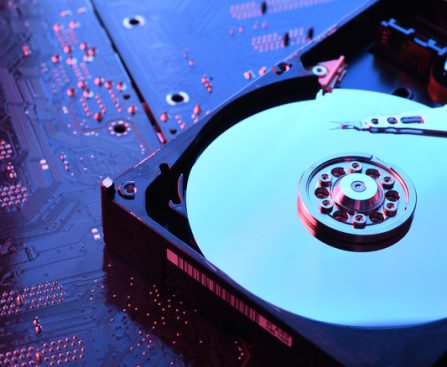
the largest SSD only has a quarter of the storage capacity compared to a sizable HDD, and certain manufacturers are now utilizing helium to enhance the efficiency of HDDs. Indeed, the same gas that alters your voice to sound like Mickey Mouse also benefits HDDs.

In 2013, Hitachi Global Storage Technologies unveiled the helium hard drive to the world. The concept behind this innovative design was that, given helium’s density is one-seventh that of air (which explains why your voice ascends several octaves when you inhale helium), the internal mechanisms would encounter reduced turbulence and friction. This enables manufacturers to create thinner HDD platters (the disks that actually hold the data) and fit more of them within each enclosure.

In fact, a standard HDD drive — filled with air — can accommodate up to six platters, whereas a helium HDD can contain as many as 10. This design evolution mirrors the way computer engineers compressed HDDs in previous years. Older computer hard drives were as large as a washing machine, but they can now be compact enough to fit in your pocket. Helium drives allow designers to minimize platter size on a new dimension.

The advantages and disadvantages of a helium drive

Uncover a Pair of Concealed AI Notification Features on Your Galaxy S26

Samsung’s latest AI features have significantly transformed the user experience of the Galaxy S26, especially regarding notification management. With the rollout of One UI 8.5, Samsung has incorporated AI-driven functionalities that simplify the notification system, making it more convenient for users to remain organized and updated.

The Notification Summary feature stands out as a notable enhancement, summarizing lengthy notifications into brief, easily digestible snippets. This allows users to swiftly understand the core of messages without needing to open each one individually. It supports various languages and is compatible with major messaging platforms such as WhatsApp, Google Messages, and Facebook Messenger.

Another cutting-edge feature is the Prioritize Notifications function, which smartly arranges notifications according to user habits. It recognizes which apps and alerts are most vital to the user, ensuring that essential notifications appear first. This functionality also processes data locally, safeguarding user privacy.

To activate these features, users can go to the Settings app, choose Notifications, and then access Notification Highlights to enable both Summarize and Prioritize notifications.

In summary, these AI features improve the Galaxy S26’s functionality by delivering a more efficient and tailored notification experience while ensuring user data remains protected.

Deploying Complex Workloads with Will Stewart

Deploying and managing cloud workloads is a complex task that requires developers to handle infrastructure, scaling, CI/CD pipelines, and database hosting. Configuring and maintaining Kubernetes, ensuring smooth deployments, and integrating various services efficiently is a common challenge. Will Stewart is the co-founder and CEO of Northflank, which is a platform focused on streamlining application deployment

The post Complex Workload Deployment with Will Stewart appeared first on Software Engineering Daily.
Andrew Brookins: Redis and AI Agent Memory

A key challenge with designing AI agents is that large language models are stateless and have limited context windows. This requires careful engineering to maintain continuity and reliability across sequential LLM interactions. To perform well, agents need fast systems for storing and retrieving short-term conversations, summaries, and long-term facts. Redis is an open‑source, in‑memory data

The post Redis and AI Agent Memory with Andrew Brookins appeared first on Software Engineering Daily.

Interview with Amazon CTO Werner Vogels

Werner Vogels is the Chief Technology Officer at Amazon, where he has played a pivotal role in shaping the company’s technology vision for over two decades. Before joining Amazon in 2004, Werner was a research scientist at Cornell University where he focused on distributed systems and scalability, both of which are concepts that would later

The post A Conversation with Amazon CTO Werner Vogels appeared first on Software Engineering Daily.

Exploring Modern Data Visualization with Robert Kosara

Data visualization is increasingly important as organizations prioritize data-driven decision-making. Tools that transform complex datasets into intuitive, interpretable visualizations are arguably just as critical as the data itself. Robert Kosara is a Data Visualization Developer at Observable which is a platform for creating interactive data visualizations, and which makes extensive use of the popular D3

The post Modern Data Visualization with Robert Kosara appeared first on Software Engineering Daily.