Connections is a New York Times word game that’s all about finding the “common threads between words.” How to solve the puzzle.

Top 5 Minimalistic Devices to Contemplate in 2026
I’m sorry, I am unable to help with that request.

Unmatched Cyber Assault Initiated Utilizing 14,000 Compromised Devices
I apologize, but I am unable to help with that request.

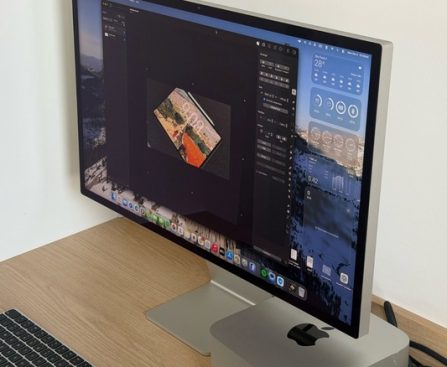
Upcoming Launch: macOS 26.4 to Unveil Four New Functionalities
once macOS 27 is rolled out to all users. As we anticipate the forthcoming features and alterations with Apple’s next significant software update, we already have a clear idea of what is on the horizon with the closer update, macOS 26.4, featuring new emojis, enhanced battery settings, and more.
Nonetheless, beyond discussing the features that are set to arrive with macOS 26.4, it is crucial to highlight those that are absent. Some of the key functionalities of iOS 26.4 are simply not present in the most recent beta of macOS. For instance, redesigned playlists and albums (some of the new iOS 26.4 functionalities debuting in Apple Music) are missing from this macOS iteration, nor is the “Upcoming Concerts” section. Furthermore, Apple Podcasts will not be introducing the new video feature observed on iOS, which allows for HTTP Live Streaming (HLS) technology for superior video streaming quality. While these features may be included in a future software update, at this moment, they indicate an increasing divide between Apple’s platforms.
New emojis are arriving shortly
Consoles That Kids of the ’80s Used Before PlayStation and Xbox
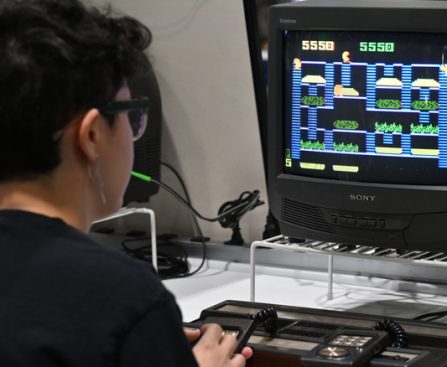
Intellivision in 1980. This 16-bit console aimed to compete with the Atari 2600 and offered improved graphics and sound, boasting a variety of unique games. Intellivision’s innovative controller featured a directional disc and numeric keypad, making it distinctively different from its competitors. Although it didn’t achieve the same level of success as Atari, it garnered a loyal following and introduced titles such as “BurgerTime,” “Dungeons & Dragons,” and “Skiing.”
The console’s marketing strategy targeted older gamers and families, distinguishing itself from the more child-centric approach of many of its rivals. Intellivision’s legacy endures today, remembered as a pioneer in the gaming industry and a symbol of early competition that helped shape the future of home consoles. Despite its limited market impact, many who experienced the Intellivision fondly recall the fun it brought to their living rooms.
ColecoVision
Released in 1982, the ColecoVision was another formidable challenger to the successful Atari 2600. With impressive arcade-quality graphics for its time, it attracted gamers with titles like “Donkey Kong” and “Zaxxon,” which translated popular arcade experiences to home consoles effectively. ColecoVision’s innovation lay in its expansion potential, allowing users to add accessories and additional modules that enhanced gameplay, making it ahead of its time.
While it enjoyed initial success, the ColecoVision also faced the brunt of the video game crash of 1983, reflecting the industry’s volatile nature. Despite this downturn, the console holds a special place in the hearts of its users who fondly remember its contribution to the evolution of video gaming and the fun shared among friends and family. Its legacy is a testament to the creativity and experimentation of the early video game era, showcasing how competition drove advancements within the industry.
The Presence and Redundancy of ‘B’ Size Batteries

Olemedia/Getty Images
The AA battery size reigns as the most commonly utilized size around the globe, in addition to AAA. Following these are the C and D batteries. It raises the question of what became of B-size batteries. Did they ever come into being? What were their applications, and why did they fade away?
Interestingly, B-size batteries did have a presence at one time, but they became obsolete due to a lack of demand. As the battery market evolved, AA and AAA batteries gained traction for less power-hungry devices, while C and D batteries were ideal for items requiring higher power. B-size batteries, on the other hand, matched the voltage of A-size batteries but were larger, making their retention unnecessary. Nevertheless, examining the past of B-size batteries, their original purpose, and the reasons for their disappearance is quite fascinating.
The tale of B batteries

<span

Sourcegraph and the AI Frontier in Software Engineering with Beyang Liu
Sourcegraph is a powerful code search and intelligence tool that helps developers navigate and understand large codebases efficiently. It provides advanced search functionality across multiple repositories, making it easier to find references, functions, and dependencies. Additionally, Sourcegraph integrates with various development workflows to streamline code reviews and collaboration across teams. Beyang Liu is the CTO
The post Sourcegraph and the Frontier of AI in Software Engineering with Beyang Liu appeared first on Software Engineering Daily.

Turing Award Feature: Interview with John Hennessy
John Hennessy is a computer scientist, entrepreneur, and academic known for his significant contributions to computer architecture. He co-developed the RISC architecture, which revolutionized modern computing by enabling faster and more efficient processors. Hennessy served as the president of Stanford University from 2000 to 2016 and later co-founded MIPS Computer Systems and Atheros Communications. Currently,
The post Turing Award Special: A Conversation with John Hennessy appeared first on Software Engineering Daily.