Hackers working for Iranâs government are using Telegram in hacking operations that use malware to target dissidents, opposition groups, and journalists who oppose its regime, according to the FBI.

Munich Startup Interloom Secures $16.5M in Funding

The Munich startup is building what it calls a âcontext graphâ, a continuously updated map of how operational decisions actually get made inside an enterprise, drawn from millions of real cases rather than documentation that may never have been written. There is a particular friction point in every enterprise AI deployment, and anyone who has […]
This story continues at The Next Web

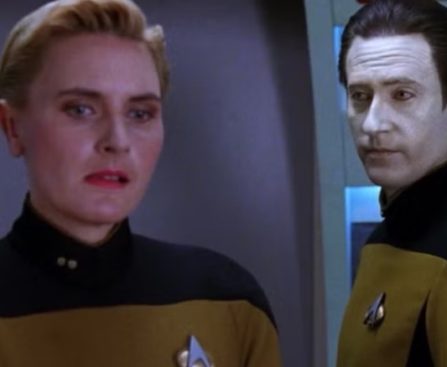
The Muse for Star Trek’s Data and Tasha Yar: An ’80s Science Fiction Film
(who also created “Andromeda,” don’t you know?) drew inspiration from the 1986 action sci-fi hit “Aliens,” helmed by AI-averse film icon, James Cameron, which came out a year prior to the show’s premiere, particularly with the tough colonial marine, Vasquez (Jenette Goldstein) and the movie’s android, Bishop (Lance Henriksen).
“After ‘Aliens,’ Gene would mention Jenette Goldstein, ‘That woman established a brand new standard of feminine beauty,” Gerrold recalled in the book by Edward Gross and Mark A. Altman, “The Fifty-Year Mission: The Next 25 Years.” “‘We ought to have something similar in Star Trek.’ Hence, we initiated with a character named Macha Hernandez, who ultimately evolved into Tasha Yar.” Regarding Data, while the similarities between Spiner’s character and the android in “Aliens” are noticeable, there were additional character attributes in the android that were also derived from some original “Star Trek” series.
Data was fashioned from Bishop and two legendary Star Trek figures
<div class="slide-key image-holder gallery-image-holder credit-image-wrap" data-post-url="https://www.bgr.com/2126587/star-trek-data-tasha-yar-80s-sci-fi-movie
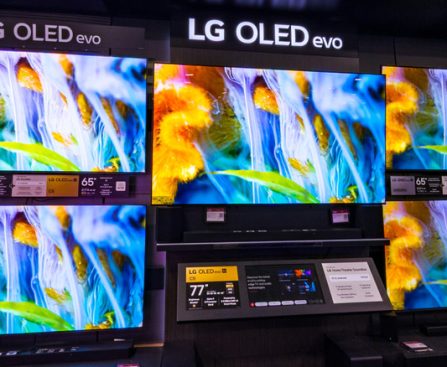
Prospective Advancement for Long-lasting OLED Displays Coming Soon
TV manufacturers have transitioned to OLED technology due to its ability to offer deeper contrast, vivid colors, and exceptional picture quality. Nevertheless, the technology is not entirely flawless — just yet. A crucial element still eludes producers, which is essential for crafting a genuinely durable OLED display.
This challenge is referred to as the blue pixel dilemma. Light is generated through red, green, and blue pixels at different intensities to produce a complete range of colors on display. However, achieving the deep-blue light emission, responsible for making cooler colors appear so vivid on an OLED screen, demands a greater amount of photon energy. This significant energy demand results in various specific disadvantages in OLED displays, including faster deterioration of the blue pixels and marked energy inefficiency overall.
<pFortunately, several companies are nearing a resolution to the blue pixel dilemma. In February 2026, the South Korean company specializing in OLED materials, Lordin, revealed that it was close to bringing high-efficiency phosphorescent blue OLED panels to market. Lordin has established mass production capabilities in India and has access to deuterium, which can enhance the lifespan of different OLED materials. With intentions to secure $25 million in funding prior to its initial public offering, Lordin stands a strong chance in the competition to produce OLED panels with unprecedented longevity.
Phosphorescent OLED represents the future of enduring displays
Adzuna Acquires Job Verticals from Trovit and Mitula
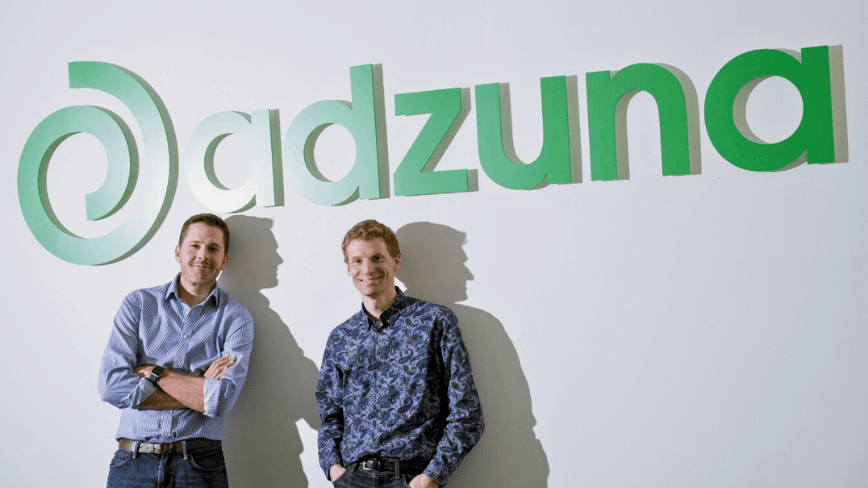
The UK job search engine has acquired the employment divisions of two multi-vertical classifieds aggregators from Lifull Connect, bolstering its presence in Spain, Italy, and Latin America as its Japanese parent offloads non-real-estate assets. Adzuna has acquired the jobs verticals of Trovit and Mitula from Lifull Connect, the digital classifieds group controlled by the Japanese […]
This story continues at The Next Web

Instagram’s Modification in Encryption Policy Elevates User Risk
Meta’s Change on End-to-End Encryption: A Regretful Step Back for Privacy
Meta Platforms, Inc. has been under intense scrutiny concerning the safety and privacy of its messaging platforms, particularly Facebook Messenger and Instagram Direct Messages (DMs). For years, the organization asserted that executing end-to-end encryption (E2EE) was a notable challenge. Nonetheless, in 2023, Meta declared that it had addressed these technical hurdles, resulting in the deployment of E2EE for Facebook Messenger by year’s end.
Despite this advancement, Meta’s recent choice to discontinue E2EE for Instagram DMs has sparked substantial apprehension among users and privacy defenders. Initially, the corporation had vowed to provide E2EE for Instagram DMs, but this functionality was hidden within the app’s settings, making it arduous for users to locate and enable. As a result, very few users engaged with it, leading Meta to eliminate the feature entirely, citing minimal engagement as the rationale.
This action has faced criticism as insincere and callous, as the feature was crafted in a manner that rendered it nearly undetectable to users. Davi Ottenheimer, a security professional, pointed out the irony in Meta’s choice, indicating that the company constructed a scenario where the feature’s lack of popularity was unavoidable.
The repercussions of Meta’s reversal on E2EE are troubling. By removing this vital privacy function, Meta not only threatens the security of user messages but also establishes a disturbing precedent for other technology firms. The choice reflects a wider tendency where companies may favor conformity with governmental demands over user privacy, potentially leading to heightened surveillance and data exposure.
In contrast, Apple has shown a commitment to user privacy, even indicating a willingness to pull iMessage from the UK market rather than compromise security. This position emphasizes the significance of companies resisting governmental pressures that could erode user privacy.
As messaging applications continue to multiply, users frequently discover themselves maneuvering through numerous platforms due to the preferences of friends. The elimination of E2EE from Instagram DMs endangers users’ privacy and brings forth concerns regarding the future of secure communications in an increasingly connected world. The scenario demands vigilance and advocacy for enhanced privacy safeguards across all messaging services.
Apple Improves Sports App with New Features for MLB and NASCAR Enthusiasts
Apple has launched a refreshed version of its Sports app for iPhone, unveiling two major features that will improve the experience for MLB and NASCAR enthusiasts.
### MLB Probable Pitcher
The recent update, version 3.9, now introduces a new data point for Major League Baseball: the anticipated starting pitcher for each matchup. This feature enables MLB fans to know which pitcher is set to begin the games ahead of time. The 2026 MLB season commences with an Opening Night game featuring the San Francisco Giants against the New York Yankees at Oracle Park in San Francisco, with Netflix exclusively streaming the event.
### NASCAR Leaderboard Update
Alongside the MLB enhancement, the Sports app has refined its NASCAR leaderboard by incorporating car numbers. This upgrade simplifies the process for fans to monitor their favorite drivers during the races. The ongoing NASCAR season, which started in February, will run through November, offering plenty of opportunities for new fans to connect with the sport.
### Apple Sports Availability
Recently, Apple introduced March Madness brackets to the Sports app, which has experienced unprecedented downloads following its inaugural Formula 1 race weekend. Apple TV is now the exclusive provider of F1 streaming in the United States, with all race coverage available through the subscription. Furthermore, Apple TV continues to showcase Friday Night Baseball, with the initial MLB games of the season slated for March 27.
The Apple Sports app is available for free on the App Store, enabling sports fans to remain informed about the latest updates in their preferred leagues.

Meta’s CEO Develops Personal AI Assistant for Executive Tasks

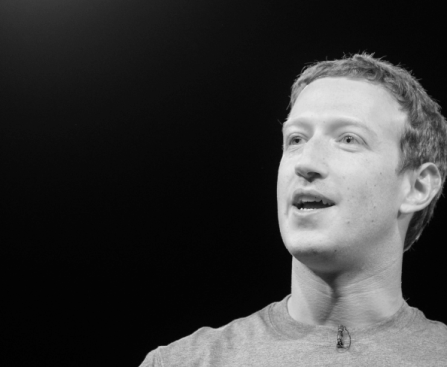
Mark Zuckerberg is building an AI agent designed to assist him with his duties as chief executive of Meta. According to reporting by the Wall Street Journal, the system remains in development but already functions as an on-demand information tool that allows the chief executive to access data faster than traditional hierarchical channels would permit. […]
This story continues at The Next Web
Facing the CEO of the AI Company That Impersonated Me
Today, Iâm talking with Shishir Mehrotra, who is CEO of Superhuman â thatâs the company formerly known as Grammarly, which is still its flagship product. Shishir also used to be the chief product officer at YouTube, and heâs on the board of directors at Spotify. Heâs a fascinating guy, and we actually scheduled this interview […]

Nebraska Aims to Create Battery Storage Solutions for Renewable Energy
causing more issues than merely increasing utility costs; they are generating noise pollution and depleting water resources, therefore if this energy backup is intended to assist in those areas, it is unlikely to make a significant difference.
What does the Nebraska energy storage legislation entail?