Apple TV Reveals Continuation of Space Series “For All Mankind” for Sixth and Last Season

Apple TV has formally revealed the renewal of its praised space drama, “For All Mankind,” for a sixth season, which will act as the series conclusion. This news signifies a major achievement for the show, as it was one of the initial titles available when Apple TV+ debuted in November 2019.

The sixth season will grant the creators the chance to wrap up all narratives as originally envisioned, making it one of the rare contemporary sci-fi streaming series to finalize on its own accord rather than being cut short.

The fifth season of “For All Mankind” is scheduled to launch on March 27, with new episodes arriving weekly on Apple TV+. The season finale is expected on May 29, coinciding with the debut of a new spinoff series titled “Star City.”

“For All Mankind” was one of Apple’s initial offerings, alongside other original shows like “SEE,” “Dickinson,” and “The Morning Show.” While “SEE” and “Dickinson” concluded after three seasons each, “The Morning Show” is presently in production for its fifth season. As things stand, “For All Mankind” is tied with “The Morning Show” as Apple’s longest-running original series by premiere date.

In terms of season count, the title of longest-running series goes to “Slow Horses,” which launched in 2022 and has received renewal for a seventh season, with an eighth likely forthcoming.

The series itself delves into an alternate history of the space race, with each season incorporating a time jump that mirrors the technological and geopolitical dynamics of a new decade. The fifth season will unfold during the 2010s, concentrating on a flourishing base on Mars that encounters various challenges.

Viewers can catch up on the complete series on Apple TV+ before the fifth season kickoff this Friday.


Pagaya Demonstrates Wall Street’s Willingness to Buy AI-Underwritten Auto Loans Again

Three years ago, institutional investors took a leap of faith when they purchased bonds backed by auto loans that an algorithm had selected. Now Pagaya Technologies is asking them to do it again, with the very same loans. The Israeli-founded, New York-headquartered fintech announced on Monday that it has closed a $450 million auto resecuritization […]

This story continues at The Next Web

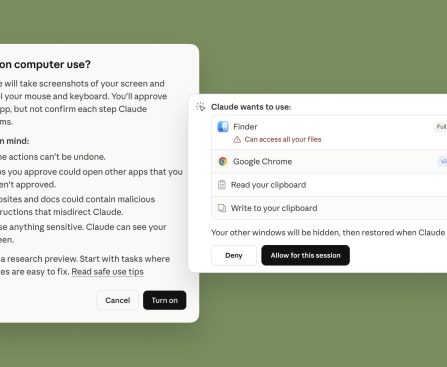
Anthropic’s Claude Code and Cowork Can Control Your Computer

Anthropic has updated Claude to perform tasks in its Code and Cowork AI tools autonomously by using your computer for you. The new feature can be used to automatically open files, use web browsers and apps, and run dev tools “with no setup required,” even when you’re away from your computer, according to Anthropic’s announcement. […]

For All Mankind to Conclude with Season 6

For All Mankind starts streaming again this week, with its fifth season set to premiere on March 27th. But Apple is also taking this moment to clarify the show’s future – it’s been renewed for a sixth season, which will also be its last. For All Mankind premiered in 2019 as part of Apple TV’s […]

The MPC Sample: My Favorite Portable Beat Maker

Akai MPC is one of the most storied names in music history. But over the last decade, it’s strayed pretty far from its roots as a humble sampler. The modern MPCs run virtual synthesizers, have complex arrangement tools, and sport large touchscreens. They have more in common with your computer running a DAW than they […]

Creative Uses of Vibration Sensors for Residential Purposes

smart home necessities that everyone ought to be utilizing. Some of these are perfect for casual smart home users, such as smart speakers and smart TVs, while others are more beneficial for individuals seeking to automate their residences — vibration sensors exemplify this well. These are compact, placeable gadgets designed to provide you with digital notifications when an event happens — for instance, they can inform you when a door is opened, when a mailbox is accessed, when a washing machine completes its cycle, and many other occurrences.

To utilize a vibration sensor, simply position the device wherever desired, such as on a sliding glass door, and when it senses vibrations, tilts, drops, or general movement, it will issue an alert to your phone or smart home hub. This can enhance the security of entry points, while also keeping you updated about activities around your home — such as when the washer or dryer has completed its cycle and it’s time to transition clothes between machines or fold them. Ultimately, there are several innovative ways to employ vibration sensors throughout your home and property, and we’ll discuss a few options below.

1. Be notified instantly when a door or window opens

The clearest application for a vibration sensor is to secure an entry or exit point within your home, including doors and windows. For instance, you could install a sensor on your front door, a side entrance, a bedroom window, your garage portal, or even a patio or sliding glass door. When the door opens, or when someone manipulates it if locked, you’ll be alerted via the vibration sensor. This serves as an excellent way to enhance your home’s security system if you’re already using cameras, a smart lock, and other similar devices. Of course, it remains beneficial even if it is your sole security device.

Rationale Behind the Lack of Countdown Timers on Traffic Signals in the United States

U.S. Department of Transportation. Although not excessively strict, these regulations are firm and require significant time to amend. The Department of Transportation is receptive to implementing systems that modify light cycles based on traffic flow, but the same cannot be said for the installation of new lights that deliver additional information — the cameras mounted on traffic signals do not qualify. The primary issue is that introducing timers to traffic signals may confuse drivers, resulting in distracted driving and an increase in accidents.

Another obstacle, though somewhat theoretical, is the expense associated with such a project. The installation of the required module would range from $190 to $1,930 per traffic signal, and the total count of traffic lights in the United States remains unknown. We only recognize that there are hundreds of thousands, many of which are in urgent need of maintenance. So what should take precedence? Should we enhance the signals, incorporate a fourth color to suit the increasing number of autonomous vehicles, or set up timing modules? There is a limited budget available.

Countdown timers are indeed advantageous

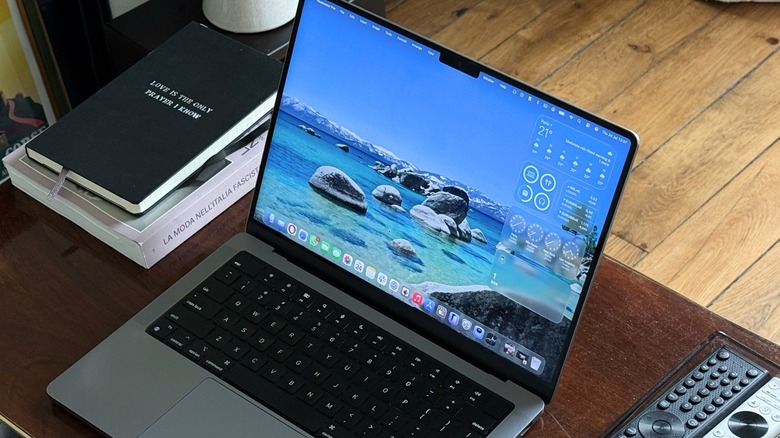
Leading MacBook Apps to Leverage in 2026

A MacBook serves as a robust instrument for students, professionals, coders, creators, or casual web surfers. Having owned a Mac for more than half of my life, I have tried numerous applications that have been invaluable in completing school assignments, editing a podcast for my journalism program, and performing my professional duties. From a focus application named Portal, which can whisk me away to stunning locales across the globe, to Opera One, which offers powerful multitasking capabilities within a streamlined browser, there are countless MacBook applications worthy of your attention in 2026.

Some can be found in the Mac App Store, while others are available for download directly from the developer’s site. There is a mix of free and premium applications, all of which simplify my daily tasks, whether I need a moment to relax, require a quick lookup, or need to verify a login.

Although I could mention popular choices like Apple’s Pixelmator Pro, Ulysses, ExpressVPN, or Slack—apps I also rely on regularly—the applications listed below are versatile and make excellent additions to anyone’s Dock. The best part is that many are free (or at least offer a free trial).

Portal – Escape Into Nature

March Update Brings Significant Quality of Life Enhancement to Android Devices

Android and iPhone devices often seem ineffective for various tasks, as a majority of applications require internet access. Since Wi-Fi typically offers greater stability and speed compared to cellular data, most users favor it over mobile connections. Following the March 2026 update, Android is set to simplify the process of connecting to Wi-Fi, allowing users to enter their login details just once and enabling Wi-Fi access across their devices.

A Google support document indicates that the Wi-Fi sync functionality is included in the Google Play services v26.10 update launched in mid-March for both PCs and phones. “Wi-Fi Sync assists in keeping users’ devices connected online by facilitating the sharing and synchronization of recognized, trusted Wi-Fi networks throughout a user’s personal device ecosystem, ensuring that whenever connectivity is present, it’s promptly and effortlessly obtainable,” claims Google.

The precise operation of this feature and the number of supported devices, especially on Chromebooks, remains uncertain. Google is developing its own ChromeOS operating system, which it is currently integrating with Android as part of its Aluminum OS strategy. In mid-August 2025, Google Play services v25.32 introduced a comparable feature: “Wi-Fi Sync allows you to share and synchronize trusted Wi-Fi networks across all your devices for convenient connectivity.”

How the feature might operate

[embedded content]