Google Addresses Gemini Problems for Home, Enhancing User Experience

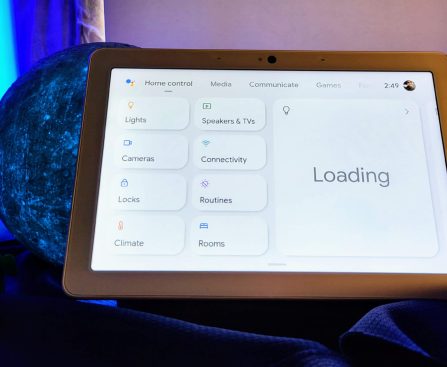
The latest Google Home update has rolled out a range of thrilling features, enhancing user interaction and broadening its functionalities. A key highlight is expressive lighting, enabling users to manage smart bulbs using more conversational language. Rather than naming precise colors, users can now describe hues with phrases like “the shade of the ocean” or “the radiance of the moon,” and Google Home will adjust the lighting to match.

Moreover, the update introduces enhanced language support, increasing the assistant’s accessibility for a larger audience. Spanish is now supported across all compatible regions, and early access to Gemini for Home has launched in Mexico. This extension ensures that more individuals can take advantage of the smart assistant’s features.

Additionally, the update improves device recognition and management. Users are no longer required to memorize specific device names or commands, as Gemini can now comprehend casual expressions and context more effectively. This advancement minimizes confusion between similar devices, such as differentiating between a “lamp” and a “light.”

For families, the update is especially advantageous as it permits children with supervised Google accounts to utilize Gemini for Home. This capability fosters both learning and entertainment, offering help with activities like spelling or sharing jokes.

Furthermore, the Google Home app has been refreshed to accommodate new Android 16 features, such as edge-to-edge display and predictive back gestures, enhancing the overall user interface and experience.

In summary, the new Google Home update emphasizes making interactions more user-friendly and broadening its capabilities to serve a varied user demographic.
Apple Celebrates 50th Anniversary with Unique Animated Homepage Tribute

**Apple Honors 50 Years of Innovation with Unique Animation and Events**

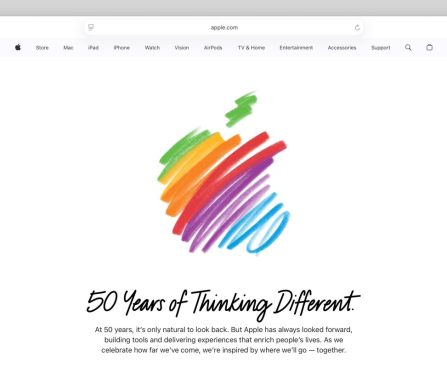
In celebration of its 50th anniversary, Apple has revamped its website homepage to include a unique animation video that showcases some of the brand’s most celebrated inventions. This animated sketch art highlights iconic items like the original Mac, the iMac, the iPod, the App Store, the Apple Watch, the iPhone 17 Pro, Vision Pro, and additional products, all presented in an engaging illustrative manner.

April 1st marks the exact 50th anniversary of the collaboration between Steve Jobs and Steve Wozniak, which began in Jobs’ family garage where their initial manufacturing and operations were established. The subsequent year saw the official incorporation of Apple Computer Inc.

Although Apple generally emphasizes looking ahead instead of dwelling on the past, the company has made an exception for this important milestone. In the weeks prior to the anniversary, Apple has held celebratory concerts at various Apple Store locations around the globe, including a private performance by Paul McCartney at Apple Park.

The homepage features a heartfelt message:

“**50 Years of Thinking Different**
At 50 years, it’s natural to reflect. However, Apple has consistently looked to the future, creating tools and providing experiences that enhance people’s lives. As we celebrate our achievements, we’re motivated by our future — together.”

As Apple reflects on its evolution from a small startup to a leading industry player, further special coverage is expected throughout the week, highlighting the company’s historical growth and its influence on technology and culture.

Apple Lowers Cost of Studio Display XDR Without Stand Option by $400

### Apple Studio Display XDR Price Reduction: Key Information

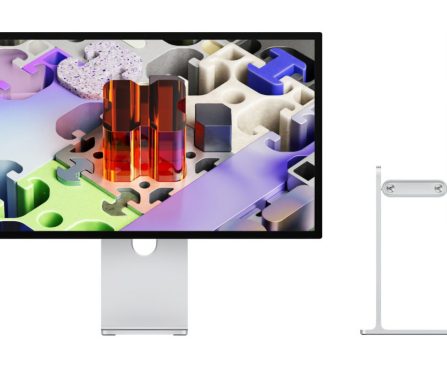
Apple has recently revealed a notable price reduction for its Studio Display XDR, which was introduced just last month. Originally priced at $3,299 for both the VESA mount variant and the model equipped with Apple’s tilt-adjustable stand, the VESA mount variant has now seen a $400 decrease, resulting in a new price of $2,899. This adjustment is an uncommon event in Apple’s pricing approach, particularly so soon after a product’s release.

#### Explanation of Price Adjustments

The reduction in price for the VESA mount variant indicates that the production costs for this model are significantly lower compared to the version that comes with the stand. It prompts inquiries into why this difference was not reflected in the pricing initially. Nonetheless, a 12% price decrease within a month of launch is unusual for Apple products, which are generally recognized for their consistent pricing.

Along with the price alteration, Apple has modified the purchasing process on its website. The updated flow highlights the lower-priced VESA mount variant right from the beginning. Previously, customers were first asked to select between glass textures—standard or nano-texture. Now, the initial step in the buying experience is to choose the stand option, allowing customers to identify the most economical configuration right away.

#### Effects for Consumers

For those interested in acquiring Apple’s premium monitor but who already possess a VESA-compatible stand, this price reduction offers a valuable chance to save $400. However, it should be noted that the non-XDR Studio Display has not experienced a comparable price drop. Both the stand and VESA mount options for this model continue to be priced at $1,599, with the standard tilt-adjustable stand included, while the height-adjustable version remains a $400 upgrade.

#### Summary

The recent price reduction for the Studio Display XDR underscores Apple’s adaptability to market conditions and consumer demands. For prospective buyers, especially those with pre-existing VESA-compatible setups, this adjustment enhances the appeal of the Studio Display XDR. As always, consumers should evaluate their specific needs and existing equipment before deciding to purchase.

Finnish Neurowellness Startup Audicin Secures $1.9 Million in Funding

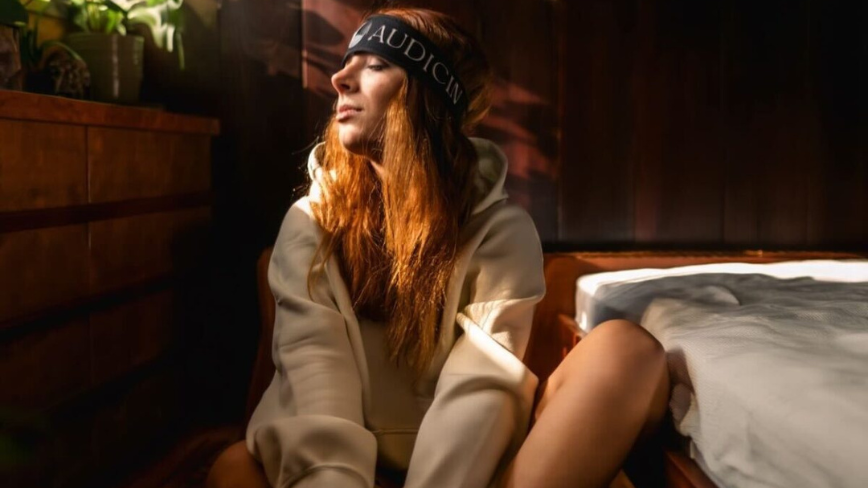
The all-female-founded company, backed by Oura Health co-founders and Business Finland, uses brainwave entrainment to support focus, sleep, and recovery via background audio. Its new Sleep Headband targets secure environments where phones are banned. Audicin, the Finnish neurotechnology company using brainwave entrainment and auditory engineering to support nervous system regulation, has raised $1.9 million in […]

This story continues at The Next Web

Google Introduces New Fitbit Inspired by Whoop, Revealed by Steph Curry

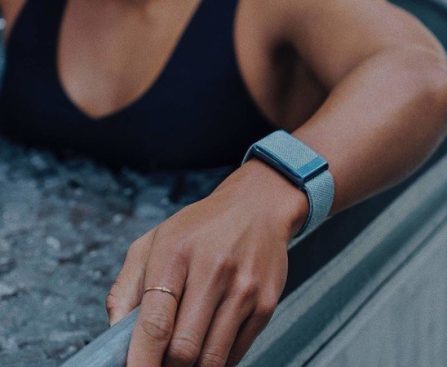
The forthcoming Fitbit gadget, hinted at by Google, is poised to transform our health tracking experience with its groundbreaking screenless design. This innovative wearable, featured in a video by basketball icon Steph Curry, includes a textile band and focuses on health monitoring without requiring a display. The device is anticipated to provide fundamental tracking capabilities at no cost, while more sophisticated insights are likely to be accessible through a Fitbit Premium subscription.

This strategy resembles the model employed by Whoop, a brand recognized for its screenless fitness trackers that depend on smartphones for comprehensive health information. Google’s foray into this arena indicates a rising trend towards minimalist wearables prioritizing functionality and data precision over visual feedback.

The promotional video alludes to a “new relationship with your health,” implying that this Fitbit device could connect with Google’s AI health endeavors, possibly providing tailored health coaching and insights. Although no official release date has been disclosed, the participation of a prominent athlete like Curry suggests that the launch may be imminent.

As the marketplace for screenless fitness trackers grows, Google’s upcoming Fitbit could establish a new benchmark for health monitoring technology, presenting users with a smooth and unobtrusive method to remain updated about their wellness.

Telink TL3228: Energy-efficient Dual-core RISC-V Wireless MCU with Bluetooth 6.0, 802.15.4, and 2.4 GHz Proprietary Support

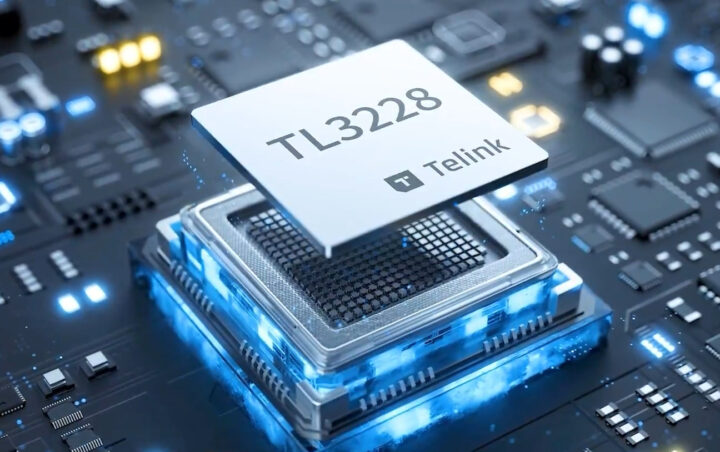
TL3228

Telink has launched the TL322x wireless MCU family, starting with the TL3228, featuring a 192 MHz dual-core RISC-V MCU, and supporting Bluetooth 6.0, Matter, Thread, Zigbee, RF4CE, and proprietary 2.4GHz protocols for Smart Home, asset tracking, “8K” gaming accessories, and more The chip supports the recent Bluetooth features such as Channel Sounding, AoA/AoD, and LE Audio, as well as the company’s proprietary HDT technology delivering up to 6 Mbps data rate and ultra-low latency. Telink TL3228 specifications: Dual-core CPU 32-bit Andes D25F RISC-V core with FPU up to 192 MHz 32-bit Andes N22 RISC-V core Memory – 384 KB SRAM Storage – 2.5 MB of NVM (Flash + RRAM) Connectivity Bluetooth 6.0 Channel Sounding Mesh Networking Bluetooth LE AoA/AoD location services 802.15.4 radio for Zigbee, Thread, Matter, RF4CE 2.4GHz Proprietary 2.4GHz radio data rates – 1Mbps, 2Mbps, 4Mbps, 6Mbps; Bluetooth LE PHY: LE 2M, LE Coded Bluetooth LE Multiple Connections – 4x […]

The post Telink TL3228 – Low-power, low-latency dual-core RISC-V wireless MCU supports Bluetooth 6.0, 802.15.4, and 2.4 GHz proprietary appeared first on CNX Software – Embedded Systems News.

Apple Unveils iOS 18 Update to Counter DarkSword Exploit for Users Who Are Not Transitioning to iOS 26

Apple plans to launch an iOS 18 update on Wednesday morning to fix vulnerabilities exploited by the DarkSword hacking tool. This comes after a number of updates directed at earlier iOS versions, particularly focusing on two vulnerabilities known as Coruna and DarkSword. Coruna impacts devices running iOS 13 through iOS 17.2.1, whereas DarkSword affects iPhones on iOS 18.4-18.7.

Both vulnerabilities make use of multiple weaknesses, mainly through WebKit, to compromise devices. In response, Apple has issued several updates, including:

– iOS 15.8.7 and iPadOS 15.8.7 for older models such as iPhone 6s and iPad Air 2.
– iOS 16.7.15 and iPadOS 16.7.15 for devices like iPhone 8 and iPad Pro 9.7-inch.
– iOS 18.7.7 and iPadOS 18.7.7 for newer models like iPhone XS and iPad 7th generation.

Although Apple has patched iOS 18 for devices that aren’t capable of running iOS 26, those that are compatible with iOS 26 but haven’t yet updated remain exposed. To remedy this situation, Apple has stated it will deliver an updated version of iOS 18 with safeguards against the DarkSword vulnerability, similar to what is included in iOS 26. Users with auto-update enabled will receive this automatically, whereas those who have it disabled can opt for the patched iOS 18 or choose to upgrade to iOS 26.

This preemptive action follows the revelation of DarkSword being publicly accessible on GitHub, heightening the risk for users. It is essential for anyone still on iOS 18 to promptly update their devices as soon as the patch is made available.