Luxury iPhone Attributes Genuine Fragment of Steve Jobs’ Turtleneck

On October 5, 2011, Steve Jobs passed away as a result of complications from a pancreatic tumor. The individual propelled Apple into fame and was seldom spotted on stage without his signature black turtleneck. This piece of apparel was unadorned yet is arguably more recognizable than Mario’s red-and-white branded cap. Now, you have the opportunity to possess a portion of the turtleneck — for a considerable price.

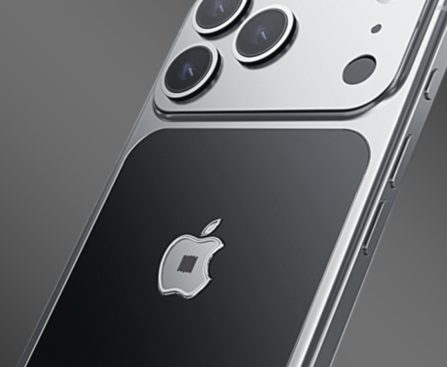
Caviar, a brand renowned for its luxury iPhones, has recently unveiled the Apple 50th Anniversary Collection, which features three phones. Two of these devices are customized black iPhone 17 Pros, while the third pays homage to the original iPhone by incorporating part of Jobs’ sweater into the casing. No, it isn’t the large black rectangle on the phone’s back featuring Jobs’ signature inscribed into the case. That small black square at the heart of the Apple logo? That’s the fragment of the turtleneck that supposedly makes this phone extraordinary.

According to Caviar, this sliver of fabric originated from the turtleneck that Jobs was donned in when he unveiled the NeXT computer to audiences in 1988. The reasoning behind the company selecting the attire Jobs wore for one of his major product failures, instead of, say, the turtleneck he sported during the original iPhone launch, remains unclear. In fact, if you view the video of the NeXT computer launch, it appears Jobs is not wearing a turtleneck. Perhaps it was beneath his suit? Yet, Caviar asserts that the fabric has been authenticated, so we must take their word for it.

This phone will come with a hefty price tag

Caviar’s Jobs iPhone is not the premiere instance of Steve Jobs’ personal belongings being marketed as collectibles. His 1973 job application sold for $50,000 at auction, although this phone does not come close to that valuation, it is still significantly one of the most expensive operational Apple products on the market.

Caviar offers two variations of the customized phone: an iPhone 17 Pro version and an iPhone 17 Pro Max variant. Both can be ordered with either 256 GB, 512 GB, 1 TB, or 2 TB of storage. At the “lowest” price point (the 256 GB iPhone 17 Pro), this device will cost you $9,630, whereas the iPhone 17 Pro Max 2 TB model reaches an impressive $11,560. Delivery is complimentary, but taxes and customs fees are not included in the price; the latter can range from $40 to $200, depending on your location. Additionally, you will have to wait somewhere between one week and four months to receive your phone after Caviar has completely finished production.

Each unit of this phone comes with a certificate of authenticity and a one-year warranty. However, since the device is deemed a “museum-worthy collector’s item” (these are Caviar’s words, not ours), it might be wiser to keep it at home where it remains protected. This way, it can be the cherished centerpiece of your collection for many years, if not decades.
Nothing Allegedly Creating AI Smart Glasses Anticipated to Release Next Year

It appears the company is aiming to explore another market. An unexpected report has emerged, indicating that Nothing intends to venture into the realm of AI-driven smart glasses.

This speculation was reported by Bloomberg, citing an unnamed source who claims that Nothing’s CEO, Carl Pei, previously resistant to the concept, has shifted his stance (via 9to5Google). Details about these AI smart glasses are sparse, including specific features and functions. Nevertheless, the article suggests that these glasses will not operate independently. Therefore, Nothing may need users to connect the glasses to their smartphones.

The article mentions that the glasses might rely on smartphones for “the cloud to manage AI processing.” Data collected would be transmitted from the glasses to the user’s phone in the back. This raises questions about hardware, for which the report hints at certain functionalities. As per Bloomberg, these Nothing smart glasses could include cameras, speakers, and a microphone.

A piece by TechCrunch underscores previous remarks from Carl Pei, asserting that Nothing must “advance on the hardware and software front, and utilize AI, to differentiate itself in the market.”

These elements strongly indicate AI-focused smart glasses, likely suggesting robust voice-assisted features. The AI may provide responses to user inquiries, but actions requiring visual input will likely necessitate reaching for the smartphone. The rumors propose that Nothing is aiming for a launch in 2027, coinciding with smartphones and other gadgets.

When Carl Pei dampened expectations for a true flagship this year, there was no indication of smart glasses in Nothing’s forecast or any hint regarding developments elsewhere. If this report holds merit, Nothing would be entering an intriguing market, one where Meta has rooted itself and Samsung is advancing. Samsung’s mobile business vice president, Jay Kim, shared some insights into what consumers might anticipate from its inaugural pair.

According to Kim, Samsung’s smart glasses will feature an eye-level camera that heavily relies on its AI software to “comprehend” what the user observes. This aligns with the direction we might expect Nothing’s AI glasses to take. They will utilize their cameras to interpret what the user discusses, but the significant processing will likely be managed by the smartphone, potentially delivering richer information through the speakers.

Conversely, Meta’s Ray-Ban glasses have recently launched with prescription lenses right out of the box.

Android Central’s Perspective

Focusing solely on the rumors here, I find this concept isn’t particularly groundbreaking. We’ve encountered this type of idea previously, where it mainly centers around cameras or audio. It utilizes a phone’s capabilities for processing. Certainly. What intrigues me is how these glasses might look. Nothing tends to challenge conventions, crafting a design that’s somewhat unexpected. However, its Nothing OS AI has shifted towards a utility approach, providing users with more information, enhanced notifications, and beyond. I wonder if Nothing will position this as an enhancement to its phones’ existing functionalities.

OpenCode, AI Code vs. Shipped Code, and LiteLLM Breach: SED News

SED News is a monthly podcast from Software Engineering Daily where hosts Gregor Vand and Sean Falconer unpack the biggest stories shaping software engineering, Silicon Valley, and the broader tech industry. In this episode, they cover the resurgence of ARM and CPUs as serious compute infrastructure for running local AI agents, a supply chain attack

The post SED News: OpenCode, AI Code vs. Shipped Code, and the LiteLLM Breach appeared first on Software Engineering Daily.

Covalo Raises €3.5M to Establish as Shared Data Infrastructure for Industry Reformulations by 2030

The Zurich platform, which connects 1,500+ ingredient suppliers and 6,000 brands including Givaudan, Symrise, PUIG, and La Prairie, is evolving from a discovery marketplace into a data backbone that plugs directly into suppliers’ PIM systems and brands’ R&D workflows. Hi inov led the round. Covalo, the Zurich-based platform connecting personal care ingredient suppliers with brands, […]

This story continues at The Next Web

Generare Raises €20M to Decode 97% of Microbial Chemistry

The Paris techbio company screens microbial genomes to find molecules that evolution spent three billion years producing, and claims to have characterised more novel small molecules in 2025 than the rest of the field combined. Alven and Daphni co-led the Series A. Generare, the Paris-based techbio company reading microbial genomes for molecules that drug development […]

This story continues at The Next Web

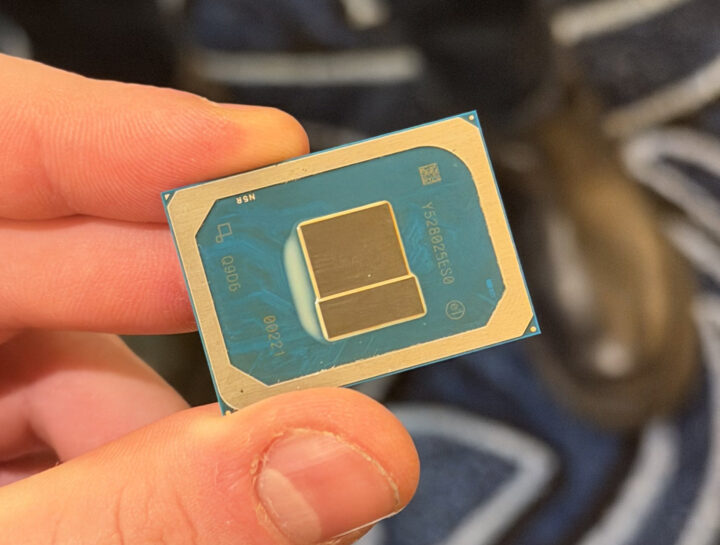
Details and Benchmarks Emerge for Entry-Level Intel Core i3-304 Wildcat Lake Processor

Wildcat Lake processor

Intel discreetly introduced the Wildcat Lake Core Series 3 CPUs at CES 2026 with some high-level specifications, but no part numbers or exact CPU, GPU, and NPU frequencies. Some leaks reveal more details about the Wildcat Lake parts, notably the Intel Core 3 304 penta-core processor, for which we also have some benchmarks. Intel Wildcat Lake SKUs The data below comes from a post by Jaykihn on X. While we have six SKUs in the table above, the Intel Core 5 320/330 and Core 7 350/360 only differ in terms of SIPP (Intel Stable IT Platform Program) support. SIPP is an enterprise initiative that ensures that key platform components, such as processors, chipsets, graphics, storage, networking, and wireless, remain consistent with minimal or no changes for a guaranteed period. The GPU turbo clocks are much higher than in Alder Lake-N/Twin Lake chips (typically 1 GHz to 1.35 GHz), and LPDDR5x […]

The post Entry-level Intel Core 3 304 Wildcat Lake processor details and benchmarks surface appeared first on CNX Software – Embedded Systems News.