Four Key Enhancements of the Nintendo Switch 2 Compared to the Original

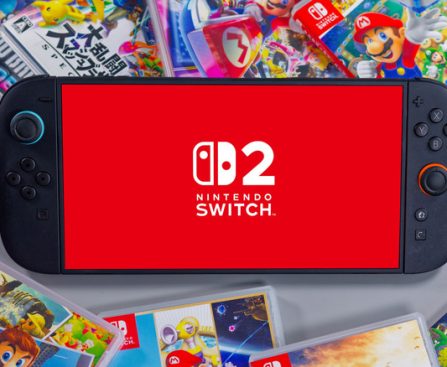
Nintendo Switch 2 has been available for almost a year, and it truly appears to be gaining momentum. It has already become Nintendo’s quickest-selling console ever, with over 17 million units sold by 2025.

This figure doesn’t even include all the hardware sold since the release of “Pokopia” on March 5, which provided the Switch 2 with its first compelling system-selling title. Much of the Switch 2’s triumph hinges on quality. The updated hardware enhances game performance without significantly altering the innovative structure and features of the hybrid system.

However, the Switch 2 is not just a minor upgrade. Nintendo incorporated inventive new features, and while not all are particularly practical (how many of us are really inclined to use GameChat instead of Discord, even if it functions better than anticipated?), there are numerous aspects in which the Nintendo Switch 2 represents a considerable advancement.
Enhanced visuals and quicker performance

This should be expected from any new console, but it’s important to highlight the specifications of the Nintendo Switch 2 to demonstrate its superiority over the previous model. The original Switch supported 1080p when docked and 720p in handheld mode, achieving a maximum frame rate of 60fps. In contrast, the Switch 2 can achieve 4K HDR and 120fps when docked. It can also operate games in handheld mode at 1080p, and a recent update has given backwards-compatible games the same enhancement.

This means games appear and perform better on Nintendo Switch 2. Although it is still outperformed by the Xbox Series X and PlayStation 5, as a hybrid system, power is not the console’s primary aim. What matters more is that multi-platform games provide a comparable experience, even if they appear and perform better on other systems.

In this regard, the Switch 2 has been quite successful, with ports of “Cyberpunk 2077” and “Apex Legends” receiving widespread acclaim.

Custom iPhone Up for Sale Showcasing a Piece of Steve Jobs’ Iconic Turtleneck

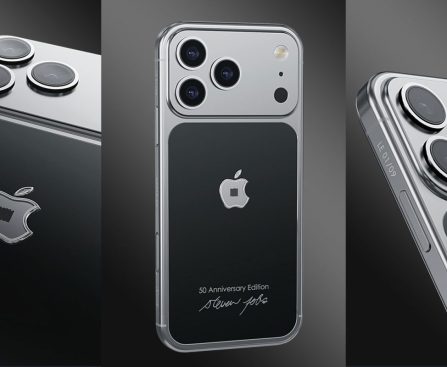
The smartphone customization studio Caviar has unveiled a distinctive option for tech aficionados and collectors: a bespoke version of the iPhone 17 Pro and iPhone 17 Pro Max that includes a fragment of a turtleneck once worn by Steve Jobs. This exclusive edition, dubbed “JOBS,” is available for $9,630 and pays homage to Apple’s legendary co-founder and the company’s inaugural smartphone.

The design of the JOBS iPhone is inspired by the original iPhone, featuring a glossy black panel on the rear, enhanced by a silver titanium casing with a PVD finish. This look seeks to reinterpret the original iPhone 2G as a modern luxury piece. Importantly, the black panel displays a replica of Steve Jobs’ autograph, accompanied by a diminutive square cutout of his turtleneck, which has been validated with a certificate.

Caviar has created only nine pieces of this bespoke device, echoing the release date of the first iPhone on January 9, 2007. At present, just two units are left for sale. Each device is accompanied by a custom wallpaper crafted solely for this limited release and is presented in premium materials that feature a “signature Caviar key.”

For those intrigued by this exceptional fusion of technology and history, additional information can be located on Caviar’s official website.

“Westworld’s Sci-Fi Film Influenced a Neglected 1980s Follow-Up Series Prior to HBO’s Revival”

“Westworld” stands out as an impressive sci-fi series that many believe was terminated prematurely and subsequently removed from HBO Max, the streaming service of its host channel. This is unfortunate as it had the potential to serve as a compelling alternative to Prime Video’s latest “Fallout” series, though with a more thought-provoking atmosphere overall. If it were still available for streaming, you could enjoy it while anticipating more new post-apocalyptic content. For those interested, the four seasons available for purchase can be viewed at your convenience.

HBO’s “Westworld” is rooted in a series of films, with the original from 1973 — crafted by acclaimed author Michael Crichton — being the very first live-action film to utilize CGI. After the “Westworld” film and its sequel “Futureworld,” but before the recent Emmy-winning series, there was an additional show intended to build on Michael Crichton’s initial narrative. Titled “Beyond Westworld,” this show, now largely overlooked, aimed to expand upon the original concept.

Regrettably, following the airing of only three episodes on CBS — out of a total of five produced — the series was cancelled. Ratings fell short after the first two episodes, resulting in a pull before the full five-episode arc could air. It remains accessible on Prime Video, for a fee, although Rotten Tomatoes does not provide a score to gauge expectations. IMDB users, in contrast, have rated it at 4.5 out of 10 stars based on nearly 400 reviews.

What is Beyond Westworld about and how does it further the original narrative?

The DVD cover for “Beyond Westworld” indicates that the series is set after the events of the original film. However, it overlooks the sequel. The narrative focuses on the sinister intentions of the park’s mad scientist, Simon Quaid, regarding the advanced technology rather than the park itself. Quaid has covertly integrated hundreds of robots from Westworld across the globe. As portrayed in both the movie and the contemporary series, most individuals outside the park would fail to recognize the robots due to their human-like design.

“Beyond Westworld” was set to introduce a new android in each episode that John Moore, the protagonist, was tasked to track down and eliminate. In “Westworld Destroyed,” the pilot episode, Moore seeks out Quaid and discovers the existence of androids beyond the park, including one concealed among the crew of a U.S. nuclear submarine. The second episode follows Moore as he pursues an infiltrating android within an oil company, while the third features an android embedded in a rock band.

It presents an intriguing idea, but the lack of clarity regarding the low ratings seems to stem from the absence of the action typically expected from similar series as seen in the original film. The show was broadcast during CBS’s “family hour,” which limited the portrayal of firearms and other conventional weapons associated with action series, leading to an over-the-top silliness. It’s a worthwhile binge option if you start with the 1973 movie first.