Katie Aselton and Mark Duplass create a glorious hangout movie for theater kids with “Their Town,” starring Chosen Jacobs and Ora Duplass. Review.

This $16 Tool Greatly Reduces Internet Annoyance
A lifetime subscription to AdGuard Family Plan safeguards nine devices for just $15.97.

Get Lifetime Access to This Browser-Based PDF Tool for $79
This lifetime subscription to the PDFToolKit Unlimited Plan handles all your PDF needs for life.

AAEON Intelli TWL01 Edge Fanless Mini PC with Core 3 N355 Twin Lake CPU for Kiosks and Digital Signage
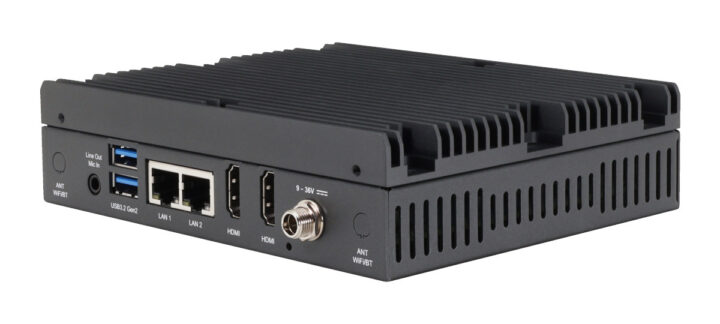
AAEON Intelli TWL01 Edge is an industrial mini PC with dual 4K display support powered by an Alder Lake-N/Twin Lake processor up to the Intel Core 3 N355 CPU and designed for kiosks, video conferencing suites, video walls, and interactive billboards. The fanless computer ships with up to 16GB of RAM and 64GB of eMMC flash, offers M.2 sockets for NVMe storage and WiFi/Bluetooth connectivity, and features two Gigabit Ethernet ports, four USB 3.2 ports, an RS-232/422/485 COM port, and more. The company also provides DIN rail, wall, and VESA mounting options for the mini PC. AAEON Intelli TWL01 Edge specifications: Alder Lake-N/Twin Lake SoC (one or the other) Intel Processor N97 quad-core processor @ up to 3.6 GHz (Turbo) with 6 MB cache, 24EU Intel UHD Graphics @ 1.2 GHz; TDP: 12W Intel Processor N150 quad-core processor @ up to 3.6 GHz (Turbo) with 6MB cache, 24EU Intel UHD […]
The post AAEON Intelli TWL01 Edge fanless mini PC features up to Core 3 N355 Twin Lake CPU for kiosks and digital signage applications appeared first on CNX Software – Embedded Systems News.
Samsung’s Messages Application to Halt Functionality in 2026: Important Actions for Users
Samsung Messages is set to close in July 2026, prompting users to transition to Google Messages.
Key Information
- Samsung will cease the Messages app in July 2026, necessitating a switch to Google Messages for users.
- Post-shutdown, Samsung Messages will be unable to send texts apart from those to emergency contacts and services.
- Users will receive instructions to transition via in-app notifications and can easily set Google Messages as their default.
- Devices with Android 11 or earlier will not be impacted.
Samsung has officially announced its plan to discontinue the Messages app in 2026, requiring users to migrate to Google Messages.
In 2024, Samsung began not including its Messages app on new flagship Galaxy devices. This indicated a potential phase-out, and now Samsung has confirmed the app will be discontinued in July 2026. An official announcement has been made on its U.S. website regarding this change.
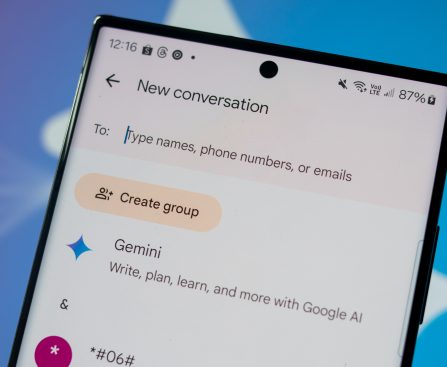
The announcement specifies that users can adopt Google Messages as their primary app to ensure a unified Android messaging experience. The notice also mentions that after the app’s discontinuation, “sending messages through Samsung Messages on your device will no longer be feasible, except for emergency service numbers or emergency contacts listed in your device.”
Article continues below
“Pixel Update Restores Crucial Function in Now Playing App”
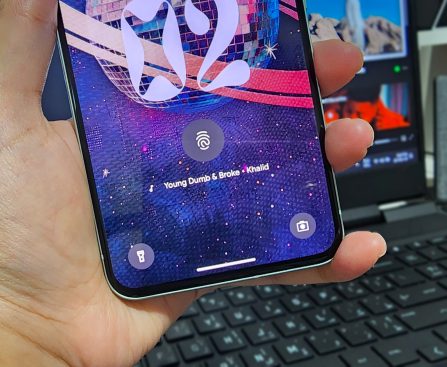
A recent update reinstates the “Tap to see what’s playing” prompt on the lock screen.
What you need to know:
– Google eliminated the manual search button in March, leaving users frustrated when automatic detection failed.
– The latest update to the Now Playing app brings back the “Tap to see what’s playing” feature.
– The button initiates a cloud search, enabling wider and more precise song identification.
If you own a Google Pixel, you likely concur that Now Playing is one of those attributes that makes switching to another phone challenging. It’s simply impressive to glance at your lock screen and instantly identify that obscure indie track playing in a coffee shop, all without any effort.
However, not long ago, Google altered the interface in a way that puzzled many users. When the standalone Now Playing app was introduced in March, the manual search button disappeared, removing the essential tool needed when automatic recognition falls short.
The good news is that Google has responded. An update is being rolled out now that reinstates the “Tap to see what’s playing” prompt on the lock screen, as highlighted by a Reddit user (via 9to5Google).
Offline recognition is fantastic — until it isn’t.
For those unfamiliar, Now Playing utilizes a database on your device to identify songs, which aids in protecting your privacy and conserving battery life. Nevertheless, since this database only contains a limited array of popular tracks, it frequently overlooks less mainstream songs. The manual search button provides assistance by initiating a cloud-based search capable of recognizing nearly any song.
The latest version of the Now Playing app places the manual search tool back on the lock screen right after your phone fails to automatically identify a song.
Aside from that, 9to5 didn’t observe any significant changes following the update. This likely indicates that the release primarily focuses on background fixes rather than new features.
You can anticipate this update to become available on all compatible Pixel devices in the next few days. It’s a minor step back in the right direction, but for music enthusiasts, it’s the most noteworthy update this month.
Android Central’s Take
Honestly, I’m relieved that Google has finally resolved this, but there shouldn’t be a need for a commotion just to retain a basic feature. It’s aggravating to be expected to celebrate the return of a button that should never have been removed. It feels a bit like being asked to express gratitude for receiving back your wallet with half the money missing.
Salesforce Grants Slackbot 30 New AI Features, Adopting a Microsoft-Like Strategy
In short:Â Salesforce unveiled more than 30 new AI capabilities for Slackbot on 31 March 2026, the most sweeping overhaul of the platform since its $27.7 billion acquisition in 2021. The update transforms Slackbot from a conversational assistant into an agentic system that can transcribe meetings across any video platform, monitor usersâ desktop activity, execute tasks […]
This story continues at The Next Web
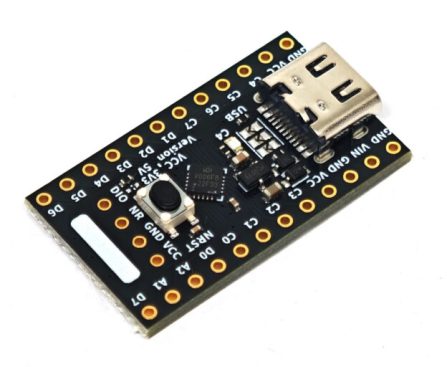
$2 WeAct CH32V006F8U6 Mini Core Board with CH32V006 RISC-V MCU, Supports 3.3V/5V I/O Voltage
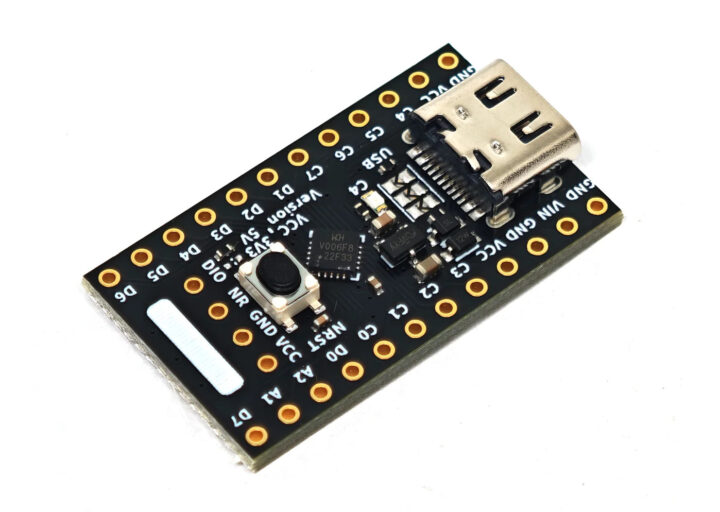
WeAct CH32V006F8U6 Mini Core is an inexpensive, tiny development board based on the 48 MHz CH32V006 RISC-V microcontroller and equipped with a USB-C port, a Reset button, and two rows of 12-pin headers for I/Os using either 3.3V or 5V voltage. WCH introduced the CH32V006 in 2024 as an update to the popular CH32V003 with more memory (8KB vs 2KB SRAM), storage (62KB vs 8KB flash), additional GPIOs, a wider supply voltage range, and an upgraded 32-bit RISC-V2C core. I just hadn’t seen any third-party CH32V006 boards so far. The WeAct Studio board changes that. WeAct CH32V006F8U6 Mini Core board specifications: SoC – WCH CH32V006F8U6 CPU â 32-bit âRISC-V2Câ core up to 48 MHz Memory â 8KB SRAM Storage â 62KB flash + 3KB “boot” flash USB – 1x USB Type-C port for power and debugging Expansion 2x 12-pin headers with GPIO, ADC, USART, I2C, SPI I/O Voltage – 3.3V […]
The post $2 WeAct CH32V006F8U6 Mini Core board features CH32V006 RISC-V MCU, supports 3.3V or 5V I/O voltage appeared first on CNX Software – Embedded Systems News.
Elevate Your Streaming Experience with 4 Key Tips for Google TV Streamer 4K
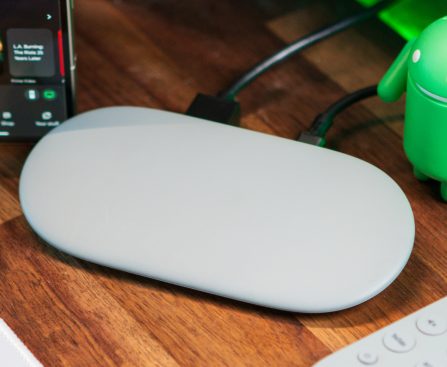
The Google TV Streamer 4K debuted in 2024 and continues to be one of the top external devices for utilizing Google TV. If you’ve recently acquired a smart TV, it likely comes with Google TV pre-installed, although the smoothness of the interface and features might differ based on the brand and model you own. For example, the ability to access the Google Home panel through Google TV was initially reserved for the TV Streamer 4K and later expanded to certain third-party TVs, but not all of them.
If you’ve recently purchased a Google TV Streamer 4K or haven’t taken the time to explore its full range of features, here are four important settings and functions to check out to maximize its potential as your home’s best streaming device.
### Adjust the TV Streamer’s frame rate to match the content
If certain shows and movies appear somewhat choppy to you, it’s not just your imagination; it’s likely due to a specific setting on the Google TV Streamer. On a 4K television, your TV Streamer typically defaults to the highest resolution, which is generally 4K 60Hz. When playing content, it will force everything to operate at 60Hz, which can create problems since many shows and films are intended to run at 24Hz.
Most streaming services like Netflix and Prime Video will adjust to the content’s original frame rate, but you must permit the Google TV Streamer to align with this.
To adjust this setting, adhere to these steps:
1. On the remote for your TV Streamer, long-press the **Home** button and select **All Settings**.
2. Pick the first menu item: Display and sound.
3. Scroll down to **Match content frame rate** and modify it from Never to **Always**.
The Seamless-only choice seems to apply to TVs equipped with Variable Refresh Rate (VRR). After activating this, your TV screen may temporarily black out when playing content below 60Hz as it transitions to a lower refresh rate, which is expected. Following this adjustment, you should notice that shows and movies play back smoothly without any strange glitches.
### Simplify your Google TV homescreen
If the standard Google TV homescreen feels cluttered, with the various recommendations, carousels, and ads, there is an easy method to turn these off. This is known as **Apps-only mode**, and activating it eliminates most recommendations from the homescreen, presenting you exclusively with your apps.
Give it a shot by navigating to **All Settings**, **Account and profiles**, selecting your account, and scrolling to the option titled **Apps-only mode**. A warning screen will appear outlining all the features that will be turned off, including search and voice. No need to fret; you can always return here and turn it off later if necessary.
After activation, the homescreen will refresh within a second or two, and you’ll be left with only your installed apps and limited tabs beside your profile image at the top. Personally, I enjoy the default view and recommendations, as I have come across some fantastic shows this way. Additionally, this feature allows you to take advantage of the next item on the list.
### Consolidate all your ‘watch-later’ content in one location
The Watchlist function in Google TV resembles what made Plex immensely popular among streaming fans long ago. You can bookmark nearly any piece of content from any streaming service into a universal **Watchlist** for later viewing. This allows you to have a single compilation of shows to revisit instead of separate lists across each streaming application.
To add content to the Watchlist, simply long-press the center button on the remote and scroll to **Add to Watchlist**. This menu option will instantly change to **Watchlisted**. If you have several accounts set up on the Google TV Streamer 4K, you can select which account’s watchlist you want to add the content to.
To view all your watchlisted shows, just select your profile image in the top-left corner of the homescreen and scroll down to **Watchlist** to see a carousel of all your bookmarked items.
### Connect headphones to your Google TV Streamer 4K
In case you were unaware, you can connect any Bluetooth headphones to the Google TV Streamer 4K and enjoy your content without bothering others. This is an often-overlooked feature that proves quite useful if you wish to continue watching late at night without disturbing your partner in the same room.
Navigate to **All Settings**, scroll down to **Remotes and accessories**, and choose **Pair remote or accessory**. Simply ensure your headphones/TWS are already in pairing mode and follow the on-screen prompts. The next time you power on your headphones, and if you haven’t paired them with any other devices…
Hints and Solutions for Hurdle – April 6, 2026
Hints and answers to today’s Hurdle all in one place.