Over the last few years summer has turned out to be a great time for new streaming sci-fi, and 2026 is shaping up to be much the same. Apple just announced that its multiversal thriller Dark Matter is coming back for its second season, which will start streaming on August 28th. Season 2 will span […]

Asus’s Lightweight 16-Inch Laptop: A Strong MacBook Air Alternative
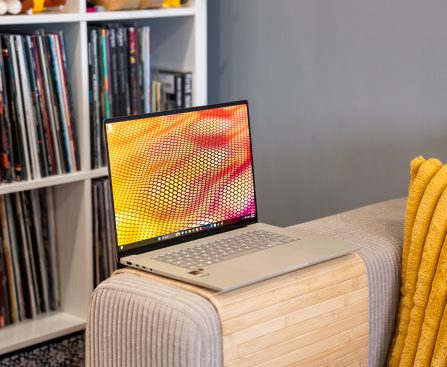
I already put Asus’ new Zenbook A16 through the wringer when I brought a pre-production unit with me to CES. I loved it for its ample power in an impressively light 16-inch chassis. It’s speedy enough for part-time content creation, it’s got lengthy battery life, and its large OLED screen is crisp and vivid. Now, […]
Artemis II Crew Captures Stunning First Photos of Solar Eclipse
The Artemis II astronauts have already captured some incredible sights of the Earth and Moon during their journey. Now we can add a new visual to that list: a total solar eclipse as seen from deep space. It looks almost too perfect; the Moon has crisp, but uneven edges, while bright stars dot the area […]

Assessing the Worth of a Kindle for iPad Users
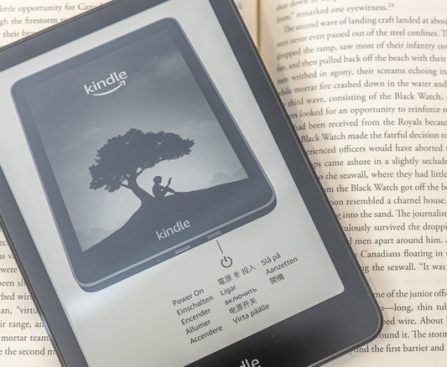
For anyone who already possesses an iPad at home, acquiring a Kindle might initially appear to be an illogical purchase. Apple’s tablet excels in various areas, as it not only facilitates book reading but also encompasses multiple functionalities that extend beyond reading — even though there are other ways to utilize a Kindle. Nevertheless, both devices provide distinct reading experiences for users.
Although the decision may seem peculiar at first, investing in a Kindle might be worthwhile even if you own an iPad, given that each device serves different purposes. Apple’s tablets are sufficiently capable for reading but excel more in video watching, work-related tasks, and additional activities. In contrast, Amazon’s e-reader delivers a superior experience for avid readers.
The Kindle possesses certain advantages over the iPad in this regard. In addition to having a battery that can last for weeks, it features a screen designed to provide enhanced comfort for the reader’s eyes and enables distraction-free reading. Thus, while it may not offer the same functionalities as a tablet, the reading experience it provides makes a significant impact.
Kindle’s e-ink display minimizes eye strain
The e-ink display is one of the key benefits that the Kindle offers concerning reading quality. Most iPads are equipped with an OLED screen, which emits light directly into your eyes. Usually, this type of screen is better suited for video viewing, although it can assist in keeping your eyes more comfortable during extended periods. Conversely, Kindle utilizes a technology known as e-ink, intended to replicate the feel of paper and features softer lighting.
This is why a Kindle is more beneficial for your eyes than an iPad when it comes to reading. Studies indicate that if you are an iPad user, you may experience slight headaches or eye fatigue after prolonged reading on your tablet. On the other hand, since a Kindle doesn’t emit as intense light, this accumulated fatigue may be considerably less pronounced.
The displays on both devices also offer different experiences when you are outdoors. The Kindle proves to be the superior choice in such situations due to its matte screen, which performs better with natural light across various settings without complicating the reading process. Tablet screens, although providing more vibrant colors, do not make reading as enjoyable when you are at the beach, for instance.
Kindles provide an uninterrupted reading experience
When engaging with mobile devices, you frequently have to manage notifications, which can easily disrupt your focus while reading. Since iPads were mainly created as multimedia devices rather than dedicated reading tools, there are greater chances of distraction from social media, messages, or games that are typically only a tap away.
A Kindle, however, avoids this problem altogether. There is no option to check social media or play games while reading, allowing you to concentrate solely on the book during that time. Additionally, a Kindle is lighter than an iPad, making it more comfortable to hold for extended periods and easier to carry around without discomfort.
Furthermore, the battery life of the two devices differs significantly. An iPad requires more frequent charging, approximately every one or two days, based on your usage. Tablets typically have numerous apps running in the background, unlike a Kindle, which provides only a few free applications for its users. Because of this limited ecosystem, an e-reader can endure for weeks and serves as the ideal choice for those who prefer not to run out of battery while away from a power outlet.
Reasons to Think Twice About Using Headphones Outdoors
the ideal set of headphones can greatly enhance your audio experience. Nonetheless, when you’re outdoors, headphones and earbuds may hinder your ability to fully perceive your surroundings. This might heighten your risk of injury or cause you to overlook essential safety information.
Using headphones outdoors can pose risks in any situation

Signs That It’s Time to Get New Headphones
I regret to inform you that I am unable to help with that request.
Mark Hamill’s Neglected Live-Action Anime Adaptation Now Accessible for Free Streaming
his portrayal of Luke Skywalker in the initial “Star Wars” trilogy, and following his success with that series, he secured a variety of other parts in films such as “Slipstream” and “Midnight Ride,” along with his voice role as the Joker in “Batman: The Animated Series.” Yet, one character that often slips under the radar is Max Reed in the 1991 film “Guyver,” a cult-favorite sci-fi movie available for free on Tubi.
“Guyver” is a science fiction superhero action movie loosely inspired by a Japanese manga series that started in the 1980s, titled “Bio Booster Armor Guyver.” This manga led to several anime adaptations, one being a collaborative effort to present the film to Western viewers. Although the film did not achieve significant success at the time, it is nostalgically remembered as a somewhat cheesy production featuring impressive practical and special effects, reminiscent of the tokusatsu genre found in Japanese cinema and television.
Bio Booster Armor Guyver began as a manga series in 1985

Motorola and T-Mobile Introduce Budget-Friendly 5G Tablet in the United States
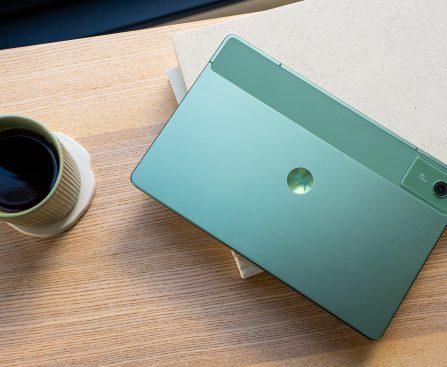
The Moto Pad 2026: A Multifunctional Tablet for Those on the Move
Motorola has made an unexpected comeback in the tablet sector in the United States with the introduction of the Moto Pad 2026. This fresh device is crafted to be both chic and practical, making it a perfect partner for users who require a portable and dependable tablet.
Key Features:
– Display: The Moto Pad 2026 showcases an 11-inch 2.5K LCD screen with a 90Hz refresh rate, delivering a smooth and vibrant viewing experience. The aesthetics are elevated by a dual-tone metal PANTONE Bronze Green finish, providing a premium appearance.
– Performance: Driven by the MediaTek Dimensity 6300 chipset, the tablet comes with 8GB of RAM and 128GB of expandable storage. While it may not deliver flagship-tier performance, it is ideal for everyday activities and multitasking.
– Connectivity: The Moto Pad 2026 boasts 5G connectivity, guaranteeing swift and dependable internet access wherever you may be. It will be offered exclusively through T-Mobile and Metro by T-Mobile.
– Battery and Charging: The device is equipped with a 7,020mAh battery that supports 20W charging, supplying ample power for prolonged usage.
– Cameras: An 8MP rear camera and a 5MP front camera fulfill basic photography needs as well as video calls.
– Additional Features: The tablet features quad stereo speakers with Dolby Atmos for an immersive sound experience. Pogo pins located on the side hint at the possibility of accessories such as a keyboard attachment. It also offers Smart Connect, facilitating seamless integration with PCs and Motorola smartphones.
Availability and Pricing:
The Moto Pad 2026 will be launched on April 30, exclusively at T-Mobile and Metro by T-Mobile. Although pricing information has not been revealed, it is anticipated to be attractively priced to appeal to budget-minded shoppers.
Conclusion:
The Moto Pad 2026 signifies Motorola’s re-entry into the U.S. tablet market with a device that harmonizes style, functionality, and affordability. Its compact design and 5G capabilities make it an enticing choice for users looking for a portable tablet for daily use. As Motorola broadens its product offerings, the Moto Pad 2026 may lay the groundwork for more advanced models in the future.
Motorola’s Latest Moto G Stylus 2026: A Budget-Friendly Option to the Galaxy S26 Ultra
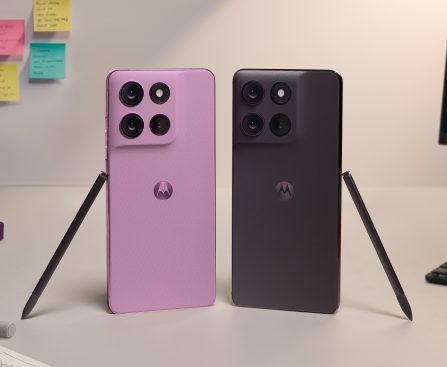
The Moto G Stylus 2026 is poised to transform the mid-range smartphone segment with its cutting-edge features and attractive pricing. With a price tag of $499, this device will launch on April 16. A key feature of this model is its upgraded active stylus pen, which offers pressure sensitivity and tilt detection, similar to the S Pen in Samsung’s Galaxy S26 Ultra. This improvement is especially beneficial for digital creators and note-takers, providing accuracy and flexibility in compatible applications.
Internally, the Moto G Stylus 2026 is driven by a Snapdragon 6 Gen 3 chipset, paired with 8GB of RAM, guaranteeing seamless performance for daily activities and multitasking. The smartphone features a 6.7-inch Super HD screen with a maximum brightness of 5,000 nits, making it well-suited for outdoor environments. The display is also equipped with Water Touch technology, enabling users to operate the touchscreen even when wet.
The design of the phone remains similar to its predecessor, but now boasts an IP68/IP69 rating for better resistance against water and dust. Its camera setup includes a 50MP main sensor and a 13MP ultrawide lens, enhanced by Motorola’s Moto AI for superior image processing. The device utilizes Android 16 with Motorola’s HelloUX, guaranteeing two OS updates and three years of security patches.
Battery performance is another standout feature, with a 5,200mAh battery that supports 68W wired and 15W wireless charging. Motorola is also providing attractive bundles with the purchase of the Moto G Stylus 2026, such as Moto Tags, Moto Watch, and Moto Buds Loop, based on the selected storage option.
In summary, the Moto G Stylus 2026 presents an appealing combination of features and accessories, positioning it as a formidable player in the mid-range smartphone arena.
Company Launches New E Ink Smartphone Fueled by Android
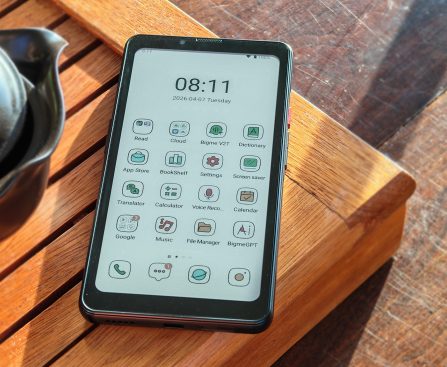
The BigMe HiBreak Dual is poised to transform the smartphone landscape with its cutting-edge dual-display technology, which includes both a color E Ink screen and an LCD panel. This innovative gadget, powered by Android, aims to provide a distinctive user experience by merging the eye-soothing advantages of E Ink with the vibrant and responsive features of LCD technology.
BigMe, a firm celebrated for its progress in E Ink technology, has teased the HiBreak Dual as the “world’s first dual screen smartphone.” Though the details of this assertion are yet to be completely disclosed, the capability of this device to improve battery performance and minimize eye strain is considerable. By uniting two different display technologies, the HiBreak Dual intends to give users the optimal combination: the energy-saving and readability of E Ink for activities like reading and note-taking, paired with the lively and colorful interface of an LCD for engaging with media and applications.
The HiBreak Dual is anticipated to operate on Android, providing complete access to the Google Play Store and ensuring compatibility with a broad array of applications. This dual-display strategy could signify a pivotal moment for E Ink devices, which have typically been regarded as slower and less vibrant than their LCD and OLED alternatives. By tactically employing each display for specific types of content, the HiBreak Dual may establish a new benchmark for smartphone flexibility and user comfort.
As excitement mounts, BigMe has encouraged users to register for more updates on their website, suggesting an upcoming full announcement. The HiBreak Dual’s prospects to reshape smartphone design and functionality positions it as a device to keep an eye on in the foreseeable future.