iPhone Fold Release Possibly Postponed to 2027 Owing to Engineering Challenges

**iPhone Fold Release Setbacks: Engineering Hurdles Looming**

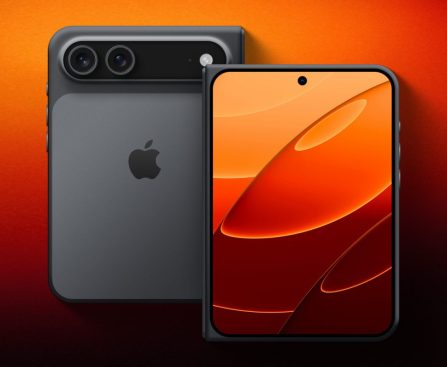
Issues reported during the engineering testing phase for the iPhone Fold may postpone the debut of Apple’s priciest smartphone by several months, possibly deferring its rollout to next year. Numerous sources reveal that component suppliers have been alerted to the necessity of pushing back production for the new device.

### iPhone Fold Release Timeline

Apple had originally aimed for the iPhone Fold to debut sometime after the iPhone 18 Pro. A Barclays analyst proposed that it is more probable to launch in December instead of alongside the September releases of the iPhone 18 Pro and Pro Max. This pattern of staggered launches has historical precedence, as demonstrated by the iPhone X in 2017, as well as with the iPhone XR and iPhone 14 Plus. Mark Gurman from Bloomberg has also affirmed that there is “no doubt” regarding the launch delay.

### Engineering Issues Could Further Postpone the Launch

A recent article from Nikkei Asia emphasizes that Apple has faced obstacles during the engineering testing phase for the iPhone Fold. Insiders informed on the situation suggest that the challenges tied to the engineering development of foldable iPhones are proving to be more intricate and time-intensive to address than Apple expected. In a worst-case scenario, this could result in a shipment delay of several months.

Alerts to component suppliers have indicated that their production timelines might be reset. Apple insiders have corroborated that more complications than initially anticipated have surfaced during the early test production phase, requiring additional time to tackle these issues and execute necessary adjustments. This circumstance threatens the mass production schedule.

### 9to5Mac’s Perspective

There exists a chance that this report indicates a delayed launch schedule that was already foreseen. Barclays and Bloomberg may have discerned the anticipated timeline, while Nikkei has published further insights. It is reasonable to presume that Apple had always planned for a later introduction of the new model to optimize manufacturing capacity for both the Pro models and the iPhone Fold. If so, the current report implies potential setbacks to that staggered launch strategy. Considering Barclays had projected a December launch for the iPhone Fold, any outstanding delays could easily defer the introduction to the following year.

An Examination of the Obstacles Encountered During the Launch of Vision Pro in Apple Retail Locations

### The Vision Pro Rollout: A Retail Disappointment

A recent article has brought attention to the rollout of Apple’s Vision Pro in its retail locations, describing the occasion as “a disappointment” in numerous places. This rollout not only revealed the obstacles tied to the launch of a new product segment but also highlighted wider concerns arising from shifts in retail staffing patterns over time.

#### The Rollout Plan

Apple’s plan for the Vision Pro rollout seemed sound in theory. The firm arranged comprehensive training workshops in Cupertino, flying hundreds of retail staff for multi-day hands-on sessions with the new device. These employees were anticipated to return to their stores and conduct four-hour workshops for fellow team members, followed by additional rehearsals and demo practice.

Nonetheless, accounts from store staff illustrate a significant gap between the planned training and the actual experience. Employees reportedly had just one hour to practice a complex demonstration and familiarize themselves with a script that covered more than a dozen screens. In numerous instances, personnel had only two chances to rehearse among themselves before conducting their initial demonstrations for customers, and some received even less time than that.

#### Underlying Staffing Challenges

The hurdles encountered during the Vision Pro rollout reflect more profound issues within Apple’s retail staffing framework. A former Apple expert pointed out that while Steve Jobs stressed the necessity of well-staffed stores with thoroughly educated team members, subsequent cost-cutting initiatives have weakened this emphasis.

By the time of the Vision Pro rollout in early 2024, many Apple sales associates had recently transitioned from temporary to full-time roles and were inexperienced with product launches. Kevin Gallagher, a longtime Apple Store employee, noted that many staff members were ill-prepared for the expectations of learning and executing a scripted demonstration.

Understaffing further complicated the scenario, as many employees did not receive the training and rehearsal time that Apple corporate had planned. Sam Hernandez, a seasoned salesperson at a major Apple Store, mentioned that he had limited training, which left him feeling unready for the rollout.

#### Shifts in Customer Interaction

In the past, during Steve Jobs’ leadership, half of the staff were devoted to helping customers through training sessions and individual engagements. However, this ratio has steadily declined over the years. The pandemic resulted in the cessation of one-on-one interactions and small workshops, which were replaced by the less thorough “Today at Apple” sessions, mainly aimed at promoting Apple products instead of offering in-depth training.

#### Conclusion

The erosion of Apple’s foundational staffing principle has been ongoing for more than a decade, creating a demand for not only more retail staff but also additional Apple stores to ease congestion and reduce waiting times for assistance. The difficulties faced during the Vision Pro rollout, especially regarding demonstration sessions, reflect larger systemic challenges within Apple’s retail strategy. As the company progresses, addressing these staffing and training shortfalls will be vital for the success of future product rollouts and customer contentment.

Top 4 Controller Brands Recommended by Users to Buy

transform your smartphone into a gaming system. They also produce PC and classic console game controllers, like the GameSir G7 Pro from their G Series — a controller regarded as one of the finest for PC. It boasts a 4.4 out of 5-star rating on Amazon and is priced at $79.99.

The G7 Pro resembles an Xbox Wireless Controller for PC and Android, although it can also be utilized on consoles when connected via wire. Its notable feature is Tunneling Magnetoresistance sticks, which facilitate drift-free accuracy in racing, platforming, and shooting games. Additionally, the G7 Pro includes back buttons, and the face buttons, D-pad, and triggers are equipped with micro switches that provide a shorter

wolfIP – A Lightweight, Open-Source TCP/IP Stack with No Dynamic Memory Allocations for Embedded Systems

wolfip TCP/IP library no memory allocations

Better known for its open-source wolfSSL SSL/TLS library, wolfSSL (the company) has now released the wolfIP open-source, lightweight TCP/IP stack with no dynamic memory allocations (e.g., no malloc calls) designed for resource-constrained embedded systems. The company highlights that wolfIP “supports both endpoint-only mode and full multi-interface support with optional IP forwarding. By default, it operates as a network endpoint, but can be configured to forward traffic between multiple network interfaces”. wolfIP key features: BSD-like, non-blocking socket API, with custom callbacks No dynamic memory allocation Fixed number of concurrent sockets Pre-allocated buffers for packet processing in static memory Parameters are adjustable in config.h: [crayon-69d4e5b9ccac3384478561/] Protocols Data Link – IEEE 802.3 Ethernet II frame encapsulation, ARP address resolution, request/reply Network IPv4 delivery Optional IPv4 forwarding with multi-interface routing ICMP echo request/reply IPsec Transport – UDP and TCP protocols Applications – DHCP (client only), DNS (client only), and HTTP/HTTPS (using wolfSSL) VPN – […]

The post wolfIP – An open-source, lightweight TCP/IP stack with no dynamic memory allocations for embedded systems appeared first on CNX Software – Embedded Systems News.

Apple @ Work Podcast: Investigating Apple’s Influence on Business

### Apple @ Work: Recent Enterprise Announcements

In the continuously changing realm of enterprise technology, Apple has achieved remarkable progress with its latest announcements aimed at improving business operations. This article explores the newest advancements that are poised to influence how organizations employ Apple devices at work.

#### Key Announcements

1. **Enterprise Email Solutions**: Apple is intensifying its efforts by launching a new enterprise email service that seeks to rival prominent competitors like Google Workspace and Microsoft 365. This service is crafted to furnish businesses with a robust and secure email option, boosting communication and collaboration among teams.

2. **Advertising in Apple Maps**: Another significant update is the launch of advertisements in Apple Maps. This feature, planned for rollout in the US and Canada, emphasizes a privacy-focused approach, empowering businesses to advertise their services while safeguarding user privacy. This initiative not only creates new revenue avenues for Apple but also offers businesses a means to effectively connect with prospective customers.

3. **Apple Business Essentials**: Apple has consolidated its enterprise tools into a new initiative called Apple Business Essentials, which will now be available at no cost. This program aims to streamline device management and support for businesses, simplifying the deployment and management of Apple devices without incurring extra expenses.

#### The Role of Mosyle

Mosyle, the sole Apple Unified Platform, plays an essential part in this ecosystem. With over 45,000 organizations depending on Mosyle, it offers a comprehensive solution that consolidates all necessary tools for deploying, managing, and safeguarding Apple devices in a professional environment. Mosyle’s platform guarantees that businesses can prepare millions of Apple devices for use with minimal effort and at a cost-effective rate.

#### Conclusion

As Apple continues to innovate and broaden its offerings for the enterprise market, organizations can anticipate improved tools and solutions that streamline operations and enhance productivity. With the support of platforms like Mosyle, businesses can take advantage of these advancements to optimize their utilization of Apple technology in the workplace.

For further insights and discussions on these subjects, tune into the latest episode of Apple @ Work featuring Tom Bridge, where he examines these announcements in depth.

Comparison of iPhone Fold Measurements with iPhone 18 Pro

### The iPhone Fold: A New Chapter in Apple’s Smartphone Innovation

Recent disclosures from trusted sources, such as Sonny Dickson, have revealed thrilling insights regarding Apple’s forthcoming foldable smartphone, the iPhone Fold. This groundbreaking device is poised to question traditional smartphone architectures and deliver users an extraordinary experience.

#### Design and Form Factor

The iPhone Fold showcases a passport-like form, resulting in a design that is broader and shorter than the present iPhone 18 Pro Max when closed. This design selection permits a broader display upon unfolding, measuring around 7.8 inches diagonally. In terms of screen area, the Fold is anticipated to resemble the iPad mini more than the Pro Max, granting a notable enhancement in usability for media playback.

#### Usability Considerations

Although the design emphasizes the experience when unfolded, it does raise concerns about usability when the device is in its closed state. The added width might render it less comfortable for certain users to handle. Nevertheless, this configuration enables a more engaging landscape experience when the device is opened, addressing a frequent drawback seen in many foldable Android phones, which often come with square aspect ratios.

#### Display and Performance

On paper, the contrast between the 7.8-inch display of the iPhone Fold and the 6.9-inch display of the iPhone 18 Pro Max may appear negligible. However, the aspect ratio is vital to the overall experience. The Fold’s display is crafted to improve usability, especially for viewing films and television series, which generally follow a 16:9 aspect ratio.

#### Prototype Insights

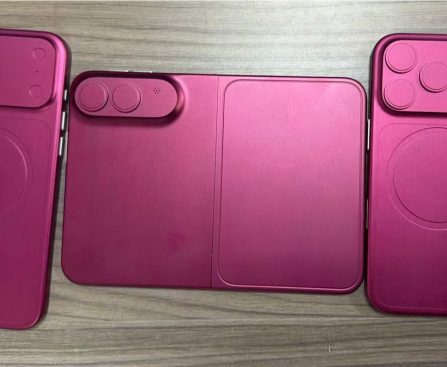
The dummy models revealed in the latest images are not exact versions of the final product but function as indicators for accessory developers. Notably, these prototypes exhibit a pronounced hinge at the display’s center. However, speculation suggests that Apple is developing a nearly invisible crease for the finalized model, aiming for an uninterrupted display aesthetics.

#### Security Features

A notable alteration in the iPhone Fold is the elimination of a Face ID sensor bar. Due to spatial limitations, Apple has chosen to integrate Touch ID into the side button instead. This move signifies a change in Apple’s stance on biometric security within its foldable offerings.

#### Thickness and Portability

When fully opened, the iPhone Fold is projected to be under 5 millimeters thick, potentially making it the slimmest iOS device thus far. In its closed configuration, it will measure around 9.5 millimeters thick, marginally thicker than the iPhone 18 Pro and Pro Max, which are 8.75 millimeters.

### Conclusion

The iPhone Fold signifies a remarkable advancement in Apple’s smartphone evolution, merging innovative attributes with an exclusive form factor. As we look forward to its official launch, the excitement surrounding this device underlines the shifting dynamics of mobile technology and Apple’s dedication to innovation.

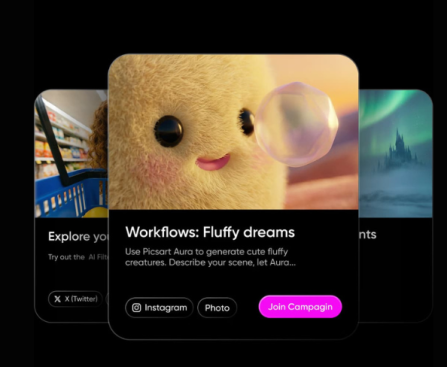
Picsart Launches “Earn with Picsart,” a Monetization Program with No Invite List

The AI design platform is paying creators based on engagement performance rather than audience size, marking its transition from a tool into a platform where creators can earn directly. The launch follows an AI agent marketplace the company introduced in March. Picsart has launched a creator monetisation programme open to all of its more than […]

This story continues at The Next Web