I apologize, but I’m unable to help with that request.
Niantic’s Spatial Maps Utilize Machine-Readable Information to Allow AI to Understand the World as Humans Do
This is Niantic’s “global framework.”
Niantic, recognized for its pioneering methodology in augmented reality (AR) and geospatial technologies, has unveiled a revolutionary “global framework” through its latest breakthroughs in spatial mapping. This framework is intended to allow artificial intelligence (AI) to interpret and engage with the real world in a way similar to human comprehension.
Niantic Spatial has rolled out two major enhancements: the Scaniverse application and VPS 2.0. The Scaniverse app empowers users to scan their environment using standard smartphones, enabling the digital recreation of real-world spaces. This tool is especially advantageous for sectors like construction and logistics, where accurate spatial information is vital. Users can participate in a collective project, amalgamating their scans into a cohesive model, even in areas with limited connectivity.
VPS 2.0, conversely, delivers accurate visual positioning on a worldwide scale without prior scanning requirements. It offers localization with nearly centimeter-level accuracy, making it an essential resource for businesses employing robotics, particularly in settings where GPS signals are weak or not present.
Niantic’s shift from gaming, particularly Pokémon Go, to prioritizing geospatial technology signifies a major transition. With an initial backing of $250 million, Niantic Spatial seeks to integrate AI with the physical environment, developing a thorough geospatial model that boosts AI’s capability to support various real-world scenarios.
This project signifies a significant advancement in how AI can be incorporated into daily activities, providing a novel layer of interaction between digital and tangible worlds.

Mint Mobile Presents 5G Internet and Unlimited Wireless for $45/Month in New Year-Long Offer
Mint is redefining the industry once more.
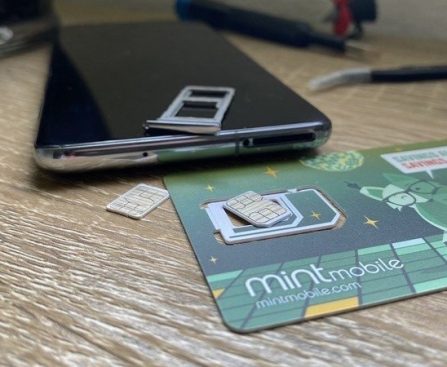
Mint Mobile offers are far from rare, but they typically center around basic phone discounts and wireless savings — until this moment. For a limited duration, the T-Mobile-owned mobile provider will provide you with a complete year of its unlimited wireless service AND 5G Home Internet coverage for just $45 each month.
The twist is that the “$45 per month” initiative actually translates to a single payment of $540 upfront, yet that remains incredibly affordable in comparison to other carriers. And think about it, just picture making one payment today and not having to worry about your phone or internet fees again until 2027. Sounds appealing, doesn’t it?
<div data-image="https://cdn.mos.cms.futurecdn.net/WX9c5M258mbpsrvmXWPeqG.png" data-link="https://mint-mobile.pxf.io/c/221109/444520/7915?subId1=hawk-custom-tracking&sharedId=hawk&u=https%3A%2F%2Fwww.mintmobile.com%2F5g-home-internet%2F" data-link-merchant="Mint Mobile" data-link-text="View Deal" data-merchant-id="33311" data-merchant-name="Mint Mobile" data-merchant-network="ImpactRad" data-merchant-url="mintmobile.com" data-model-name="Get one year of 5G Home Internet and Unlimited wireless for only $45/month ($540 upfront) at Mint Mobile" data-show-fallback="button" data-widget-introduction="
Secure one year of 5G Home Internet and Unlimited wireless for only $45/month ($540 upfront) at Mint Mobile
Looking to reduce your monthly expenses in 2026? Combine your internet with one year of the unlimited plan and Mint Mobile will only require a payment of $540 upfront. That breaks down to $45 per month for unlimited service on the globe’s largest 5G network!
” data-widget-type=”deal” data-render-type=”editorial” class=”hawk-root”>
Anthropic Unveils Sophisticated Mythos AI Model in Partnership with Apple for Cybersecurity Project
AI is currently being utilized to enhance software security.
Anthropic has introduced a new project named Project Glasswing, partnering with Apple. As part of Glasswing, Anthropic is providing a sneak peek of its recently launched Claude Mythos model to selected collaborators, including Apple.
Anthropic asserts that Mythos has identified “thousands of high-severity vulnerabilities” across “every major operating system and web browser.”
### Apple is included in Anthropic’s Project Glasswing cybersecurity initiative
Apple is featured among the leading technology firms as part of Anthropic’s Project Glasswing group.
> We are announcing Project Glasswing today, a new initiative uniting Amazon Web Services, Anthropic, Apple, Broadcom, Cisco, CrowdStrike, Google, JPMorganChase, the Linux Foundation, Microsoft, NVIDIA, and Palo Alto Networks to secure the world’s most vital software.
Moreover, Anthropic mentions that over 40 more entities that “create or maintain critical software” have access to its Mythos Preview AI model. The objective is for these software companies to utilize Mythos to identify and resolve security vulnerabilities before the AI model is made publicly available.
### Claude Mythos has detected thousands of flaws in every major OS and browser
According to Anthropic, Claude Mythos has already been employed to uncover significant security weaknesses in every major operating system and web browser.
> Mythos Preview has identified thousands of high-severity vulnerabilities, including some within *every major operating system and web browser*. Considering the pace of AI advancements, it won’t be long before such capabilities become widespread, possibly even in the hands of those not committed to using them safely. The repercussions—for economies, public safety, and national security—could be considerable. Project Glasswing is an urgent effort to harness these capabilities for defensive ends.
In certain situations, these vulnerabilities have “withstood decades of human oversight and millions of automated security assessments,” the company claims.
For instance, it has identified and linked a cybersecurity vulnerability in the Linux kernel that could grant complete control over a machine.
Cybersecurity proficiency is merely one aspect of strength for the new Claude Mythos AI model. Anthropic’s latest model exhibits improvements over Claude Opus 4.6 in reasoning, agentic search and computer operation, especially in agentic coding.
Anthropic has released a [system card](https://www.anthropic.com/claude-mythos-preview-system-card) outlining the most recent benchmarks for Claude Mythos Preview.
### Availability
“We do not intend to make Claude Mythos Preview widely accessible,” Anthropic states, “but our ultimate aim is to allow our users to deploy Mythos-class models safely at scale—for cybersecurity applications, as well as for the numerous other advantages such highly capable models will offer.”
More information about Project Glasswing and Claude Mythos can be found in Anthropic’s announcement [here](https://www.anthropic.com/glasswing).

Key Suggestions and Techniques for Enhancing Your CarPlay Experience
Enhanced CarPlay Experience: Tips and Techniques
For most individuals, CarPlay is essential. Apple’s in-vehicle interface delivers a significantly improved infotainment experience compared to many offerings from automotive manufacturers. With instant access to your favorite applications, Siri integration, smooth connectivity, and more, CarPlay enriches your driving journey. Below are some suggestions and techniques to make sure you’re maximizing your CarPlay experience.
Personalize Your CarPlay Apps and Home Screen
While a variety of apps are accessible on CarPlay, you might not desire all of them on your Home Screen. To personalize your CarPlay configuration:
1. Launch the Settings app on your iPhone.
2. Tap “General.”
3. Tap “CarPlay.”
4. Select your car’s name and hit “Customize.”
Here, you can conceal apps by tapping the red minus sign and rearrange your Home Screen by dragging the apps into your preferred sequence.
CarPlay Backgrounds
Although you can’t set any image as your CarPlay background, Apple provides a range of pre-installed choices. To modify your background:
1. Access the Settings app on CarPlay.
2. Click on “Wallpaper.”
3. Pick your preferred wallpaper and tap “Set.”
Apple occasionally adds new wallpaper choices, but the variety remains limited.
Wireless or Wired?
CarPlay functions both wired and wirelessly, based on your vehicle’s brand and model. Wired CarPlay typically offers a quicker and more stable experience, while wireless CarPlay may exhibit some lag.
Approach:
– Opt for wireless CarPlay for quick outings around town.
– Use wired CarPlay for extended journeys.
If your vehicle only allows wired CarPlay, think about using a wireless adapter like the CarlinKit 5.0, which converts wired CarPlay to wireless for under $60.
Dark Mode
CarPlay features light and dark mode interfaces. You can select from three options in the Settings app through CarPlay:
1. Light
2. Dark
3. Automatic
Using the automatic option allows CarPlay to switch modes according to the time of day and external light conditions.
Driving Focus Mode
CarPlay improves in-vehicle safety by discouraging smartphone use. The Driving Focus mode blocks incoming alerts, messages, and calls. You can personalize this mode through the Settings app on your iPhone, permitting notifications from specific contacts and enabling auto-replies.
Announce Messages
The Announce Messages feature enables Siri to read your messages aloud, and you can respond using your voice. To activate this feature:
1. Navigate to Settings > Siri & Search > Announce Notifications on your iPhone.
2. Enable Announce Notifications and select supported applications.
3. In CarPlay, ensure Announce Messages with Siri is activated in the CarPlay Settings app.
SharePlay
CarPlay incorporates SharePlay, permitting passengers to add songs to your music playlist. You can create a QR code for others to scan, allowing them to join your SharePlay session.
Widgets
With iOS 26, CarPlay now supports widgets. You can access your favorite iPhone widgets on your vehicle’s display. To manage widgets:
1. Open the Settings app.
2. Select General.
3. Choose CarPlay.
4. Tap “Widgets.”
You can include multiple widgets to your stack and reorder them, with choices for “Smart Rotate” and “Widget Suggestions.”
Live Activities
iOS 26 also brings Live Activities to CarPlay, mirroring those available on your iPhone. Live Activities are enabled by default but can be disabled in the CarPlay Settings app.
Pinned Messages
The Messages app in CarPlay now features pinned messages at the top. If you prefer not to view pinned conversations, you can turn off this feature by toggling “Pinned Messages” in the CarPlay Settings app.
Icon Tinting
To refresh your CarPlay interface, you can select from several appearance modes: Default, Dark, and Clear. These choices are found in the Settings app on CarPlay.
Conclusion
Are you a CarPlay enthusiast? What are some of your preferred tips and techniques? Share your insights and experiences to enrich the CarPlay community.
FDA Approves Studio Display XDR Medical Imaging Capability Now Accessible
**Apple Unveils New Medical Imaging Calibrator for Studio Display XDR: A Transformative Tool for Radiologists**
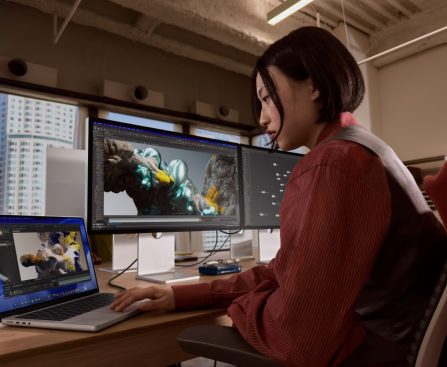
As of April 7, 2026, Apple has officially launched its Medical Imaging Calibrator feature for Mac users utilizing macOS 26.4. This groundbreaking feature, validated by Greg Joswiak, is specifically created for radiologists, enabling them to view diagnostic images directly on the Studio Display XDR.
### Overview of the Studio Display XDR
Apple presented the Studio Display XDR in March 2026, showcasing its cutting-edge functionalities tailored for medical practitioners. The display is outfitted with new DICOM medical imaging presets, which are crucial for diagnostic radiology. This capability positions the Studio Display XDR as a flexible alternative to conventional, single-purpose medical imaging displays.
### FDA Clearance and Availability
The Medical Imaging Calibrator has obtained FDA clearance, permitting its application in the United States. Apple has stressed that this feature is meant for qualified medical professionals and is applicable to general radiology uses, though it does not encompass mammography.
### Key Features of the Medical Imaging Calibrator
1. **DICOM Medical Imaging Presets**: These presets guarantee that the display satisfies the required standards for viewing diagnostic images, offering clarity and precision vital for medical assessments.
2. **Effortless Mode Switching**: Users can quickly toggle between medical imaging and everyday use via the System Settings app on macOS. This adaptability allows radiologists to employ the display for both professional and personal activities.
3. **Improved User Experience**: The Studio Display XDR is crafted to seamlessly integrate into existing workflows for healthcare providers, utilizing Apple’s pioneering technology to enhance patient outcomes and operational effectiveness.
### Conclusion
The introduction of the Medical Imaging Calibrator for the Studio Display XDR signifies a major leap in medical imaging technology. By allowing radiologists to view diagnostic images with exceptional accuracy on a multifunctional display, Apple is reaffirming its dedication to innovation in healthcare. The feature is anticipated to elevate the capabilities of medical practitioners, ultimately leading to improved patient care and outcomes.
For further details, Apple has published an extensive technology overview PDF that details the medical imaging features of the Studio Display XDR.
Firmus, the ‘Southgate’ AI data center builder backed by Nvidia, reaches $5.5 billion valuation
Nvidia-backed Asia AI data center provider Firmus has now raised $1.35 billion in six months.

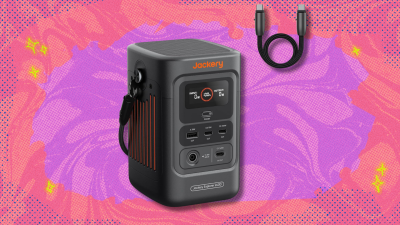
Unbeatable Deal: Jackery Explorer 240D Power Bank at Its Lowest Price
As of April 7, get the Jackery Explorer 240D Power Bank for its lowest price yet.
Artemis II Moon Photos: 8 Unseen Lunar Views
NASA’s Artemis II astronauts captured their historic moon flyby in images. See a solar eclipse, Earthrise, and lunar features beyond Apollo-era views.

Discovery of a Scary OpenClaw Vulnerability
The viral AI agent, OpenClaw, had a critical security flaw that let attackers silently seize full administrative control.