Ex-Meta Engineer Investigated for Accessing 30,000 Private Facebook Photos

In short: A former Meta engineer in London is under criminal investigation after allegedly building a program to extract around 30,000 private Facebook photos while bypassing the platform’s security checks, the latest in a series of privacy and security failures to emerge from the company over the past four years. Meta’s internal security systems are designed […]

This story continues at The Next Web

Spotify Unveils Suggested Playlists Including Podcasts for Inquisitive Premium US Beta Users

With earbuds in, the podcast kicks off.

Essentials to understand

  • Podcasts are joining the lineup for Spotify’s Prompted Playlists beta, accessible in the U.S., Canada, Ireland, the U.K., Australia, and New Zealand.
  • Similar to writing a description for music, users can communicate their podcast interests to the algorithm for a curated list.
  • The beta phase for Prompted Playlist initiated in the U.S. in January, enabling creation through the “Create” button.

AI has found its place on Spotify to assist in discovering music, but the platform is advancing with its audio shows.

Manipulating the algorithm has been crucial for Spotify’s Prompted Playlists; now, it’s providing insights on a beta enhancement that incorporates podcasts. Launching this week, Prompted Playlist testers in the U.S., Canada, Ireland, the U.K., Australia, and New Zealand can start incorporating podcast descriptions into their requests. Spotify claims users can satisfy their interests through this feature, as Prompted Playlists can explore millions of available shows.

Android Central’s Perspective

I’ve never really gotten into podcasts, yet there are many users who do. Friends of mine enjoy tuning into podcasts, indicating a genuine demand for them. Spotify states that 34 million podcasts are uncovered “every week” on its platform. If users could avoid incessant scrolling and specify what show they want, that would be a huge advantage.

If users aim to stay informed on entertainment happenings (think music, film, and fashion), they should inform Prompted Playlists about it. For instance, Spotify suggests you can say, “Create a podcast playlist featuring the latest entertainment news from the past few days. Include all aspects of music, film, fashion, and significant cultural events.”

Podcasts extend beyond just entertainment. You can inquire about shows related to science (did you know Artemis II is orbiting the moon?) or even true crime mystery podcasts. After this update, Prompted Playlists will remain intact and unaltered. Users can still initiate by clicking “Create” and selecting Prompted Playlists. From that point, simply state your request as usual, whether it pertains to specific music genres or podcasts.

Additionally, Spotify emphasizes that users can choose how frequently their playlist refreshes. Options include daily or weekly updates, with a “don’t update” choice available as well.

Prompted Podcasts (Playlists)

As mentioned earlier, Prompted Playlists remains in beta and is being rolled out to the regions listed above. The update should start to show up today (Apr 7) and onwards for participating testers.

Android Central’s Perspective

For personalization purposes, Prompted Playlists places your music algorithm into your control. “Personalization” already exists in various forms on Spotify. We have Discover Weekly, Release Radar, and playlists in “Your top mixes,” but this combines all of those features. You’re in charge, controlling the direction of the algorithm. And, if dissatisfied, just roll again.

The Prompted Playlists beta first launched in New Zealand late last year before coming to the U.S. in January, with Canada also being part of that expansion for Spotify. Prompted Playlists utilizes your descriptions for music (and now podcasts) to compile a list of songs you might find appealing. While you can specify your preferred genre and artists, Spotify will also consider your account history and overall “vibes.”

Trent AI Secures $13M to Develop Multi-Agent Security for Autonomous AI Systems

The London startup emerged from stealth on 7 April with a layered agentic security solution and a seed round backed by LocalGlobe and Cambridge Innovation Capital. Its co-founders include a Cambridge professor who was previously Amazon’s director of machine learning. Trent AI, a London-based agentic security company, has raised $13 million in a seed round […]

This story continues at The Next Web

Uber joins Amazon’s Trainium roster with AWS expansion deal

In short: Uber has expanded its AWS contract to run real-time ride-matching infrastructure on Amazon’s Graviton4 processor and is piloting AI model training on Trainium3, joining Anthropic, OpenAI, and Apple on a customer list that is becoming the clearest evidence yet that Amazon’s custom silicon strategy is working. Uber’s infrastructure runs on milliseconds. Every time a […]

This story continues at The Next Web

Significant Improvements in AirPods Max 2 That Initial Users Value

AirPods Max 2 made a surprising debut in late March, catching most people off guard. Sporting the same design as the original version introduced in 2020, the new generation could easily be mistaken for the USB-C variant that launched a year prior. Nevertheless, two significant enhancements are making early adopters quite pleased with these headphones: Superior ANC and enhanced audio quality.

As a current user of the original AirPods Max, I’m still unsure about upgrading. The premium price tag makes these headphones nearly as costly as an iPhone 17e or MacBook Neo. To be honest, both options could offer much more value for that amount.

Although these new headphones present a somewhat bittersweet upgrade due to the unchanged design, early adopters report that the improved ANC and sound enhancements are quite apparent. If you’ve never owned AirPods Max or are considering transitioning from the first generation to the second, these initial customer reviews might assist you in making a decision.

The AirPods Max 2 appears the same, but is different on the inside

Google’s $135 million Android Data Settlement is approaching finalization: Choose your payout method today.

Google has commenced the distribution process for a $135 million settlement concerning a lawsuit about Android data, with claims now available for qualifying users. The lawsuit, which was filed in November 2020, alleged that Google gathered and shared Android users’ cellular data without adequate consent. The settlement is applicable to Android users in the U.S. who utilized cellular data from November 2017 until the final approval date. Users have the option to receive their payouts through PayPal, Venmo, Zelle, ACH, or a virtual card. The anticipated maximum payout for each eligible user is approximately $100, subject to the total number of claims and reductions for administrative costs, taxes, and legal fees. Residents of California are not included in this settlement because of a distinct $314 million lawsuit. The final approval hearing is scheduled for June 23, 2026, and payments will be made if the settlement receives approval.

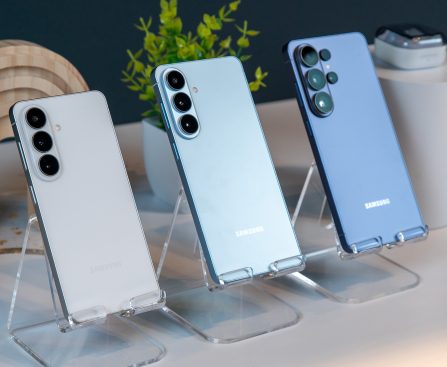
Crucial Actions to Perform After Acquiring Your New Galaxy S26

Get the most from your Galaxy S26 with these suggestions!

You’ve just acquired a shiny new Galaxy S26. The phones might not appear vastly different from the Galaxy S25 series, but Samsung’s newest flagships are packed with numerous new features, some of which may also benefit earlier models.

While we promote the exploration of your new device and all its capabilities, here are some initial adjustments or checks to consider after setting up your phone. Whether you own the Galaxy S26, S26 Plus, or S26 Ultra, here are some early tips and tricks.

Configure your Privacy Display to obscure your screen

A major hardware highlight of the Galaxy S26 series is the Privacy Display. Regrettably, it’s exclusive to the Galaxy S26 Ultra; this feature employs a distinct pixel arrangement that effectively obscures your screen’s contents from anyone viewing from an angle by deactivating some pixels. Consequently, you can still see your display, but anyone attempting to take a peek shouldn’t be able to.

The effect is impressively effective, and Samsung allows you to tailor the Privacy Display to activate only when you launch specific apps or when notifications arrive.

To enable the Privacy Display on your Galaxy S26 Ultra, go to Settings > Display > Privacy Display and switch the feature on. Then, tap the option to explore the various customizations.

Once you turn on the Conditions for activation, you’ll discover the following options:
– Apps: Activates the Privacy Display when certain apps are opened
– Pin, pattern, password: Obscures the screen when entering sensitive information, but works only in the Settings app, lock screen, and Secure Folder.
– Notification pop-ups: Partially enables the Privacy Display, hiding just the notifications while the rest of the display remains visible to others.

You can also choose to activate a Maximum privacy display, which alters how the display looks when viewed directly. This will further deter others from viewing your screen and will also change your viewing experience.

A fresh approach to voicemail

Voicemails are typically managed by carriers or apps like the T-Mobile Visual Voicemail app. However, Samsung is taking charge with Direct Voicemail, a feature that fundamentally enhances your voicemail experience at no additional cost.

With Direct Voicemail, Samsung grants you greater control over your experience. For instance, when a call comes in, you can opt to send it to voicemail, immediately direct it to voicemail, or have it go to voicemail after a specified period.

You can access and configure Direct Voicemail by going to the Phone app > three-button menu > Settings > Direct voicemail and switching it on. Then decide if you want the app to automatically send calls to voicemail and set the timing accordingly.

Where Direct Voicemail excels compared to other options is its ability to transcribe voicemails as they arrive, a feature for which T-Mobile charges extra. And similar to the traditional voicemail recorders that play the message in real-time, you can actually take the call while the message is being recorded if you determine it’s something you need to address right away.

Voicemails are also stored on-device for easy access from the call log in your phone app. You can also utilize the enhanced Audio Eraser to refine the audio if you can’t clearly hear the main speaker due to background noise.

Alternatively, you can screen your calls

Call Screen on the Pixel is a favorite feature of ours, allowing the phone to use AI to answer calls for you. The concept is to respond to calls from unknown numbers, enabling the assistant to discern the purpose of the call, so you can decide whether it’s worth your attention.

Samsung now offers a comparable feature: appropriately named Call Screening. Like on the Pixel, you won’t have to answer the call, but you can still view a live transcription of the conversation. The AI will inquire about who’s calling and the purpose of the call, and you can either wait for the caller to hang up or answer if you believe it warrants a response.

Access this feature by going to the Phone app > three-dot menu > Settings > Call screening. Once you switch the feature on, you can also activate Auto screen calls and choose either Suspected spam and scams or Unknown callers. You can cover all bases by selecting the latter and enabling Caller ID and spam protection in the primary Call settings.

In addition to Call screening, other Call Assist features include Text call and Live translate. Similar to Call screening, an AI assistant will respond, but you can type or choose responses yourself. Fortunately, this feature connects directly to Call Screening, allowing you to switch to this method whenever you want to take control of the conversation. You can also adjust the voice’s tone, personalize the settings

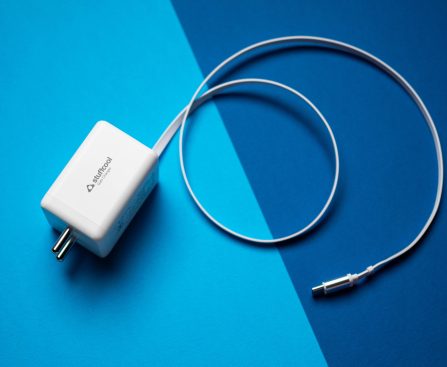
Stuffcool Launches 65W GaN Charger with Retractable Cable

The Zeno 65W GaN charger from Stuffcool is a remarkable entry into the realm of charging technology, especially for individuals who prioritize convenience and efficiency. This charger is notable for its retractable cable feature, which removes the necessity of carrying extra cables, rendering it an excellent travel companion. The retractable cable design is on the rise, with brands such as Baseus and UGREEN at the forefront, and Stuffcool has adeptly embraced this trend with the Zeno 65W.

Offered at ₹2,899 on Amazon, the Zeno 65W charger has undergone thorough testing over a three-month timeline, showcasing its reliability and effectiveness. While it is somewhat larger than standard GaN chargers due to the housing for the retractable cable, it is still compact enough for travel needs. The charger includes an Indian plug and a built-in cable that has four preset lengths, providing adaptability in different environments, such as bedside tables or hotel accommodations.

The Zeno 65W is compatible with the USB PD 3.0 protocol, capable of delivering up to 65W of power, making it ideal for charging a variety of devices, including the Pixel 10 Pro XL, Samsung Galaxy S26 Ultra, Xiaomi 17 Ultra, Vivo X300 Ultra, and Find X9 Pro. Additionally, it features a secondary USB-C port, enabling users to charge two devices at once. When the built-in cable and USB-C port are simultaneously utilized, the power is allocated as 45W to the cable and 20W to the port, which is adequate for overnight charging.

The build quality of the Zeno 65W is impressive, constructed with a sturdy plastic casing that has endured extensive usage, including travel. Although it does not have the metal casing found in some rivals like UGREEN’s Nexode Pro chargers, it remains a strong and dependable choice. In summary, the Zeno 65W GaN charger is a practical and efficient option for those in search of a multifunctional charging device featuring the added convenience of a retractable cable.

Eclipse Secures $1.3B for Two Funds to Propel the Future of Physical Industries

Fund VI ($720M) targets early-stage companies in robotics, manufacturing, and energy. Early Growth Fund III ($591M) supports companies scaling toward Series A. Total AUM is now approximately $10 billion. Eclipse, the Palo Alto-based venture firm that backs companies rebuilding physical industries, has closed $1.3 billion across two funds simultaneously. Eclipse Fund VI has raised $720 […]

This story continues at The Next Web

Narwhal Labs Secures €22.9M and Launches DeepBlue OS, an Autonomous AI Communication Platform for Regulated Industries

The Bristol-based company, parent of Narwhal AI, is building an operating system for autonomous customer conversations across voice, SMS, email, and WhatsApp. CEO Luke Sartain has previously led the Narwhal Media Group. Narwhal Labs, a Bristol-based AI infrastructure company, has raised €22.9 million and simultaneously launched DeepBlue OS, its autonomous communications platform. The company operates […]

This story continues at The Next Web