Apple Treads Carefully on iPhone Ultra Sales Following Samsung’s Major Concession

# Apple’s Prudent Strategy for the iPhone Fold: Demand Predictions and Supplier Contracts

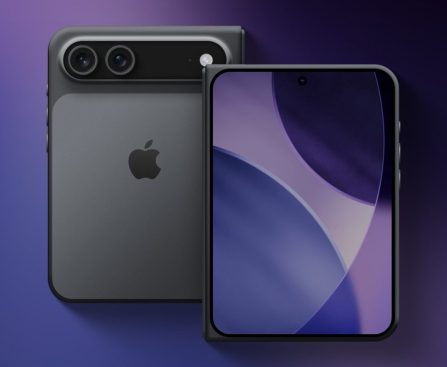
A recent analysis reveals that Apple is taking a prudent approach regarding expectations for its much-awaited iPhone Fold, also known as the iPhone Ultra. The company has reportedly directed its manufacturing collaborators to brace for dramatically reduced production orders compared to what was initially anticipated, signaling a more cautious perspective on market acceptance.

## Revised Initial Shipment Projections

According to *The Elec*, Apple initially projected selling around 10 million units during the debut phase of the iPhone Fold. Nevertheless, this number has now been adjusted downward, with manufacturing partners advised to anticipate production of merely about 3 million units. This revision indicates that Apple is drawing lessons from previous experiences, especially the mixed reception of its Vision Pro headset, which faced limited early adoption due to its steep price tag. The iPhone Ultra is set to launch with a starting price ranging from $2,000 to $2,400, potentially further restricting its mass appeal.

## Samsung’s Involvement in the iPhone Ultra’s Creation

A crucial element contributing to the delay in Apple’s entry into the foldable smartphone sector has been its dissatisfaction with the durability and visibility of currently available folding screens. Apple has dedicated the past eight years to addressing these concerns prior to launching its first foldable device. In a shift from its typical approach of sourcing components from various suppliers, Apple has reportedly chosen to depend exclusively on Samsung for the iPhone Ultra’s display. This choice arises from Samsung’s capability to satisfy Apple’s rigorous quality demands, which other prospective suppliers, such as LG and BOE, were unable to meet.

## Samsung Secures Three-Year Exclusivity

In a noteworthy development, Samsung has attained a three-year exclusive agreement to provide the foldable OLED panels for the iPhone Ultra. This contract, as noted by *The Elec*, guarantees that Apple will not source foldable displays from alternative suppliers throughout this timeframe. The exclusivity agreement was likely shaped by Samsung’s technological edge in the folding display arena, positioning the company advantageously during negotiations. Furthermore, Samsung’s investment in manufacturing lines specifically for Apple’s foldable displays accentuates the significance of this collaboration for both entities.

In summary, Apple’s prudent strategy regarding the iPhone Fold signifies a calculated effort to reduce the risks tied to launching a costly new product in a competitive landscape. With Samsung as its sole display supplier, Apple aims to guarantee that the iPhone Ultra adheres to its elevated standards for quality and durability, while also addressing the challenges of consumer demand within the foldable smartphone market.

ProPublica Staff Strike Over AI, Layoffs, and Wages

Unionized staff at ProPublica, one of the country’s leading nonprofit newsrooms, are walking off the job for 24 hours beginning Wednesday and asking the public to honor a digital picket line. The roughly 150 members of the ProPublica Guild are in the midst of negotiating a collective bargaining agreement after unionizing in 2023. The union […]

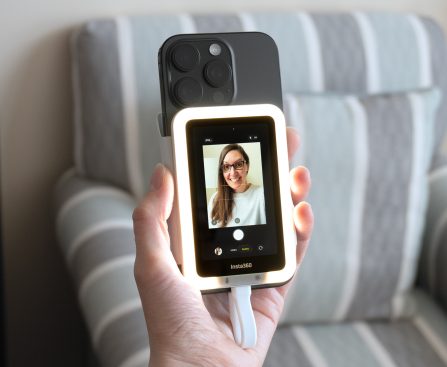
Insta360’s Snap: A Tiny Magnetic Phone Screen for Rear-Camera Selfies

Insta360 just announced the Snap, a new smartphone accessory designed to improve the quality of your selfies. It works like a digital mirror magnetically attached to the back of your Android or iOS smartphone so you can preview and properly frame shots using its more capable rear cameras, while touchscreen functionality lets you control camera […]

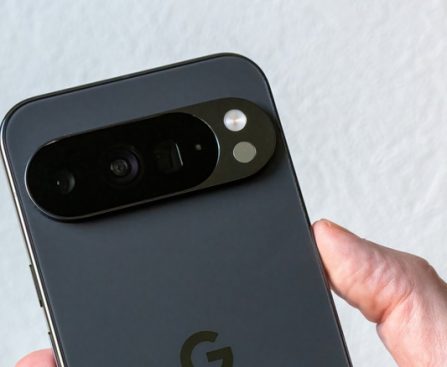
Possible Harm to Pixel 10 Pro from Flashlight Usage

Pixel 10 Pro series and its flashlight. The concerns are straightforward, such as the flashlight becoming excessively hot during operation, along with issues regarding images that seem to exhibit damage around the module where the flashlight was activated for a prolonged period.

A user commented on Reddit last month that they “detected a faint smell of smoke, felt alarmed,” and upon picking up their device, realized the flashlight was still active, and there was even a small burn mark on the wrist rest of their keyboard. Another individual recounted waking up during the night after sensing something warm against their hip. They grabbed their phone, saw that the flash was on, and found that the device was warm to the touch. After it cooled down, the user reported that the flash had changed to orange instead of white.

Google has not yet officially acknowledged any issues with the Pixel 10 flashlight

Apple Obtains Lowest Repairability Score for iPhones and MacBooks, With the Exception of a Single Model

**Repairability Ratings of Apple Devices: An Overview**

Recent assessments based on official governmental standards in Europe have shown that Apple obtains the lowest repairability ratings for both its iPhones and MacBooks. This evaluation is part of a larger initiative by the French government, which requires manufacturers to display repairability ratings to aid in brand comparisons. The European Union has adopted similar standards, and the US Consumer Organization Public Interest Research Group (PIRG) applies these benchmarks for its evaluations.

In accordance with PIRG’s most recent report, which reviewed comprehensive repair data for 105 devices from four smartphone brands and eight laptop brands, Apple consistently occupied the lowest position. The grading framework considers seven essential factors that impact the practicality of repairs:

1. Repair documentation
2. Ease of disassembly
3. Spare parts availability
4. Spare parts pricing
5. Fasteners used
6. Tools required
7. Longevity of software updates

Within the smartphone sector, Motorola topped the list with a B+ grade, followed by Google at C-, Samsung at D, and Apple lagging with a D-. In the laptop category, Asus secured the top repairability rating of B+, whereas Apple received a C-, designating it as the least repairable choice.

**The MacBook Neo: A Notable Exception**

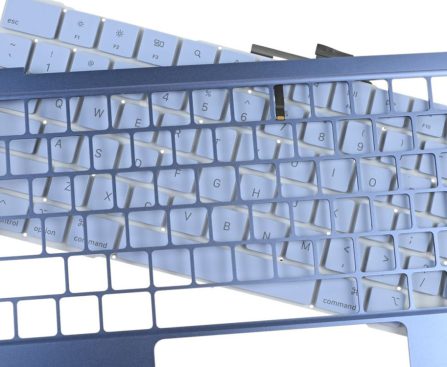
Notwithstanding the overall unfavorable ratings, the MacBook Neo emerges as an exception. It has received acclaim for its repairability, a viewpoint validated by iFixit following their disassembly analysis. iFixit characterized the MacBook Neo as “the most repairable MacBook in fourteen years,” emphasizing its design enhancements that promote easier repairs.

The inquiry remains whether the MacBook Neo’s positive rating is an isolated case or a sign of a possible shift in Apple’s strategy concerning device design and repairability. As consumers increasingly value sustainability and repair options, the demand on manufacturers like Apple to improve the repairability of their products may generate more significant changes in future designs.

In summary, while Apple’s present repairability ratings are unsatisfactory, the favorable reception of the MacBook Neo could indicate a pivotal moment for the company in emphasizing repair-friendly designs.