Four Unexpected Attributes of Your PlayStation 5 Controller

update your PS5 controller whenever your console prompts you.

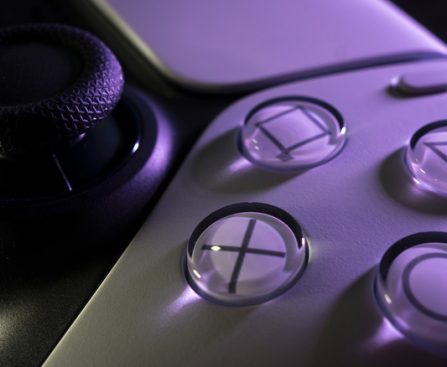
Some users on Reddit have even mentioned that the DualSense has transformed their gaming, with one describing it as “a literal game changer” that persuaded them to choose a PlayStation 5 over an Xbox Series X. However, not all features of the PS5 controller are obvious at first glance. The stylish device conceals some exciting options in the settings and elsewhere that can enhance your gaming session, further amplifying immersion and accessibility. This includes 3D audio settings and Create button adjustments you likely weren’t aware of.
Configure 3D Audio for headphones

For titles that support it, 3D Audio effectively creates a surround sound experience. It immerses you in a new environment when you’re gliding through Manhattan in “Marvel’s Spider-Man: Miles Morales” or roaming the charming, reference-laden universe of “Astro Bot.” What you might not be aware of is that no specialized gear is required to take advantage of it.

3D Audio isn’t limited to TV speakers or premium gaming headsets. In fact, any headphones that connect to the DualSense’s audio jack can access 3D Audio. All you have to do is navigate to Settings, then Audio, and select 3D Audio (Headphones). After that, choose Create Personalized

The Departure of Clippy: Factors Influencing Microsoft’s Choice to Eliminate Its Office Assistant

“It appears that you’re composing an email. Would you like some assistance?” If you were a user of Microsoft Office in the 90s, such phrases (or variations thereof) resonate with you. The Office Assistant, commonly known as Clippy, represented one of Microsoft’s initial ventures into the realm of digital assistance. Nonetheless, Clippy was set up for failure from the outset due to a misinterpretation of data.

Although Microsoft Office 97 included various avatars, Clippy was the primary one, which resulted in it receiving the majority of the attention (and criticism). Clippy was designed to provide guidance on various tasks and enhance productivity — reminiscent of Navi from “The Legend of Zelda: Ocarina of Time.” The inspiration for Clippy was drawn from a study at Stanford University which showed that humans generally respond to computers similarly to how they interact with other people; the same brain areas that activate when interacting with others also light up while typing and navigating with a mouse. Microsoft’s significant error was in taking the subsequent “logical” step to anthropomorphize the application. Clippy quickly became a source of irritation.

It relentlessly bugged users, inquiring if they needed assistance even for the simplest tasks (echoing Navi’s behavior), yet users didn’t despise the developers; they resented the software because Microsoft concretely assigned a visage to the source of their frustration. The reaction from customers was evident. On a positive note, Microsoft took heed of its users’ feedback. As Clippy was included in the next version of Microsoft Office, it was disabled by default, compelling users to seek Clippy out. Microsoft ultimately bid farewell to Clippy and its counterparts with Office 2007.

Those who fail to learn from history are condemned to repeat it

While Microsoft ultimately came to understand that Clippy was not well-received, the firm never gave up on its aspiration to integrate digital assistants across its numerous applications. On a positive note, Microsoft has ceased to give human-like traits to its products, but on the downside, the company is not allowing sufficient time for users to move past its previous blunders before introducing new ones.

In 2009, Microsoft commenced research into a fresh virtual assistant. This endeavor would eventually lead to

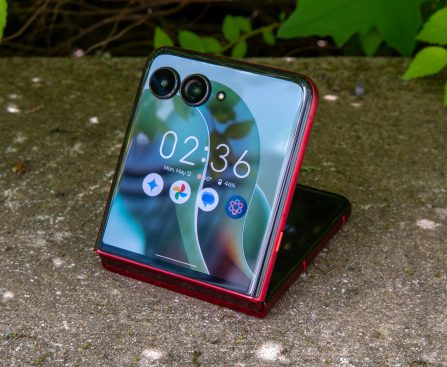
Acquire the ‘Almost Perfected’ Motorola Razr Ultra (2025) for $800 cheaper than the 2026 version today.

Forget about the Razr Ultra (2026), the previous year’s model is currently marked down by 46% with a new offer.

The newest iteration of the Motorola Razr Ultra is scheduled for release on May 21st, but the burning question remains: is the 2026 model worth its high price?

As much as I enjoy having the most advanced Android devices, it’s important to highlight that Amazon is currently offering a direct 46% discount on last year’s Motorola Razr Ultra (2025), dropping the cost of the flip phone to $699.99.

The Motorola Razr Ultra (2025) is now $800 less than the 2026 version with the new offer

<div data-custom-promos='["This is madness"]' data-image="https://cdn.mos.cms.futurecdn.net/qGSbSNpd4CKZkfqRhjjmQZ.jpg" data-link="https://target.georiot.com/Proxy.ashx?tsid=169923&GR_URL=https%3A%2F%2Famazon.com%2FMotorola-Unlocked-Camera-Pantone-Scarab%2Fdp

Meta Quest Players Rejuvenate Their Enthusiasm at the 2026 Creature Feature Showcase

I’ve sifted through all the updates so you can concentrate on what’s most thrilling!

This year has been a rollercoaster for VR enthusiasts, and although there have been numerous highs and lows, VR-centric publishers like Creature are leading the charge with their thrilling new launches. The live chat overflowed with enthusiastic shout-outs in all caps during the event, and it appears that Creature truly struck a chord with Meta Quest fans!

This year’s Creature Feature showcased a multitude of announcements, featuring fresh games and reveals, significant updates for beloved titles, and a couple of surprise features for good measure. Creature is also running a publisher sale on all its current games!

You can view the entire presentation in the video below, followed by my top selections. Here’s the comprehensive list of announcements for the Meta Quest platform before we start:

1. **Hot Dogs, Horseshoes & Hand Grenades 2:** The hot dog-themed shooter at last launches its sequel after 10 years, boasting brand new modes and a Meta Quest release.
2. **Compass:** An expansive flight adventure. Soar above the clouds, discover treasures, and enhance your ship to journey further and further.
3. **Wordbound:** Combine letters to create words, then merge those words to build objects, all to solve puzzles. It’s an impressively inventive application of interactive technology!
4. **Janet’s Planet:** A planet terraforming quest that challenges players to rescue dying worlds through unique terraforming mechanics.
5. **Sock Puppet Superstar:** Slip on your Meta Quest and slide your hand into an enchanting sock that performs at concerts in this new rhythm game that has gone viral on social media. It channels Trombone Champ in the most Pixar-like manner.
6. **Crepe Master:** A VR beat-em-up that’ll add the “sweet” to “sweet punch!”
7. **Spymaster:** An action-narrative spy game where you assume the roles of three distinct agents, each equipped with unique skills and gadgets.
8. **Updates** for Laser Dance, Deadly Delivery, Crossings, Sweet Surrender, Beat the Beats, and Forefront.

Catch the entire Creature Feature showcase to explore the remaining announcements, and enjoy these exciting new titles!

Google’s Rival to Whoop Could Debut Tomorrow

The upcoming Fitbit Air might make its entrance before Google I/O, featuring a sleek design. Google’s screenless Fitbit Air could be launched as early as May 7, following recent hints and leaks. This wearable is anticipated to monitor health metrics throughout the day and display insights within the Fitbit app rather than directly on a screen. It’s speculated that the Fitbit Air will be priced at approximately $99 and offer various band options akin to the Pixel Watch.

Based on earlier leaks, it appears that Google’s screenless competitor to Whoop could potentially debut tomorrow, May 7, 2026. Recently, Steph Curry shared an Instagram post where he was seen with a new Fitbit device that hadn’t been previously revealed, hinting at an entirely new type of wearable. Since that moment, numerous leaks have indicated that Google has been developing a Whoop-like fitness tracker devoid of a screen. This device is said to gather data throughout the day and provide insights on your smartphone, instead of displaying them on a screen.

This segment of wearables has been seeing continuous growth, with companies like Whoop, Amazfit, and others already established in the market. Now, it seems Google is prepared to enter the fray with its own version of a screenless tracker.

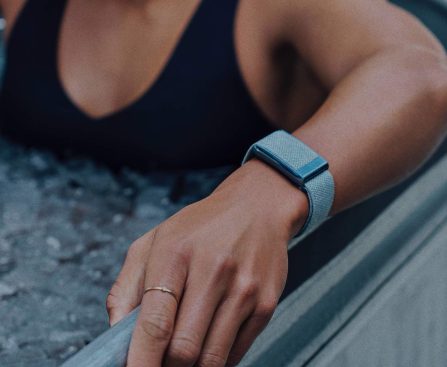
Fitbit’s official Instagram recently shared a teaser with the message “Buckle up. 5.7.26,” showcasing a light blue band with a metal buckle over several slides. The design closely resembles the Pixel Watch woven band, aligning with earlier leaks suggesting a device named the Fitbit Air. All indications point to a potential launch set for tomorrow.

In another teaser, Fitbit shared a video addressing prevalent health-related inquiries, concluding with a “thinking” prompt, hinting that the company may reveal information about its Gemini-driven personal health coach, which has been in beta testing since last year.

Prior leaks hinted at a launch around May 16, but it seems Google might be accelerating its timeline. With the upcoming Android Show and Google I/O 2026, this timing actually aligns well, allowing the Fitbit Air to gain its own attention before the major announcements take place.

Reports indicate it could retail for around $99, featuring multiple band options similar to the Pixel Watch lineup. There are also speculations that Google might rebrand Fitbit’s software experience under a new Google Health name, although nothing has been verified yet. Nevertheless, it appears that we may not have to wait much longer, as the Fitbit Air could be officially revealed very soon.

Android Central’s Viewpoint: I have always appreciated the concept of screenless trackers, but they have often seemed incomplete. If Google can merge reliable tracking with Gemini’s insights, this may be the first fitness band that genuinely provides me with useful information rather than just displaying figures.

“Persuasive Arguments for Removing Google Chrome”

And the most unfortunate aspect is that Google never inquired if you were interested.

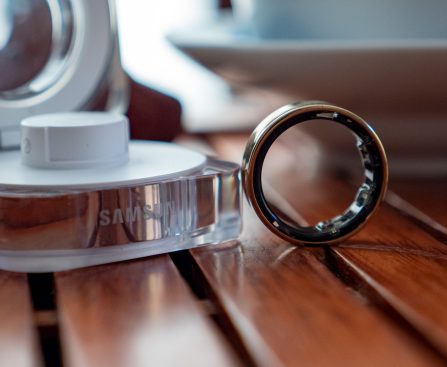
Galaxy Ring 2 Anticipated for Early 2027 Launch, Not 2026

It seems Samsung needed to reassess the situation.

Following a prolonged stretch of silence, speculation regarding Samsung’s upcoming smart ring could dampen any expectations you had for 2026.

This week, a report from EtNews (Korean) suggests that Samsung might have to bypass 2026, as it diligently works on the Galaxy Ring 2 (via 9to5Google). While nothing is guaranteed, these speculations imply that Samsung’s January/February Galaxy Unpacked 2027 may be our next point of focus. The source from the publication claims it is “likely” that Samsung could reveal the Galaxy Ring 2 “early next year.”

The claims continue, with the alleged source indicating that Samsung is striving to enhance the accuracy of temperature sensors and sleep data. Additionally, the forthcoming iteration of the smart ring could significantly “broaden cardiovascular health insights.” The concept of non-invasive blood sugar monitoring has resurfaced, reminding us of past rumors we’ve encountered over the years.

Comfort in the Galaxy Ring 2 is also a topic of internal deliberation at Samsung. Speculation suggests the company might aim to “optimize internal component arrangement” to create a lighter, more functional smart ring.

Let’s discuss Galaxy Ring 2

We’ve been on a rollercoaster journey with the Galaxy Ring 2 for a while now. Last year, we anticipated its appearance during Samsung’s summer Unpacked, but reports swiftly dashed those expectations. It was stated that the device was entrenched in its “early developmental” phase, and that Samsung would not be releasing it in 2025. Some characteristics noted in today’s rumor were mentioned back then, too, including a slimmer design and battery longevity.

Android Central’s Perspective

These rumors have also indicated that Samsung was compelled to “reassess” the Galaxy Ring 2’s release due to market conditions. It makes me ponder if everything else they’re pursuing prompted a reevaluation as well. There are persistent concerns surrounding smart rings, particularly when considering durability and the possibility of needing to replace components. We’re still lacking substantial information, so hopefully, more will emerge in the future.

Concerning its battery, rumors suggest Samsung is pursuing “dream battery” technology for the Galaxy Ring 2. These would be “all-solid-state” batteries, which would provide an energy density improvement from 200 to 360Wh/L. In essence, we could be looking at a larger cell in the Galaxy Ring 2. It was also surprising to see the topic of Samsung’s non-invasive blood glucose monitoring mentioned in this rumor. This is a technology the company has been developing for several years.

Originally, there was speculation that it might debut with the Galaxy Watch 7, but that did not materialize. It definitely did not occur for the Watch 8 either.

Supreme Court Rejects Apple’s Stay Petition, Epic Games Case Set to Go Back to District Court

The US Supreme Court declined Apple’s request today that aimed to momentarily suspend the Epic Games case from going back to the District Court for hearings intended to determine the commission rate it may levy for off-App Store transactions. Below are the specifics.

### A little background

Earlier this week, Apple submitted a petition to the Supreme Court requesting a stay on the Ninth Circuit’s order that sends the Epic Games case back to the District Court.

In its submission, Apple contended that in 2025, it was incorrectly found in contempt of a 2021 injunction concerning off-App Store purchases. At that time, Apple was imposing a 27% commission on off-App Store transactions, as the court’s 2021 ruling did not clarify whether Apple was permitted to impose such fees.

From the verdict, as Apple indicated in its plea to the Supreme Court:

> Apple Inc. and its officers, agents, servants, employees, and any individual in active collaboration or participation with them (“Apple”), are hereby permanently restrained and enjoined from preventing developers from (i) incorporating in their apps and their metadata buttons, external links, or other calls to action that lead customers to purchasing mechanisms, in addition to In-App Purchasing and (ii) communicating with customers through points of contact obtained voluntarily from customers via account registration within the app.

When Apple brought the case to the Ninth Circuit Court of Appeals, the court concluded that Apple was permitted to charge a commission, delegating the determination of the amount to the District Court.

This prompted this week’s application, where Apple requested the Supreme Court to halt the case from returning to the District Court, based on arguments such as:

– The contempt classification is unwarranted, as the 2021 injunction did not address App Store fees;
– This undue contempt classification in the records is unfairly damaging its stance in the remand proceedings;
– The injunction incorrectly extends beyond Epic Games to all developers on the App Store’s U.S. platform.

Apple further noted that with “(r)egulators globally (…) observing this case to establish the commission rate Apple ought to be allowed to charge,” any alleged procedural error or unfavorable ruling against it would adversely affect the company’s prospects for equitable trials elsewhere.

This reasoning was promptly highlighted by Epic Games CEO Tim Sweeney as, in his words, validation that “Apple’s ongoing 5 years of delay tactics in the US judiciary – culminating in the Contempt of Court finding against them and the criminal referral for providing false testimony – is clearly aimed at delaying worldwide relief for developers and consumers.”

### Returning to today

Today, the US Supreme Court denied Apple’s plea to postpone the case from returning to the District Court, as Apple prepares a formal motion for the Supreme Court to review the matter.

As reported by Reuters:

> Justice Elena Kagan, representing the court, declined to suspend a ruling from the San Francisco-based 9th U.S. Circuit Court of Appeals that deemed Apple in contempt in the Epic lawsuit challenging App Store fees.

The court’s ruling followed Epic Games’ filing of a response opposing Apple’s application earlier today, arguing that Apple did not demonstrate any irreversible harm, as participation in remand proceedings while seeking Supreme Court review did not warrant a stay.

Epic also contended that further delaying the case would continue to detriment developers and consumers by maintaining ambiguity regarding the commission Apple can impose on linked-out purchases, a point the company also raised to the Ninth Circuit in response to Apple’s request to stay the verdict.

Given the current situation, the pathway is clear for the case to revert to U.S. District Judge Yvonne Gonzalez Rogers, with proceedings regarding Apple’s off-App Store commission anticipated to resume soon.

For now, Apple still cannot impose commissions on linked-out purchases until the District Court sanctions a new rate. The company, however, is still expected to request the Supreme Court to engage with the dispute.

Apple Sets New Q1 Smartphone Revenue Record Fueled by High Demand for iPhone 17

**Apple Leads Smartphone Market Revenue in Q1 2026**

A recent initial report from Counterpoint Research shows that Apple has attained extraordinary success in the smartphone sector during the first quarter of 2026, securing nearly half of the total market revenue. This accomplishment is paired with a record average selling price (ASP) for the company in this timeframe.

### Success of the iPhone 17 Lineup

Counterpoint Research reveals that Apple established two notable revenue milestones in Q1 2026. The company captured 48% of the overall smartphone market revenue, marking its highest-ever share for a first quarter. Furthermore, Apple witnessed the quickest year-over-year revenue growth among prominent smartphone manufacturers, with its share rising from 43% in the prior year.

In contrast, Samsung occupied a distant second position with an 18% revenue share, followed by OPPO (including OnePlus and realme) at 6%, Xiaomi at 5%, and vivo at 4%.

The report underscores that the overall ASP in the smartphone sector increased by 12% year-over-year to $399, fueled by elevated smartphone prices amid a persisting memory crunch. Apple, however, achieved an impressive Q1 average selling price of $908, even while maintaining consistent iPhone prices as many competitors, including Samsung, raised theirs.

### Shipment Shares

As per the report, Apple and Samsung were equal in shipment share, each representing 21% of the market. Xiaomi trailed in third place with a 12% share, while OPPO and vivo accounted for 10% and 7%, respectively.

Jeff Fieldhack, Research Director at Counterpoint, remarked on Apple’s performance, stating, “Apple’s growth was fueled by sustained demand for the base iPhone 17 and iPhone 17 Pro Max, with a stronger mix of these models boosting Apple’s overall ASP by 11% YoY. Unlike its rivals, Apple largely maintained stable pricing despite rising BOM costs, demonstrating its capability to absorb cost pressures and remain insulated from the memory crisis, which bolstered its competitive stance during the quarter. Regionally, Apple recorded widespread vigor, particularly across the Asia-Pacific region, propelled by subsidies, promotions, and trade-in offers.”

### Future Perspective

The report indicates that while smartphone shipments are projected to keep declining throughout 2026, the ASP is expected to increase due to price pressures from the memory crunch. A significant market recovery is predicted only in late 2027.

For additional information, the complete report by Counterpoint Research can be accessed [here](https://counterpointresearch.com/en/insights/Global-Smartphone-Revenues-Up-8-percent-YoY-in-Q1-2026).

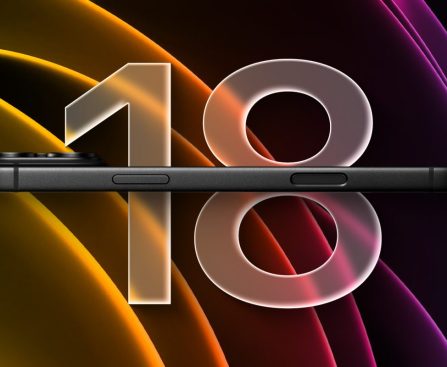
iPhone 18 Pro: Next Year Will Introduce Three Fresh Design Changes

# iPhone 18 Pro and Pro Max: Expected Design Modifications

The iPhone 18 Pro and Pro Max are anticipated to debut this autumn, introducing a variety of fresh features and design modifications that have generated considerable speculation. Below are the primary design revisions that leaks suggest we may see.

## 1. Coordinated Rear Glass and Aluminum Tones

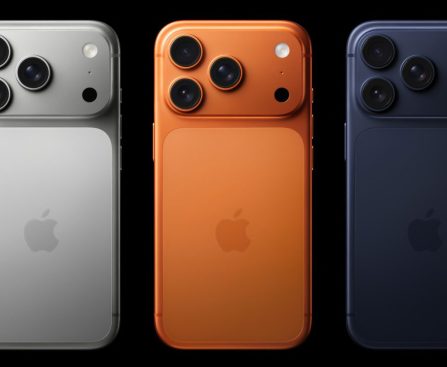
A significant design alteration is the shift towards a unified color palette for the rear glass and aluminum. The iPhone 17 Pro showcased a bifurcated design that elicited mixed feedback from consumers. As per leaker Instant Digital, the iPhone 18 Pro series will present a revamped back glass that reduces the color disparity between the glass and the aluminum rear panel, resulting in a more cohesive and integrated appearance. This modification aims to respond to the preferences of users who found the previous two-tone design less attractive.

## 2. Dynamic Island Reduces Size

The front design of the iPhone 18 Pro has also captured attention. Although the screen dimensions are predicted to stay in line with their predecessors, the size of the Dynamic Island cutout is believed to shrink. Recent leaks indicate that the updated Dynamic Island will be roughly 35% smaller compared to that of the iPhone 17 Pro. While earlier rumors hinted at a possible hole-punch design, it seems that Apple will maintain the Dynamic Island, with certain Face ID elements being moved beneath the display.

## 3. Vibrant New Colors

Building on the popularity of vibrant color choices in the iPhone 17 Pro, Apple is likely to pursue this trend further with the iPhone 18 Pro. The Cosmic Orange shade was especially well-received, leading the company to investigate additional lively shades. Speculated new color options for the iPhone 18 Pro include Light Blue, Dark Cherry, Silver, and Dark Gray. The Dark Cherry shade, characterized as a mixture of burgundy, coffee, and deep purple, is expected to be a highlight in Apple’s promotional campaigns.

As the release date nears, enthusiasm grows regarding these rumored design modifications for the iPhone 18 Pro and Pro Max. Users and fans are eager to discover how these enhancements will improve the overall user experience and visual charm of Apple’s flagship products.