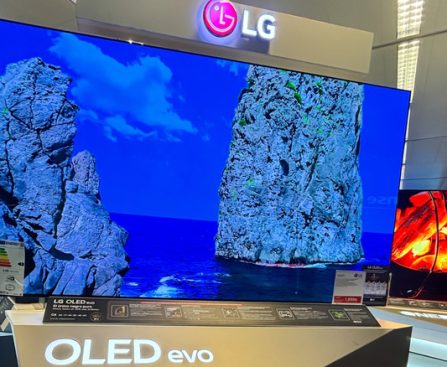
Grasping the Significance of ‘Evo’ on LG OLED Televisions

thrilling price announcement for the LG OLED C6 and G6 evo TVs. The G-series evo TVs are especially touted by LG as their top OLED displays. But what does the “evo” designation truly signify for these models? In what ways do “evo” TVs vary from other OLED panels produced by LG and competing brands?

LG addressed an inquiry on Best Buy’s site, stating that the company’s exclusive OLED evo technology delivers “improvements in brightness, color, precision, and overall image quality.” The brand aims with the evo line to achieve remarkable contrast ratios with perfect blacks and exceptional color accuracy while preserving consistent performance. Evo TVs have also received UL Solutions’ “Perfect Black, Perfect Color” recognition, Intertek’s “100 percent color accuracy” certification, and TÜV Rheinland’s “Quick Stability with Image Quality” endorsement. In other words, LG’s OLED evo technology epitomizes the reasons why TV manufacturers transitioned to OLED displays to begin with.

However, not all LG OLED TVs feature evo technology. The 2025 LG B5 OLED was not an evo model and did not incorporate the “Brightness Booster Ultimate” capability that premium LG OLED variants utilize to attain such pristine detail. LG’s B-series OLEDs act as entry-level OLED panels, ideal for those seeking exceptional OLED quality without spending excessively on evo-level enhancements.

Is purchasing an LG OLED evo TV worthwhile?

<div class="

Disproving the Myth: The Safety of Contemporary Computer Monitors for Your Vision

PC display manufacturers are transitioning to OLED screens that support increased speeds, with rates significantly exceeding 60Hz. Competitive gaming advantages come from higher frame rates, as a fluid display provides certain benefits as well. Therefore, the notion that the human eye is incapable of perceiving beyond that is inaccurate, primarily because our vision operates differently.

The 60 FPS monitor fallacy and human eye flicker fusion

Effects of Keeping Your PlayStation 5 Continuously Turned On

like PCs, there’s an ongoing discussion regarding whether it’s better to keep your PlayStation 5 powered on continuously or to switch it off when not in use. The term “Off” can refer to two distinct conditions for the PS5 since the console possesses three power states: On, Off, and Rest Mode. The Rest Mode acts as a middle ground, placing the console in a low power mode where the display and DualSense controller turn off without fully exiting any active games or disconnecting from the internet.

Each of these power states carries its advantages and disadvantages. Keeping your PS5 on enables quicker access to your games and removes the wait time for updates after starting the console, but it also results in increased power consumption and potential hardware wear. This makes the rest mode—a setting where the console automatically enters after being idle for a specified duration—a viable compromise. To grasp why switching off your PS5 or using rest mode is beneficial, understanding the hazards of leaving it powered on constantly is essential.

Continuous use of your PS5 may harm the hardware

The primary risk involved in keeping your PlayStation 5 powered on all the time may be overheating. The PS5 is built to automatically shut down if it becomes excessively hot, but leaving the console on (particularly while a game is running in the background) can lead to long-term issues. Powering down your console allows the fan to rest, which is crucial for maintaining the console’s cleanliness.

The PS5’s fan draws in air for cooling, capturing dust and particles that accumulate and contribute to overheating. You should still <a href="https://www.bgr.com/212180

Ways to Enhance Your Vehicle’s Sound System on Any Budget: 3 Efficient Techniques

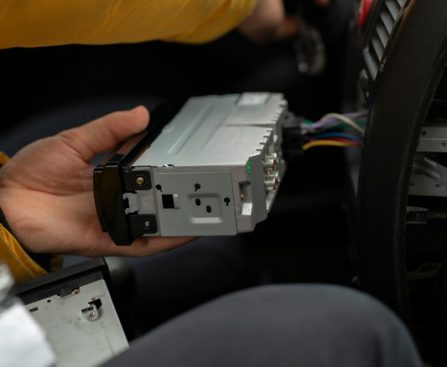
audio system superior to most home speakers. By substituting current components with more potent or specialized hardware, you can experience exceptional sound across all of your drives, whether you’re gearing up for a lengthy road trip or merely commuting to work. There are choices for every budget, so we’ll explore methods to enhance your car’s audio system along with some particular products ranging from premium equipment to more economical options.

Upgrade the car stereo receiver

Assessing the Capability of Android Tablets to Serve as Substitutes for Laptops

For years, laptops have been the preferred option for work, gaming, and other demanding tasks due to their power and versatility. However, in recent times, many users have turned to tablets. Initially limited in scope, tablets have significantly evolved, now offering larger, more vibrant screens and enhanced processing capabilities.

Numerous contemporary Android tablets are compatible with keyboards and mice, providing a complete desktop-like experience. Some even feature desktop modes, such as DeX mode on Samsung Galaxy tablets and a comparable functionality on Xiaomi HyperOS. These modes allow your Android tablet to simulate a desktop environment cost-effectively. If your tasks lean towards less demanding activities, like video conferencing, utilizing web-based applications, or surfing the internet, an Android tablet proves to be a feasible substitute.

However, suggesting that Android tablets can substitute for laptops isn’t always feasible. While they offer portability and ease of use, there are limitations — especially regarding performance and app compatibility — where they fall short in comparison to laptops. Therefore, for some users, an Android tablet may serve as a laptop alternative, while for others, it will simply act as an additional device.

Android tablets can replace laptops for casual use

Consumer Reports Uncovers Absent Crucial Security Element in Certain Children’s GPS Trackers

Consumer Reports. Some do not provide the option for children or their parents to disable the data collection or selling — this pertains to the child’s data, since they are the ones using the GPS device. Another concern is that not all of these devices are equipped with crucial online security features to help guard against unauthorized access.

When parents seek to buy trackers for their children, these devices generally fall into a few primary categories. There are Bluetooth trackers usually employed to tag and monitor personal items, like baggage, which are now being adapted for kids. There are GPS trackers similar to those found on smartphones and Google Maps, and akin to your phone, they often necessitate a monthly subscription charge to transmit your child’s location via cellular networks. Lastly, there are smartwatches uniquely created for children that come with the additional advantage of being able to communicate with the parent beyond just GPS tracking. Below, we will discuss some alternatives in each category, along with what Consumer Reports discovered about their privacy and security measures.

The least secure GPS trackers for kids