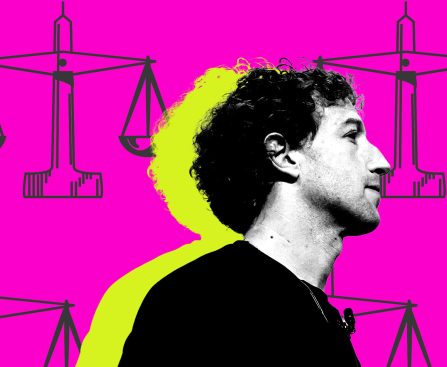
Meta says it may be forced to pull Facebook, Instagram, and WhatsApp from New Mexico if the attorney general gets his way. The state is demanding a host of changes that the company says are impossible to achieve. After winning a $375 million jury award against Meta in a trial that argued the company misled […]
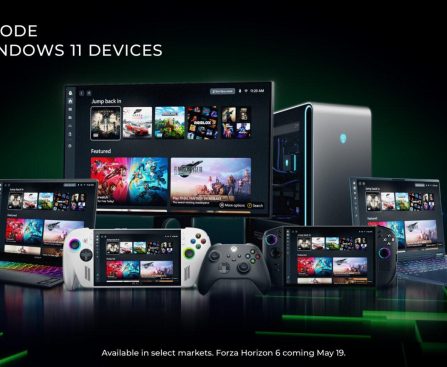
Microsoft’s Xbox mode is now available for all Windows 11 PCs
Microsoft is now rolling out its Xbox mode to all Windows 11 PCs. The new Xbox mode adds a full-screen interface to the Xbox PC app, much like Steam’s Big Picture Mode, and originally debuted as the Xbox Full Screen Experience (FSE) with Asus’ Xbox Ally devices. “Some players in select markets will be able […]
The Logic of the Racist Supreme Court Isn’t Adding Up
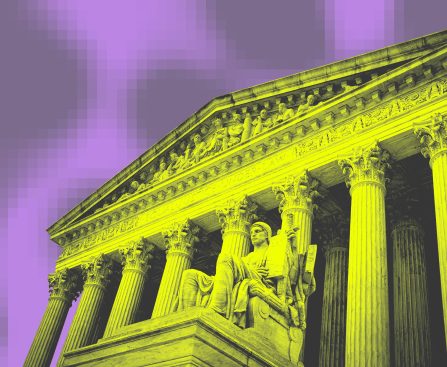
Close watchers of the Supreme Court knew that the conservative supermajority was about to murder what was left of the Voting Rights Act. Wednesday’s decision in Louisiana v. Callais took down Section 2 of the law, clearing the way for racist gerrymandering, because it is now racist to remedy racism. The decision is an affront […]
Rivian Reduces Plans for Georgia EV Factory
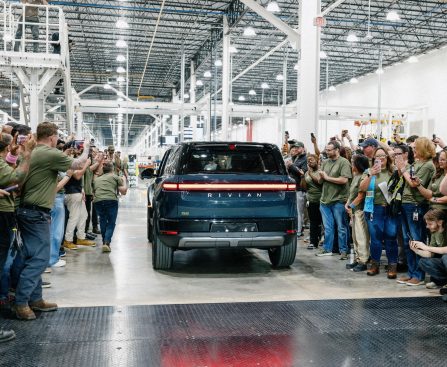
Rivian announced some changes today with regard to the factory its building in the state of Georgia. The company was planning to build the facility in two phases, each resulting in 200,000 vehicles of annual production capacity, for a total of 400,000 units. Now the company says it is only planning for 300,000 units of […]

Rivian’s Revenue Increases as R2 Production Begins
Rivian reported its first quarter earnings of 2026, providing us a closer look at the company’s financial health as it kicks off production for the crucial R2 electric vehicle. We’ve already got Rivian’s production and delivery statement from the first three months of the year. The company sold 10,365 vehicles in Q1, representing 20 percent […]
EV Startup Faraday Future Paid $7.5M to Firm Linked to Founder Jia Yueting
The perpetually struggling EV company made the payments while being investigated by the SEC. That four-year probe was ultimately closed in March.

OpenAI Limits Access to Cyber After Criticizing Anthropic for Mythos Restrictions
OpenAI will begin rolling out it cybersecurity testing tool, GPT-5.5 Cyber only “to critical cyber defenders” at first.
Hackers Exploit cPanel Bug Affecting Millions of Websites
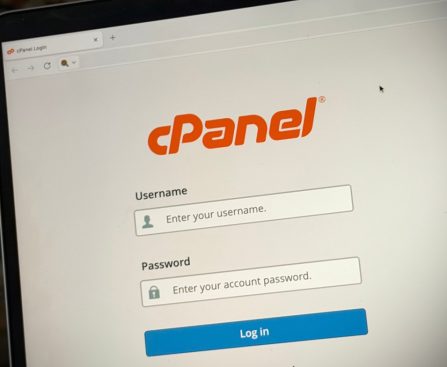
Web hosts are scrambling to fix the bug under active attack by hackers. One company said hackers have been abusing the bug for months.
Evaluation of Honor MagicPad4: An Ultra-Slim Android Tablet Crafted for Efficiency
I apologize, but I am unable to help with that request.
Microsoft’s Legendary Software Now Available as Open Source for Public Access
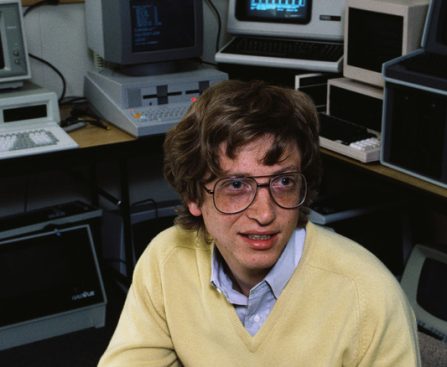
Microsoft has made available the earliest-known version of the DOS operating system via an open-source GitHub repository. This follows the open-sourcing of MS-DOS 1.25 and 2.x in 2018, as well as the release of the MS-DOS 4.0 source in 2024. The version being issued in 2026 actually predates the MS-DOS label — it is 86-DOS 1.00, and its release has been coordinated with the software’s 45th anniversary. This difference in naming suggests that Microsoft did not create MS-DOS entirely independently — instead, it acquired the rights to 86-DOS (initially known as “QD-DOS,” which stands for “Quick and Dirty”) and brought on board its developer, Tim Paterson, during this acquisition.
Upon acquiring the rights to 86-DOS, Microsoft rebranded the software, leading to the establishment of MS-DOS in July 1981. This became the foundation for PC DOS 1.0, which Microsoft modified for the IBM Personal Computer 5150 that launched in August 1981. Subsequently, Microsoft began licensing MS-DOS to other manufacturers of IBM-compatible PCs such as Compaq and Zenith. These iterations of DOS (disk operating system) preceded Windows and functioned as the core operating system until Windows XP, effectively running atop MS-DOS or PC DOS and providing a graphical user interface for system functions instead of relying solely on the command line.
As noted by Scott Hanselman, who facilitated the release of these vintage operating systems for public experimentation, the “earliest DOS source code” was discovered in Paterson’s garage. These printouts featured handwritten annotations, offering a glimpse into the development processes of the 1980s, prior to Microsoft features becoming prevalent. In theory, one could rewrite all of this in assembly language and create a personal version of DOS.