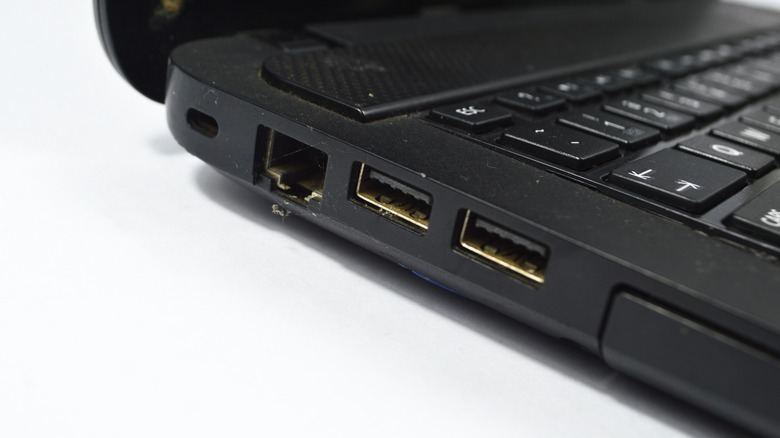
when a USB port appears blue, it signifies that the port is compliant with the USB 3.0 standard, also referred to as SuperSpeed USB. An orange USB port similarly denotes USB 3.0 but indicates that the port is continuously powered with passive power delivery. There are also teal-colored USB ports available. However, what does it signify if a USB port is black? Is it merely a cosmetic choice to coordinate with the casing, or does it hold a specific meaning?
A black USB port typically suggests that the connector is compatible with the USB 2.0 Hi-Speed standard, which, surprisingly, is now considered older despite the “Hi-Speed” designation. It allows for a maximum data transmission rate of 480 Mbps — significantly slower than USB 3.0, which can reach up to 5 Gbps. You can connect any USB Type-A cable to these ports, but if you’re connecting a newer device, like a recent smartphone, the data transfer and charging speeds will be reduced. USB 2.0 was first introduced in 2000, and although these ports remain in use today, they are considerably slower than USB Type-C and USB 3.0 and higher.
