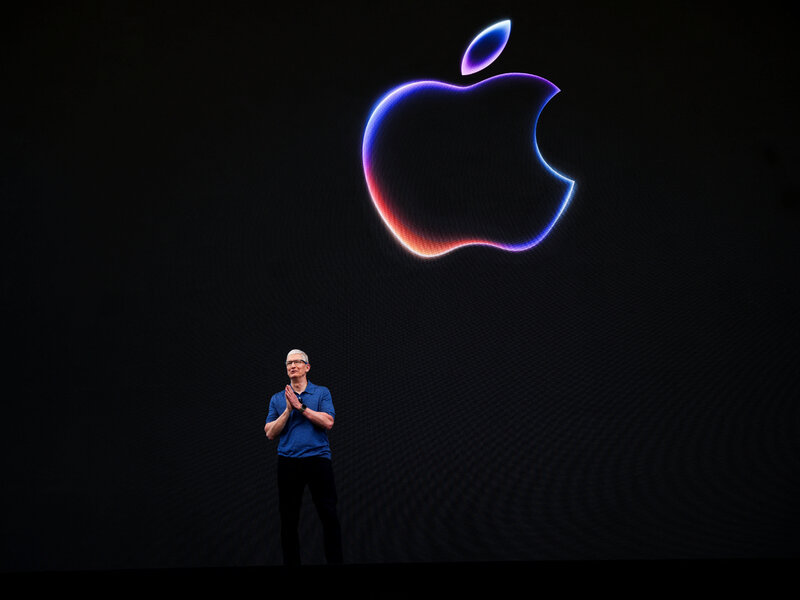
Amar Subramanya is poised to become one of the most scrutinized appointments Apple has made in recent years. Here’s his initial course of action.
### Apple’s Newly Appointed VP of AI Brings Some Relevant Background
After John Giannandrea’s retirement announcement, Apple announced that Amar Subramanya would join the firm following under six months as the Corporate Vice President of AI at the recently established Microsoft AI division. Prior to this, he dedicated 16 years at Google, starting as a Staff Research Scientist and advancing to Principal Engineer, ultimately being appointed Vice President of Engineering in 2019. He also contributed to two prominent publications related to high-profile releases: Gemini in December 2023 and Imagen 3 in August 2024.
Interestingly, Google has faced a similar challenge in recent years as Apple. Like many in the industry, Google fell behind when ChatGPT was launched and hurriedly sought to find its footing, which was particularly challenging for them as Google was the creator of the Transformer architecture (the T in GPT). However, as anyone closely following the AI domain can attest, Google is undeniably back and competitively challenging OpenAI. Following the latest Gemini model release, OpenAI’s CEO Sam Altman warned his team to brace for some “rough vibes” and “temporary economic headwinds,” meaning: “they have caught up to us, this situation is persistent, and investors recognize it too.”
Google’s journey toward not-quite-AGI-but-near-equivalent intelligence compared to OpenAI was filled with hurdles. Remember when Bard was the company’s projection for AI’s future? Fond memories. It took them almost three years (close to the exact date of ChatGPT’s launch) to implement a significant course correction, yet they accomplished it. While it’s too soon to determine if they can consistently outperform OpenAI, that isn’t even the crux of the matter. The crucial point is that they not only possess a state-of-the-art model but also have every Google-owned platform available for deployment, a resource unmatched by others. And even though Subramanya departed Google in June, he was evidently heavily involved in the majority of the development of these new Gemini models during his time as the company’s VP of Engineering.
### And What Is On Apple’s Agenda?
From the outset, Subramanya will undoubtedly encounter significant expectations to rectify the perceived missteps of his predecessor. On the positive side, this provides him a degree of goodwill and, to some extent, some time to first organize the situation and then to rectify it. However, he faces a tough challenge ahead with a severely understaffed team at an all-time low morale. While it’s impossible to predict definitively from the outside, it seems reasonable to conclude that he will need to quickly bring in additional talent if he hopes to recover from the constant series of setbacks Apple has endured, especially in the last year.
The encouraging news is that with new leadership in position and all the elements of a somewhat fresh start, Apple may be able to draw in talent that, until very recently, viewed a career in machine learning at the company as lacking promise. Some of these individuals may very well be former colleagues of Subramanya. Moreover, there’s the external expectation, which isn’t entirely his responsibility. His role is to enhance Apple’s underlying AI technology, while marketing and product teams will dictate how to convey that narrative. Nonetheless, that narrative will solely depend on what he can genuinely achieve, carefully balancing the need to act swiftly to demonstrate his value while ensuring that Apple can genuinely fulfill its AI aspirations, even if it entails initiating parts of its work from the ground up.
Lastly, there’s the long-term perspective. While rebuilding trust (both internally and externally) will form the bulk of his initiatives, this will merely be the starting point. In recent years, we’ve become accustomed to considering Apple’s role in machine learning as merely catching up to its rivals. However, that’s not the entire picture. The responsibility of any company aiming for significant advancements in AI is to cultivate an ecosystem where research and application can mutually enhance one another, which, ironically, is what John Giannandrea sought to establish prior to ChatGPT revolutionizing the industry.
While it might seem unjust that, despite his substantial contributions, Giannandrea will likely be remembered as the individual who faltered in AI at Apple, his tenure should also act as a cautionary lesson for Subramanya: repairing what is currently broken is just one aspect of the role. Equally vital will be laying the groundwork for the technological advancements of the coming decades that will not
