Fold once, fold twice: A stronger resurgence for foldables!
Foldable smartphones were envisioned as the forthcoming sensation in the smartphone sector. Initial 5-year projections were ambitious, predicting double-digit growth and significant market share capture. However, these forecasts were adjusted as shipments declined from early peaks, and the foldable market’s unit share never surpassed 1.6% of the total smartphones.
As we approach the end of the year, foldables are anticipated to see only a 10% year-over-year growth in 2025, according to IDC’s recent projections, a figure lower than the record numbers noted in the technology’s early stages. Nonetheless, the form factor shows resilience, with a favorable shift towards foldables.
While the initial foldable phones debuted with book-style designs, flip models swiftly became the favored form factor — influenced by their lower price tags and possibly the nostalgia for flip feature phones. It wasn’t until 2025 that fold models seized the lead with 53% market share in the category.
Android brands, headed by Samsung, Honor, Oppo, and Google, have capitalized on their newest foldable offerings, eager to challenge the $1,000+ premium segment long monopolized by Apple, which has yet to introduce a foldable option.
How new engineering has addressed foldables’ most significant flaw
Simultaneously, gradual innovations in design and durability have started to reshape the innovation landscape, providing foldables with a competitive advantage. For instance, the Honor Magic V5 stands as the slimmest foldable on the market, featuring a folded thickness of 8.8mm and an unfolded thickness of 4.1mm.
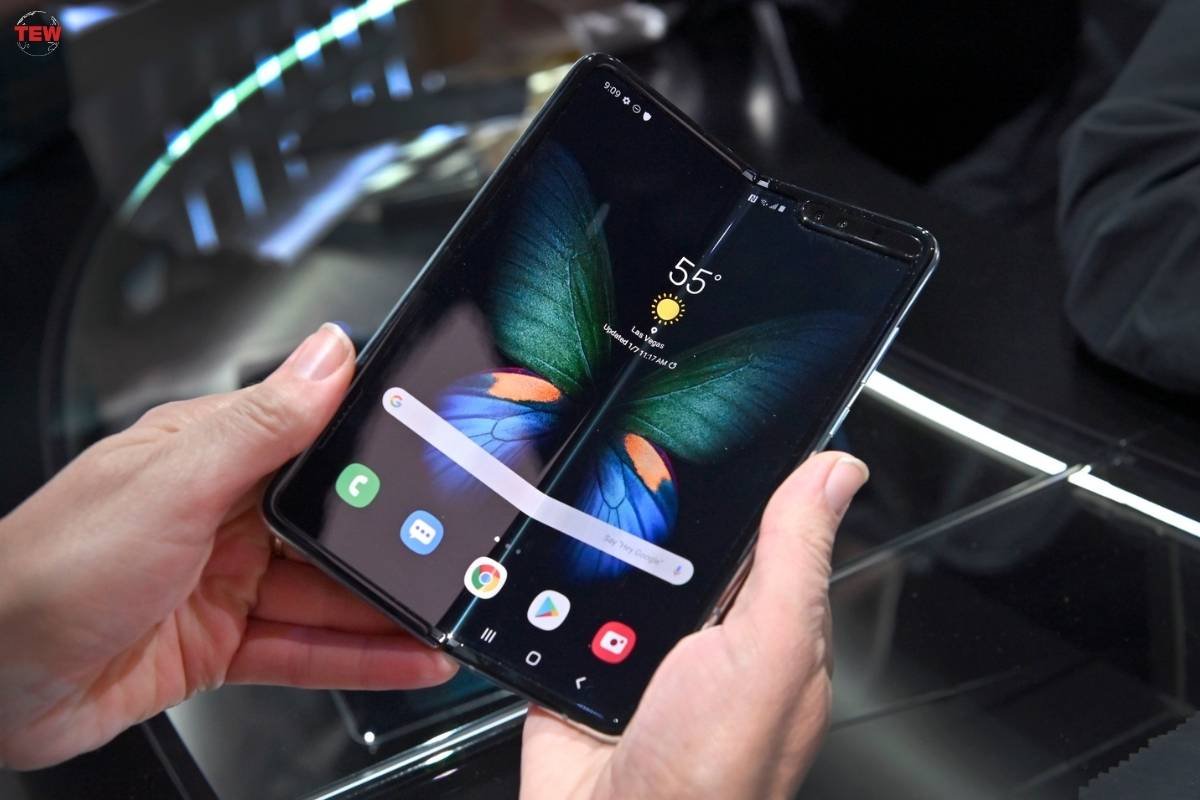
The Samsung Galaxy Z Fold 7 measures 8.9mm when folded and 4.2mm when opened. In contrast, the original Galaxy Fold debuted in 2019 with measurements of 17.1mm/7.6mm, and the 2024 Galaxy Z Fold 6 at 12.1mm/5.6mm. When compared to a non-foldable within the Galaxy series, it surpasses Samsung’s slimmest S25 Edge in its unfolded state.
Regarding durability, the Galaxy Z Fold 7 claims to withstand up to 500,000 folds owing to improved materials and hinge design, while the Galaxy Z Fold 6 managed only 200,000 folds. This translates to a decade of durability for the average user of the latest model.
These comparisons illustrate that the consumers’ primary concern — bulkiness — has become a non-issue. Foldables are now slimmer, more durable, and constructed to endure, justifying their premium pricing.
The daring new form factor driving global interest
The redemption story continues. Huawei advances the foldable idea with the introduction of the world’s first trifold smartphone, operating on Harmony OS and set for global availability in 2025. The display folds twice to 10.2 inches and achieves a thickness of 3.6mm when opened.
With Huawei’s trifold design establishing an audacious benchmark, Samsung responds to the rivalry by unveiling the Galaxy Z TriFold in December 2025. The 10-inch, 3.9mm-thin TriFold’s in-store and online inventory sold out rapidly during its initial launch in Korea, signaling a resurgence of robust consumer interest in foldables.
Indeed, Samsung’s Galaxy Z TriFold marks a new chapter for foldables. It is the first trifold smartphone operating on Android and supported by Samsung, the frontrunner in the foldable field. With its extensive reach and formidable brand influence, Samsung is poised to bring trifold technology to average consumers quicker than Huawei.
Facing barriers due to the absence of Android and Google services, Huawei primarily targets China with its Mate XT and Mate XTs trifolds. Despite this challenge, both models collectively secured a 3.6% unit share of the foldable market in the initial three quarters of 2025, selling over 740,000 units and generating an impressive $2 billion in revenue since their debut. These figures are remarkable, considering both models retail at a hefty $2,500.
The 2026 turning point: What occurs when Apple finally enters the field?
As trifold foldables attract consumers, the real turning point is anticipated in 2026: Apple finally joins the foldable landscape, expected to capture a 22% unit share and 34% value share of the foldables market in its inaugural year, according to IDC.
Apple’s capacity to sell on a large scale to a dedicated customer base will undoubtedly lead to healthier growth across the entire foldable sector. In fact, IDC’s latest predictions suggest a phenomenal 30% growth for the overall foldable market in 2026.
This influence will also affect the Android foldable segment. While possibly not immediate, a more significant consumer demand is expected to emerge over the medium term.
