
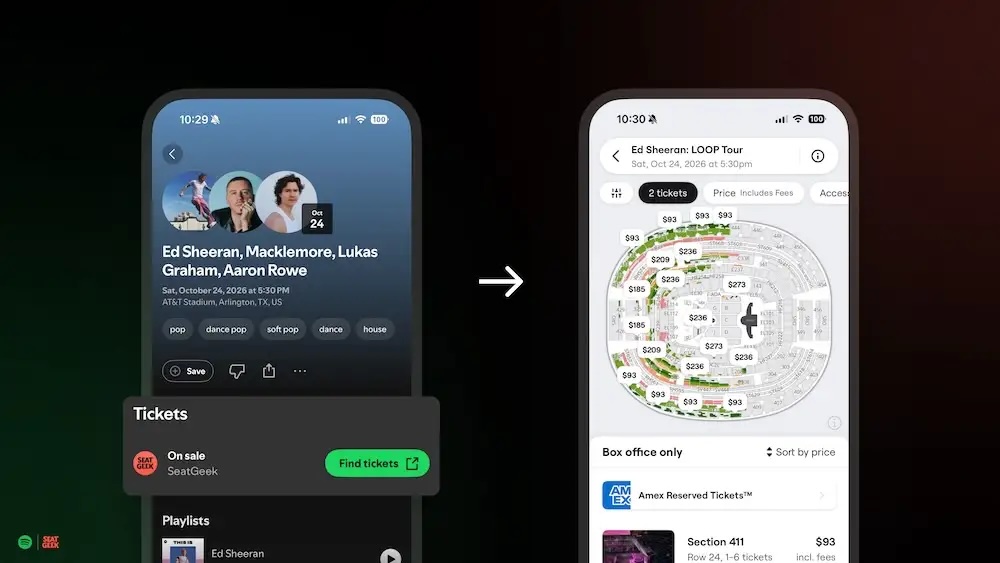

SeatGeek announced on Wednesday a new integration with Spotify, offering a seamless ticket-buying experience for Spotify users.
Now when Spotify users browse an artist’s page or upcoming tour dates, they will see ticket links powered by SeatGeek for concerts at these participating venues, enabling a streamlined purchase process.
Currently, the integration is available for a select group of venues where SeatGeek serves as the primary ticket seller. It includes SeatGeek’s 15 major U.S. venue partners, such as State Farm Stadium in Glendale, Nissan Stadium in Nashville, and AT&T Stadium in Arlington. Though SeatGeek is significant in the secondary ticketing market, this integration is limited to venues where it is the primary ticketing platform.
This is a strategic win for SeatGeek. Through direct placement in the Spotify app, SeatGeek can reach millions of active music fans as they discover upcoming events, increasing the chances of converting listeners into ticket buyers.
Despite SeatGeek’s advancements, it faces competition from industry giants Ticketmaster and AXS. These rivals dominate the ticketing market, supported by long-standing contracts with many top venues and event organizers. It’s estimated that Ticketmaster alone covers 53 of the top 68 U.S. arenas. Even Barclays Center, which switched from Ticketmaster to SeatGeek in 2021, quickly reverted to Ticketmaster within a year of a seven-year deal.
This partnership follows Spotify’s announcement that it has helped artists generate over $1 billion in ticket sales by connecting fans with live events through its ticketing partners. The company collaborates with over 45 ticketing partners, including Ticketmaster, AXS, Eventbrite, DICE, and Bandsintown.
Spotify previously tested direct ticket sales in 2022.
This isn’t SeatGeek’s first collaboration with a popular app. The company partnered with Snapchat in 2018, enabling users to purchase tickets directly within the social app.
Separately, Spotify’s recent earnings call reported over 750 million monthly users and 290 million paid subscribers, with projections to reach 759 million users and 293 million paid subscribers in the current quarter, emphasizing its ongoing focus on profitability.