
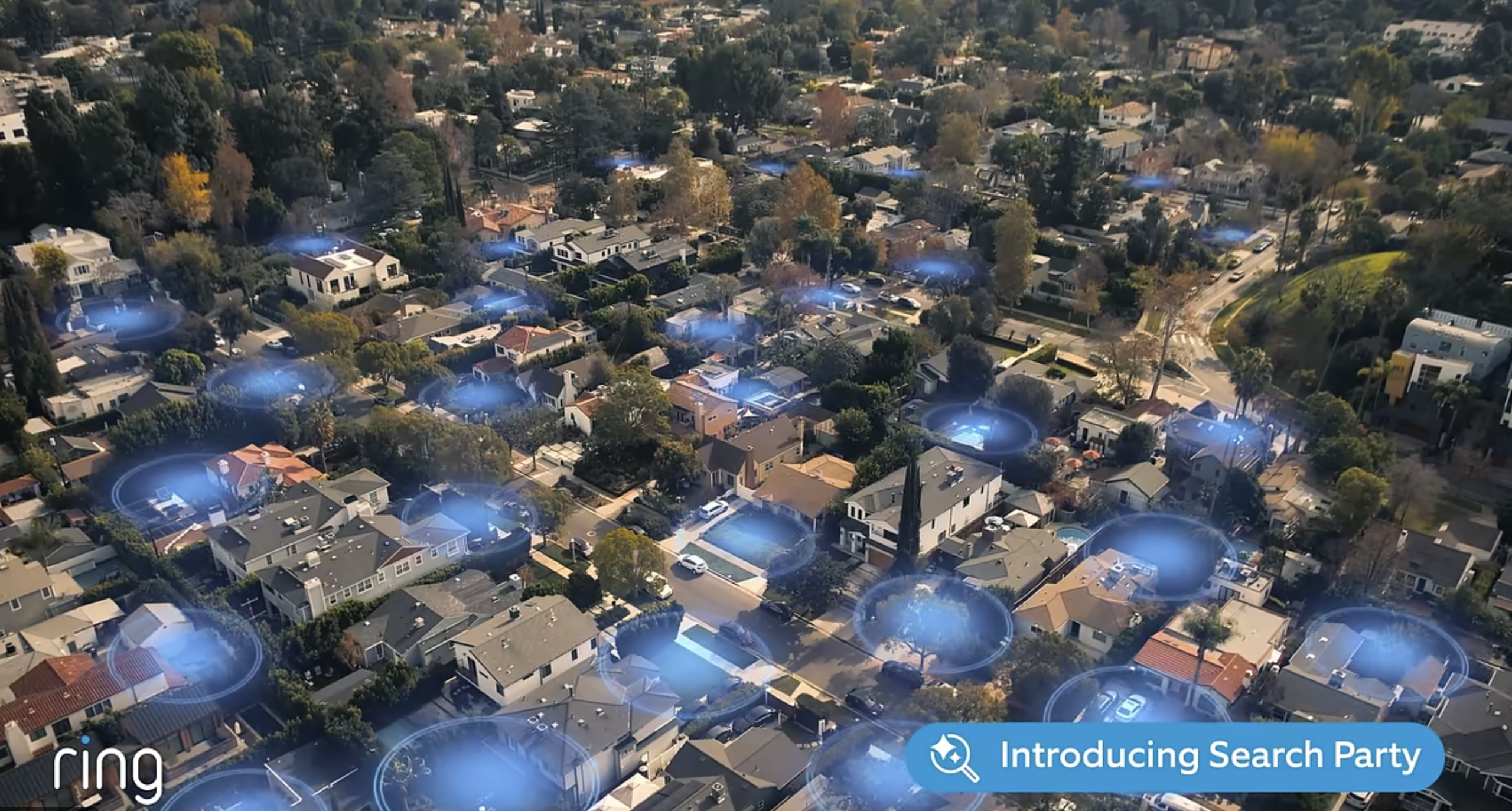

Maps are not the issue.
Ring founder Jamie Siminoff is on an “explanation tour,” as described by The New York Times, after the backlash from its Super Bowl ad and the introduction of the Search Party feature.
In an interview with The Times this week, Siminoff addressed people’s concerns, acknowledging that perhaps the image of blue rings radiating from suburban homes in the ad triggered reactions. He mentioned that future ads would feature fewer maps.
The true problem isn’t the graphics in ads; it’s the potential for Ring’s extensive AI-powered camera network to become a surveillance tool accessible to law enforcement, recording and tracking people’s movements via AI, raising issues about reliability and potential misuse. Ring stands alone in having a system, Community Requests, allowing users to directly share footage with local police.
Ring insists its cameras aren’t being used to establish a wide-reaching surveillance network. They emphasize robust privacy protections and user control over video sharing with law enforcement. Nevertheless, they haven’t adequately addressed their users’ anxieties.
Siminoff should stop pushing the narrative that cameras solve crime and acknowledge the genuine concerns about how far Ring might take its technology. He needs to define the boundaries, particularly will Search Party only track human movements?
Instead, Siminoff believes in adding more cameras and video, saying most people feel the same, even if they express otherwise. He noted to The Times that without video, some stories might not be accurately told or known.
The worry extends to what becomes of video once shared with police. While arguably not Ring’s problem, they recognize the significant responsibility that comes with their mission “to make neighborhoods safer,” needing to ensure responsible use of their technology.
While Ring claims users have full control over their video sharing, activating Search Party by default shows they hold that control, and future settings aren’t guaranteed. Plus, individuals filmed may have no choice in their footage’s use.
Despite canceling its controversial partnership with Flock Safety, linked to ICE, Ring continues using its Community Requests tool and partnership with Axon, known for Tasers and widely used law enforcement evidence management systems.
Siminoff affirmed to The Times that Ring would keep expanding Search Party, possibly adding features like tracking cats, raising questions about future directions.
As this technology advances rapidly, many feel it’s on the verge of creating a dystopian surveillance system.