
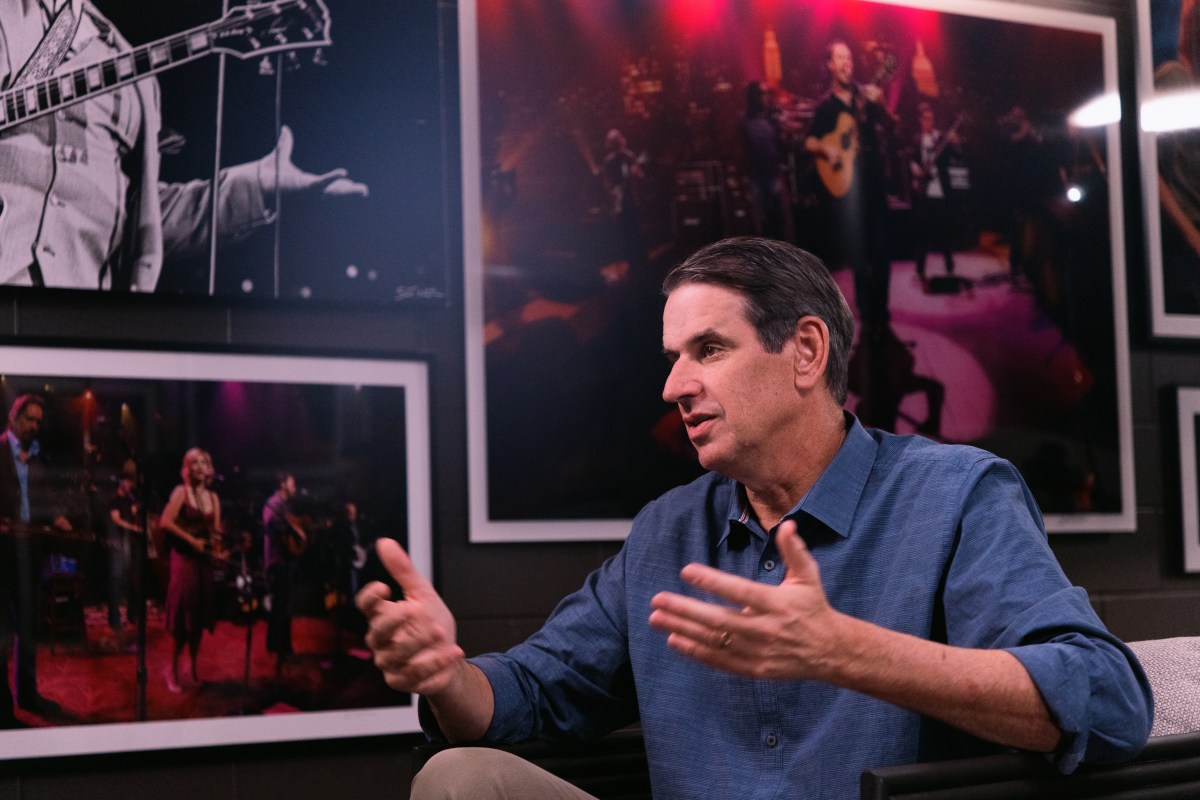

For nearly three decades, Bill Gurley has been one of the most influential figures in Silicon Valley — a general partner at Benchmark with early investments in companies like Uber, Zillow, and Stitch Fix that helped shape modern venture capital. Now, having relocated to Austin and stepped back from active investing, the Texas native is channeling his talent for pattern recognition into new areas: a book, a foundation, and a policy institute focused on issues he believes he can impact.
The book, “Runnin’ Down a Dream,” is a nod to Tom Petty and promotes the idea that pursuing your passion is not just romanticized career advice but a viable competitive strategy, particularly as AI transforms the workforce. His Running Down a Dream Foundation will award 100 grants of $5,000 annually to individuals who need financial support to make significant life changes they’ve been hesitant to attempt.
We spoke with Gurley about his new ventures, the surprising influence some of his former tech peers now wield in Washington, his views on the 996 work culture, and the implications of AI for career paths. This conversation, edited for length and clarity, will be available in full on Tuesday on TC’s “StrictlyVC Download” podcast.
Why write this book?
I started reading a series of biographies from various fields and periods, noticing patterns similar to those I’d see in evolving markets. I noted them down, and later, a talk I gave at the University of Texas, which gained attention online, got me thinking about turning it into a book. As I transitioned away from venture capital, I realized I wanted to focus on something with a larger purpose than just writing about VC, Uber, etc.
Your research with Wharton found 60% of people would choose different career paths if given the chance. Why was this surprising?
Our initial SurveyMonkey poll showed seven in ten people would make different choices, and a more rigorous study with Wharton showed a result of six in ten. The book mentions that life is a “use it or lose it” proposition, and many people realize too late how precious their time is. Daniel Pink’s work on regrets of inaction reveals that people often regret the things they didn’t attempt and this holds true globally. Parents often prioritize economic stability over encouraging their kids to pursue their passions, which might not be the best approach, especially in the age of AI.
Exploring one’s passion seems like advice for the financially secure. What would you say to someone living paycheck to paycheck?
Firstly, the book highlights people who started at the bottom and rose to success; for instance, Jen Atkins moved to LA with only $200. There’s no requirement to begin anywhere but the start. Secondly, I’d advise not quitting a job but using free time to brainstorm and prepare for what you want to pursue. Finally, this is the rationale behind the foundation: it offers $5,000 grants to those who need a little help to make a leap they’ve pondered deeply.
You’ve expressed concerns about regulatory capture — big companies using regulation to cement their positions.
I spoke on regulatory capture at the All-In Summit, expressing concern that AI companies could use regulation to self-protect, which seems to be happening. Meanwhile, Jonathan Haidt’s bestseller “Anxious Generation,” argues that social media has been harmful to children, a debate with AI parallels. The issue is the companies loudly lobbying for AI regulation are the same ones needing regulation themselves, making their intentions questionable. If US AI faces complex regulations and Chinese models don’t, we’ll be at a disadvantage. I always ask: what are your five favorite regulations and have they been effective? Can state-level legislators write effective AI regulations?
It’s surreal that several tech personalities now have significant roles in Washington. How do you view this?
It’s quite ironic. Watching my regulatory capture talk, who’d have thought that a few years later David Sacks would be acting as a special advisor on AI and crypto at the White House?
In 2018, Mike Moritz argued in the FT that Americans might lose to China without increased work effort. Though controversial, the 996 work ethos is spreading among young founders. Thoughts?
I actually appreciate it. Silicon Valley became complacent during COVID — office attendance dropped, and the culture softened. Having visited China multiple times, I agree with Moritz that we could lose not due to lack of intelligence but due to weaker work ethics. However, if one examines successful individuals in various fields, dedication is admired. When founders enjoy their work, believing it’s the right time for intense effort, that aligns with the book’s main theme: finding your passion.
The book discusses mentorship. What constitutes a great mentor relationship, and how can one find it?
Avoid the self-help ideal of finding a mentor by cold-calling unattainable figures. Instead, regard these individuals as aspirational mentors and learn from their work and public outputs. For real mentors, set your sights lower — find someone more accessible, and be