
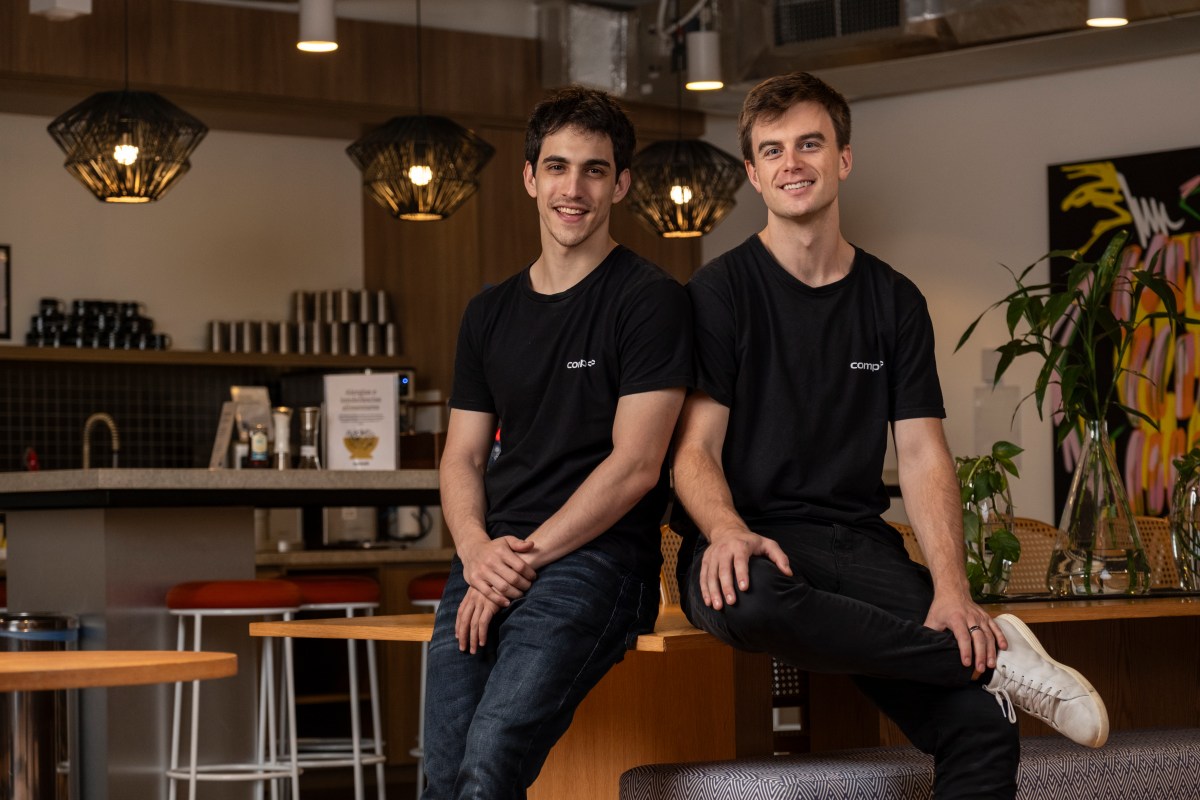

After graduating from Cornell University, Christophe Gerlach dedicated nearly two years to investing solely in HR tech startups for General Atlantic. Although investing was thrilling, Gerlach longed to return to entrepreneurship.
At Cornell, Gerlach collaborated with classmate Pedro Bobrow, a native of Brazil, to build and sell a food delivery startup. By late 2022, Gerlach and Bobrow, who previously worked as a product manager at Lyft, joined forces once more, combining their industry expertise and cultural backgrounds to establish Comp, an HR tech startup targeting Brazil.
Comp is developing AI-driven HR software to facilitate tasks such as recruitment, compensation policy formulation, and performance review system design. The startup also offers “forward-deployed” experts—former HR executives—who collaborate with clients to devise strategies for compensation, performance, and recruiting.
While Brazilian companies often hire compensation consultants, Gerlach asserts that Comp’s forward-deployed HR executives should be considered extensions of existing HR teams rather than consultants.
These executives are crucial in enhancing Comp’s technology. “Our forward-deployed HR execs perform tasks manually initially and then utilize that work to teach the AI best practices,” Gerlach explained.
The ultimate aim is for Comp’s AI agents to evolve into fully autonomous entities capable of managing traditional HR functions independently.
Currently, Comp delivers AI-supported HR services supplemented by professionals, aspiring to supplant both conventional consultancies and HR software. As Gerlach states, “Rippling provides software to assist junior HR teams in increasing productivity. We become the HR team.”
This week, Comp secured a $17.25 million Series A financing round led by Khosla Ventures, marking the VC firm’s first investment in a Brazilian enterprise. As part of the arrangement, Khosla general partner Keith Rabois has joined Comp’s board of directors.
Comp seeks to position itself as an AI-driven alternative to traditional compensation consultancies like Mercer, Korn Ferry, and Willis Towers Watson, while also rivaling global HR platforms like Rippling and Workday.
Gerlach notes that Comp launched in Brazil because many companies there lack traditional HR software, allowing the startup to introduce a novel, automated model rather than competing with established platforms.
The business model appears to be gaining traction in Brazil, with clients such as Nubank, QuintoAndar, Creditas, and “almost every unicorn in Brazil,” according to Gerlach. The startup is now planning to expand into the U.S. and other countries.
Other investors in Comp’s Series A included existing supporters Kaszek and Canary, as well as new investors Abstract Ventures and Endeavor Catalyst.