
China’s humanoid robots captured global interest with kung fu displays at the Spring Festival Gala, and Honor plans to present its first humanoid robot at MWC in Spain. Robotics, emphasized in China’s “Made in China 2025” strategy, initially targeted factory automation. Now, fast progress in multimodal AI is enhancing embodied AI—autonomous machines navigating real environments—potentially addressing labor shortages and boosting productivity. Chinese firms are leading U.S. counterparts in speed and volume of humanoid robot development, noted Selina Xu, a China and AI policy lead at Eric Schmidt’s office. Xu stated China benefits from a robust hardware supply chain and the strongest global manufacturing base, helping companies iterate faster than Western rivals. Consequently, Chinese robots are cheaper and new models are released more rapidly, she added. Unitree shipped about 36 times more units last year than U.S. competitors Figure and Tesla. Global humanoid robot shipments amounted to 13,317 units last year, a minor base for an industry projected to nearly double annually, reaching 2.6 million units by 2035. The report suggests caution in interpreting figures, as the number of commercial sales versus demo models or pilot deployments is unclear. Top humanoid robot producers by 2025 shipments were headed by China’s Agibot and Unitree, followed by UBTech, Leju Robotics, Engine AI, and Fourier Intelligence, showing Beijing’s early dominance in the sector. The shift from demo-driven excitement to operations-driven adoption is significant, according to Yuli Zhao, chief strategy officer at Galbot. Galbot’s G1 humanoid robot was featured at the Spring Festival Gala, alongside robots from Unitree Robotics, Noetix, and MagicLab. Zhao stated more customers are questioning if robots can work stably in real environments and relieve human workload, driven by China’s policy and strategy promoting automation enhancements and a fast iteration-friendly manufacturing ecosystem. While increased funding to humanoid startups has hastened progress, the most sustained adoption occurs when reliable and repeatable value in operations is demonstrated, Zhao said. Nevertheless, investment aids, and Chinese robotics firms are securing it. Unitree’s valuation reached around $3 billion after closing its Series C, aiming for a $7 billion valuation in a future IPO. Meanwhile, Galbot raised over $300 million in fresh funding, elevating its valuation to $3 billion, one of China’s largest humanoid robotics sector financings. U.S. firms are also moving beyond flashy shows, focusing on real-world implementations and ambitious targets. For example, U.S. startup Foundation aims to produce 50,000 humanoid robots by 2027. However, China targets a mix of affordable mass-market models and high-end uses, expanding humanoids across industrial, consumer, and rehabilitation sectors, as reported by TrendForce in December. Bottlenecks ahead of China’s supremacy include issues in AI systems and software integration. The industry focuses on vision-language-action models and “world models,” but these are still emerging. Nvidia leads this space with its end-to-end humanoid software stack; thus, most Chinese humanoid startups use Nvidia’s Orin chips. However, domestic chipmakers are crafting native alternatives. Still, humanoid manufacturers tackle fundamental challenges. A major task is enabling robots to predict their forthcoming physical states in unforeseen settings, akin to how large language models foresee words. Unlike LLMs, humanoid robotics firms can’t merely collect internet data for training, Xu explained, so many utilize simulation settings generating synthetic data, though real-world data collection remains vital. Due to data scarcity, humanoids aren’t autonomous yet. The hardware is more advanced than the software—the robots exhibit more dexterity today than years ago, albeit somewhat unreliable, as shown by breakdowns at humanoid marathons, the analyst noted. Safety is a primary hindrance for humanoid robots; one notable accident could lead to public backlash, requiring careful technology rollout in China. As the sector progresses, more regulations are anticipated. Zhao believes that, owing to data scarcity, humanoids will first thrive in controlled work environments. Early progress is expected in industrial manufacturing, warehouse logistics, and retail, where tasks are repetitive, hours prolonged, and processes well-defined—conditions perfect for humanoid robots to significantly contribute, Zhao stated. Humanoid robot development isn’t limited to two countries. Japan’s robotics ecosystem, encompassing startups and semiconductor giants, targets humanoid mass production by 2027. Known for pioneering efforts like Honda’s Asimo, Murata’s Murata Boy, and SoftBank’s Pepper, Japan excels in precision and sophisticated control. Unique to Japan, humanoid robots increasingly serve in eldercare. Coral Capital CEO James Riney, investing in Japanese tech firms, believes Tokyo will remain strong in the humanoid robotics field. “Factors driving robotics adoption in Japan include labor shortages, a cultural notion of robots as friends, and Japan’s dominance in the robotics supply chain,” Riney explained. Hyundai’s Boston Dynamics unit introduced a new Atlas humano
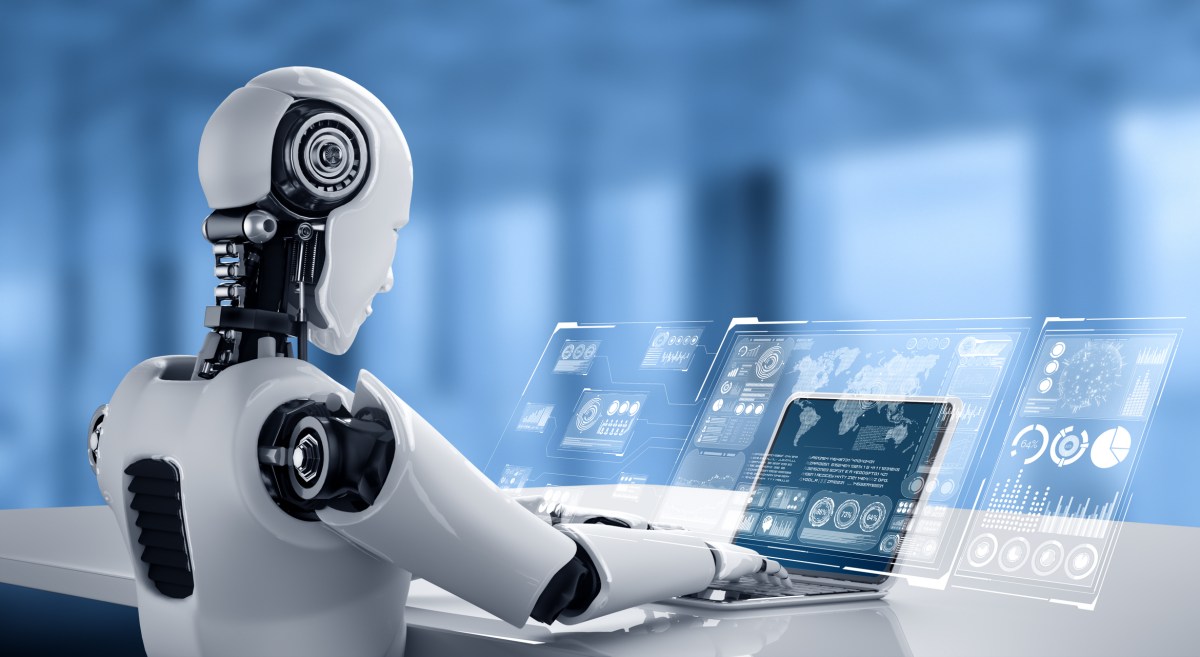
Why China’s Humanoid Robot Industry is Winning the Early Market

4 Min Read