
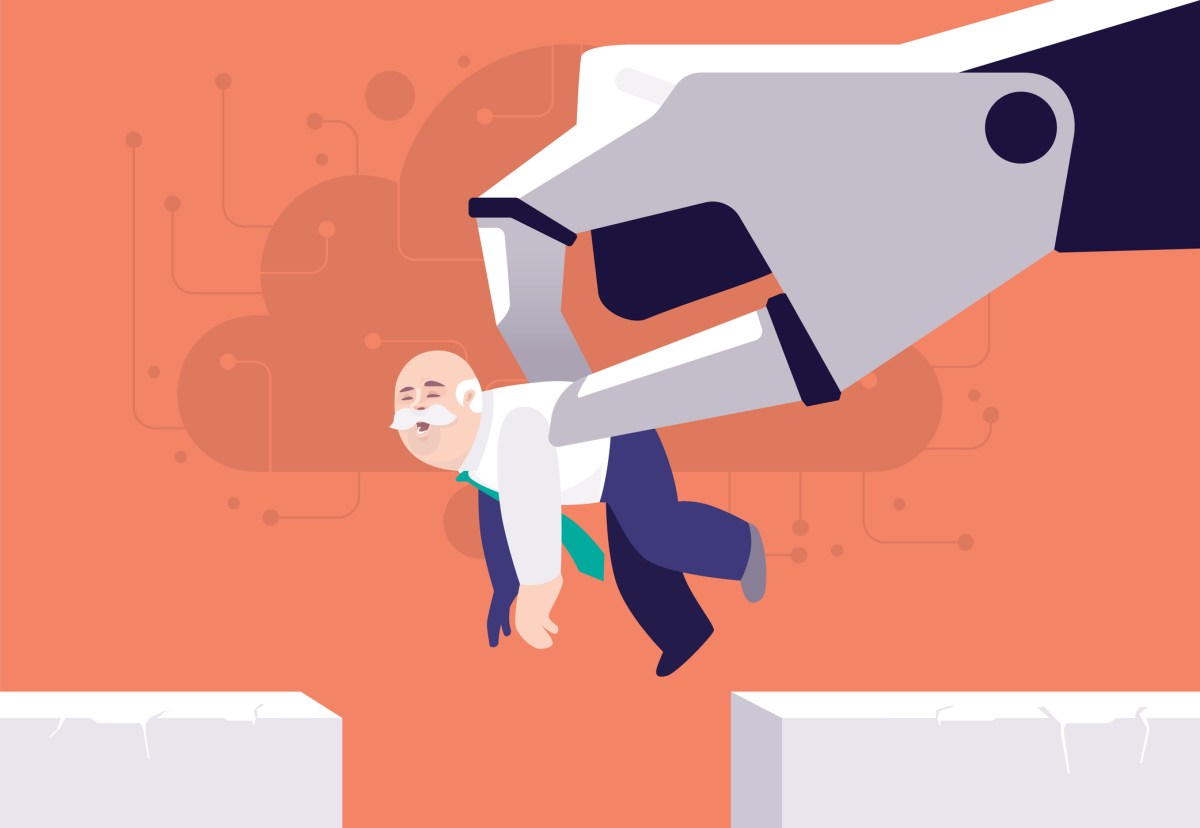

A founder recently informed his investor that he had replaced his entire customer service team with Claude Code, an AI software tool. For Lex Zhao from One Way Ventures, this highlighted a significant change — companies like Salesforce no longer being the obvious choice.
“The entry barriers for software creation are so low thanks to coding agents, making the build vs. buy decision favor building more often,” Zhao told TechCrunch.
The switch from buy to build presents issues. Using AI agents instead of people questions the SaaS business model, as companies currently charge per seat, meaning by user. “SaaS has been attractive due to predictable recurring revenue, scalability, and 70-90% gross margins,” Abdul Abdirahman from F-Prime told TechCrunch.
When one or a few AI agents can replace workers, who ask AI to retrieve data, the per-seat model starts to crumble.
Fast AI development means new tools, like Claude Code or OpenAI’s Codex, can mimic core SaaS functions and the tools vendors sell to boost revenue.
Moreover, customers can now negotiate strongly: if they dislike a SaaS vendor’s prices, they can more easily create alternatives. “Even if they don’t build their own, this pressures SaaS vendors’ renewal contracts,” Abdirahman added.
As early as late 2024, Klarna abandoned Salesforce’s CRM for its own AI system. Many companies can now follow suit, causing unease in public markets, where SaaS giants like Salesforce and Workday have seen stock declines. In February, investor sell-offs erased almost $1 trillion from software and service stocks, followed by another billion later.
Experts call it the SaaSpocalypse, with FOBO investing — or fear of becoming obsolete. Yet investors believe this fear is temporary. “This isn’t SaaS’s death,” said Aaron Holiday from 645 Ventures, but like an old snake shedding skin.
Recent market trends, seen in Anthropic’s product launches, illustrate this shift. The release of Claude Code for cybersecurity saw related stocks drop. Tools in Claude Cowork AI caused a dip in the iShares Expanded Tech-Software Sector ETF, impacting companies like LegalZoom and RELX.
These outcomes were somewhat expected, as SaaS companies have long been overvalued. They grew during a zero-interest-rate period, which has ended, increasing the cost of doing business.
Public market investors commonly price SaaS companies by predicting future revenue. However, usage of SaaS products in a year or five years is uncertain, causing stock tremors with each new AI tool launch.
“This might be the first time software’s terminal value is fundamentally questioned,” said Abdirahman, impacting SaaS company underwriting.
Adding AI features to current SaaS products may not suffice, as AI-native startups quickly redefine software companies’ roles.
Software’s simplicity and affordability mean it’s easily replicated, stated Yoni Rechtman from Slow Ventures.
This benefits new startups but challenges incumbents with established tech stacks.
There’s not enough time or evidence to determine the viability of new business models replacing SaaS. Some AI companies charge based on consumption, while others attempt “outcome-based pricing.” This approach is used by former Salesforce CEO Bret Taylor’s AI startup, Sierra, offering customer service agents.
This approach seems effective. In November, Sierra achieved $100 million in ARR in under two years.
There was once the idea cloud-based software wouldn’t depreciate, potentially lasting decades. This was somewhat true compared to previous on-premises software.
However, cloud presence doesn’t protect SaaS vendors from AI rising as competition.
Investors are wary as AI-native companies adapt and innovate faster than traditional SaaS companies. SaaS companies were incumbents replacing on-premises vendors.
The SaaSpocalypse evokes a Taylor Swift lyric about others lighting up the room.
“The SaaS pullback is both a real structural shift and a potential market overreaction,” Abdirahman said, noting investors “sell first and ask questions later.”
SaaS IPOs are paused, facing investor pressure. A Crunchbase report indicates the IPO market is thawing, but no venture-backed SaaS filings are expected.
Holiday attributes this to pressure on late-stage SaaS companies like Canva and Rippling, given the tough IPO window, high AI expectations, and unstable SaaS stock prices.
Mid-size SaaS companies have difficulty raising extension rounds due to public investor fears.
“Companies are staying private longer due to public market volatility,” said Rechtman.
Meanwhile, the public awaits AI-native companies’ IPO finances. OpenAI and Anthropic may be considering IPOs this year.
Ultimately, the industry will blend old and new, as tech disruptions historically do.
Holiday believes new feature experiments may not last, as enterprises need compliant, durable software for audits and workflow management.
“Durable shareholder value relies on fundamentals, not hype,” he concluded, emphasizing retention, margins, genuine budgets, and defensibility.