
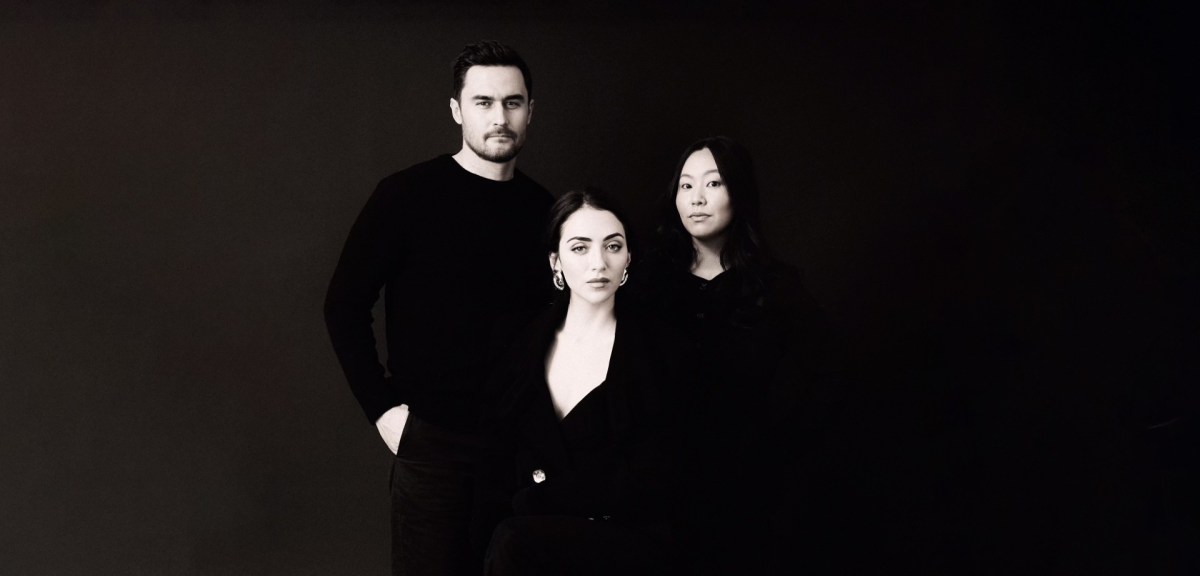

Cami Tellez has returned. Tellez, known for founding the viral undergarments brand Parade—which was seen as a Gen Z alternative to Victoria’s Secret—launched the company in 2019 at age 21. Parade raised millions in funding and gained thousands of customers before being sold in 2023 to the lingerie manufacturer Ariela & Associates. Late last year, Parade announced its closure.
However, Parade was merely the beginning for Tellez as a founder. On Monday, she and former TikTok executive Jon Kroopf introduced Devotion, an influencer marketing platform designed to assist large brands in managing their influencer programs.
Currently, many brands employ human teams to handle existing influencers and discover new ones, a tedious process due to the fast-paced nature of the industry.
“The initial creator economy was centered around macro creators, with brands engaging 15 or 20 prominent personalities each month,” Tellez said. “That model proved ineffective.” Referring to a 2025 IAB report indicating creators still account for about 2% of ad spend, she added, “The issue isn’t belief in creators; it’s about unlocking a high-scale model suitable for content-based algorithms.”
Devotion automates parts of this process, using AI to help brands enhance their creator discovery, management, and content workflows, while maintaining human oversight of AI decisions.
“There are no rogue agents operating independently of human review,” Kroopf told TechCrunch. “But they accelerate our processes.”
Devotion aids brands in analyzing influencers’ posts and captions for compliance with company guidelines, advises on post sharing and boosting, and provides a brand fit score to align creators with brand ethos. It also facilitates payments to creators, a task that would be challenging if managed solely by humans, Kroopf said.
“It’s about high-scale creator ecosystems,” Tellez, the creative director, said. “A new kind of creator community that drives more scale, lower CPMs, and increased algorithmic impact.”
Devotion spent last year in beta, gaining over 10 clients and reaching seven figures in revenue. Upon exiting stealth mode, the company announced raising $4 million in a round led by Basecase and Will Ventures.
“We’re leveraging technology to open up new opportunities that were previously unfeasible due to cost,” Kroopf explained, noting that it was not cost-effective for brands to build such platforms on their own.
“In 2019, when I started Parade, no software existed to engage influencers at scale,” Tellez said. Her team developed technology for tracking and executing gifting, engagement, and payment, creating a comprehensive pipeline for managing creator relationships. “This significantly boosted our growth,” she noted, with many founders seeking advice on replicating this engagement.
At the same time, changes in algorithms, largely driven by TikTok, became apparent. Though Devotion was her concept, Tellez brought Kroopf on board to navigate this new landscape. Five years ago, creators could reach about 20% of their audience with a post; now it’s about 2%.
“The feed is no longer based on social connections or follower counts,” she said. “It’s driven by content performance, the algorithm, and user interests.”
The new landscape means a nurse in Ohio has the same algorithmic potential as a macro-creator, Tellez explained. “Influence has been democratized.”
Consequently, brands must function like content networks, collaborating with hundreds or even thousands of influencers monthly to generate impactful content, Tellez said.
Devotion crafts customized content engagement strategies for brands to identify suitable influencers and nurture community connections over time.
While other creator economy agencies like Pearpop exist, Tellez mentioned that Devotion plans to use its newly acquired funds to hire more engineers and brand operators, further developing the company’s technology.
Future plans include adding more AI agents, though specifics remain unannounced. Tellez believes brands are still seeking ways to authentically connect with diverse individuals to convey brand messages.
“We see a shift toward our vision of scaled creator ecosystems, even among the world’s largest and most risk-averse brands,” Tellez said. “They don’t want to fall behind in the algorithm. We are enhancing our AI to manage thousands of creators efficiently — without compromising on quality or intimacy.”