
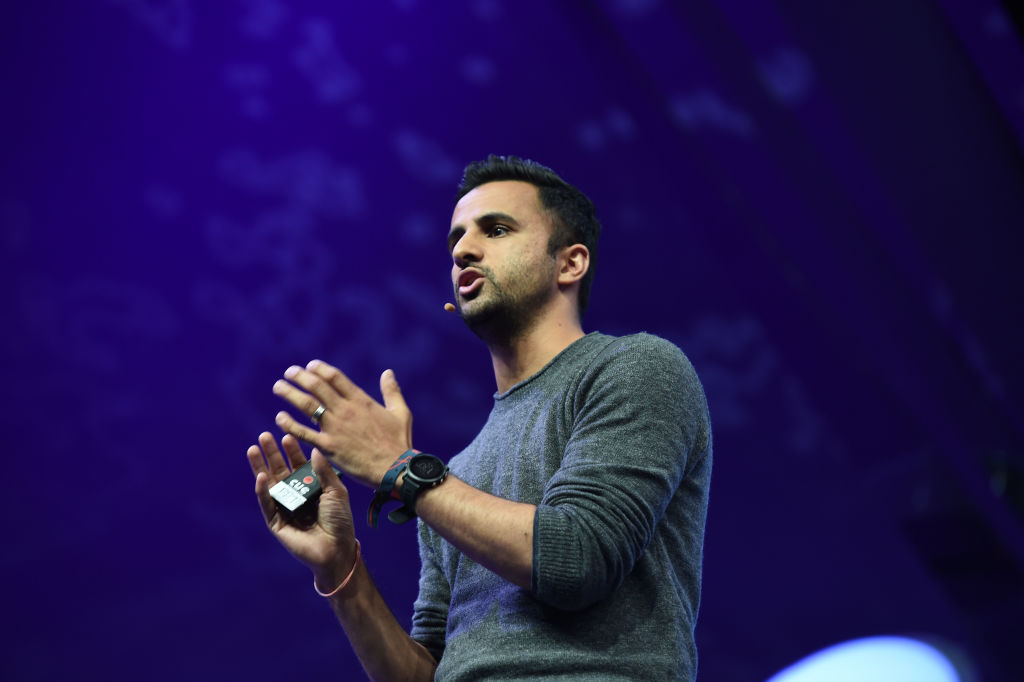

For months, rumors circulated about Silicon Valley’s billionaires recruiting a challenger for Representative Ro Khanna. On Tuesday morning, that speculation became reality.
Ethan Agarwal, a 40-year-old tech entrepreneur, declared his candidacy for California’s 17th congressional district on Monday evening. This sets the stage for a potentially high-funded primary challenge in the 2026 cycle.
Khanna, a 49-year-old Democrat and potential 2028 presidential candidate, has supported a wealth tax in California, angering some wealthy founders and investors. Undeterred, he introduced national legislation with Senator Bernie Sanders for a 5% annual wealth tax on billionaires, aiming to raise $4.4 trillion over a decade.
Ironically, Agarwal, with a Wharton background and experience at McKinsey, founded and sold audio fitness company Aaptiv and later co-founded Coterie, supported by Andreessen Horowitz. Khanna, initially a tech-backed outsider in 2014, had similar support from figures like Marc Andreessen, Sheryl Sandberg, and Eric Schmidt. He lost to Democrat Mike Honda then but won in 2016.
Now, Agarwal faces similar accusations of being influenced by wealthy tech patrons.
When asked about switching his focus from a gubernatorial race to Congress, Agarwal explained he saw more impact in opposing Khanna, who has shifted leftward, especially after supporting January’s wealth tax.
Backing his campaign, although currently unable to raise funds until filing the necessary documents, are key tech figures like [Y Combinator CEO] Garry Tan and [DoorDash co-founder] Stanley Tang.
Addressing alternative tax solutions, Agarwal suggests taxing loans against assets, increasing California’s capital gains rates, and imposing higher property taxes on investment properties rather than primary residences.
Agarwal’s top priorities in Congress include banning stock trading for members and their families, eliminating corporate PAC money, and imposing term limits.
He claims Khanna extensively trades stocks, despite advocating for a congressional trading ban he doesn’t self-impose. Agarwal promises to divest his portfolio if elected.
On the topic of social media regulation, Agarwal acknowledges the challenges but believes a reevaluation of Section 230 is necessary, particularly in relation to teenage mental health. On regulating AI, he emphasizes maintaining America’s technological edge over countries like China, while supporting sensible restrictions.
Regarding prediction markets, he believes existing regulations are adequate and sees his campaign as fully committed, drawing on his deep local ties to the 17th district to remain engaged at community events and businesses.
Inspired by his father’s immigrant success story, Agarwal sees politics not as a career but a temporary duty to address pressing issues in his district, committing to a self-imposed term limit.
This echoes Khanna’s earlier outsider campaign narratives, but whether Agarwal can capitalize on potential weaknesses of Khanna, who is currently financially robust and legislatively proactive with initiatives like collaboration with Sanders, remains to be seen.