
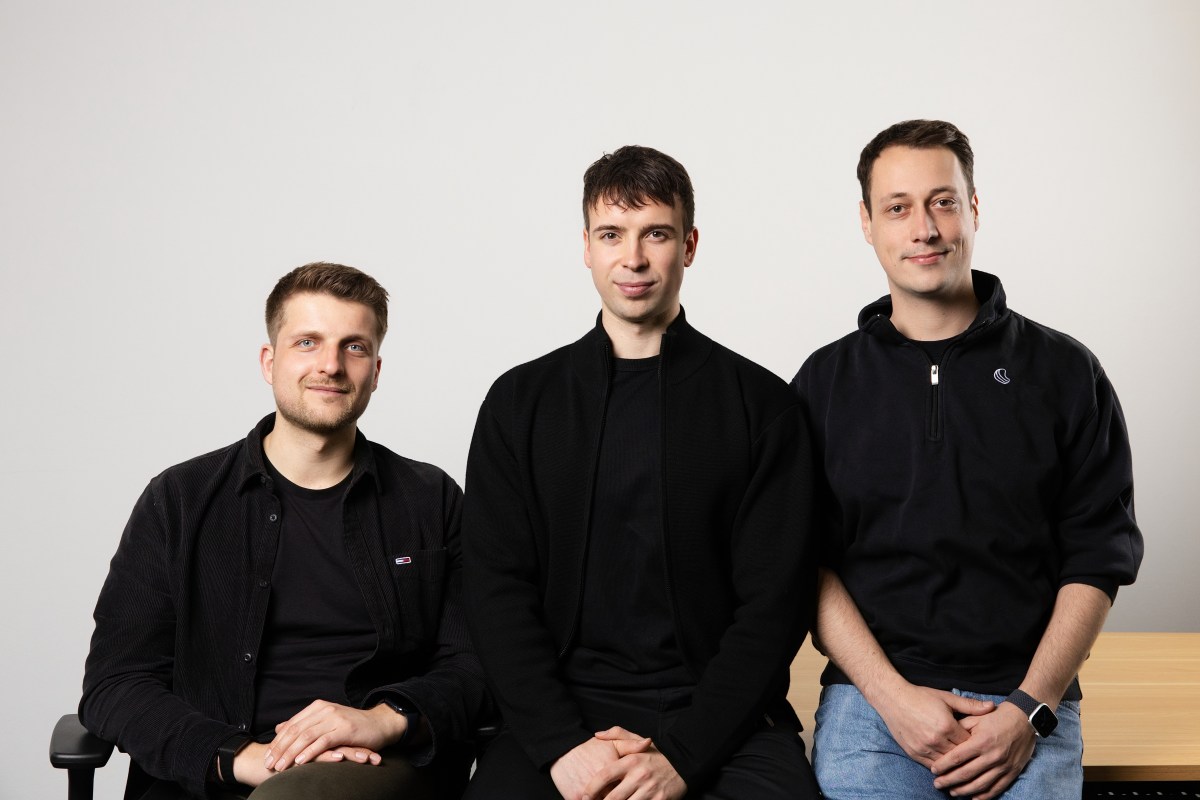

Lio’s co-founders have firsthand experience with the challenges of procurement, a process that often becomes a bottleneck for enterprises purchasing services from vendors. Vladimir Keil, co-founder and CEO, encountered this issue within a large company and while developing his first startup.
“When selling enterprise software, we had to navigate procurement ourselves and noticed how manual and fragmented the process remains,” he told TechCrunch. Kiel and his team have created an automated platform with AI agents—software that performs tasks for humans—to address these fragmented processes.
On Thursday, Lio announced a $30 million Series A funding round led by Andreessen Horowitz, with participation from SV Angels, Harry Stebbings, and YC (Lio was part of the Spring ’23 batch). The company has raised a total of $33 million. Keil stated the new funds will be used to expand throughout the U.S. and enhance Lio’s AI agents, which aim to handle the entire procurement process for enterprise clients.
Procurement is essential to enterprise spending, involving purchases from raw materials to professional services. Each purchase requires attention: accessing ERP software, consulting contract management systems, checking supplier databases, conducting compliance checks, referencing budgets, and more.
“Even with modern eProcurement software, much of the work remains manual,” Keil told TechCrunch. Companies either build large internal teams or outsource this work, leading to a slow, costly process. Keil envisioned a solution—AI agents could manage tasks involving unstructured data and repetitive workflows.
In 2023, with Lukas Heinzman and Till Wagner, Keil launched Lio, a virtual procurement workforce with an AI-native platform and agentic infrastructure to handle the procurement process.
“Previous procurement technology was based on the assumption that humans do the work with technology aiding them,” Keil explained. “We take a different approach. Rather than software helping humans do procurement work faster, Lio’s AI agents perform the workflow themselves.”
These agents work across enterprise systems to read documents, assess suppliers, negotiate terms, and complete transactions. “Processes that once took weeks are now finished in minutes,” Keil said, noting that Lio already helps companies manage billions in enterprise spending. “A global manufacturer automated 75% of its formerly outsourced procurement within six months.”
Lio joins other companies redefining enterprise software, leveraging agentic AI to transform enterprise application software operations fundamentally.
Keil identifies Lio’s competitors as legacy procurement software vendors like SAP Ariba and Oracle, BPO providers, and consulting firms assisting companies with these operations.
“Instead of processing requests and paperwork, teams can conduct more negotiations, evaluate more suppliers, and capture potential savings,” Keil added. “We believe this shifts procurement from a back-office function to a crucial lever for enterprise performance.”