

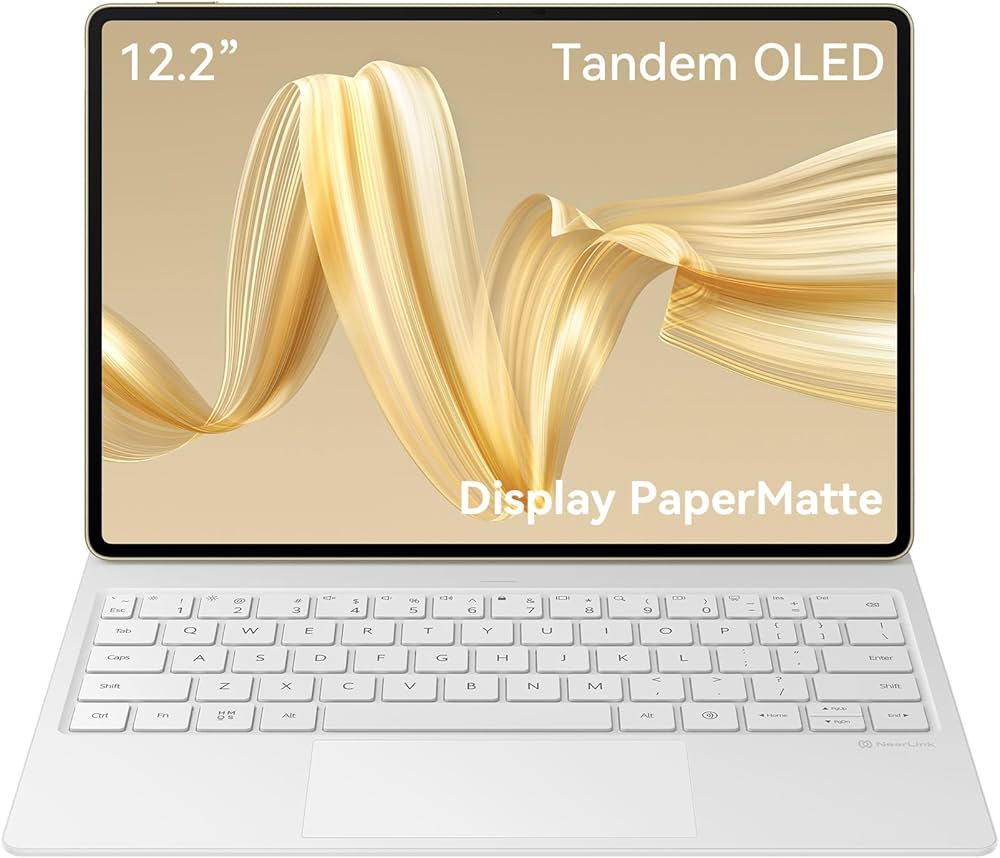
This stunning 165Hz OLED tablet redefines standards with 5280Hz PWM dimming and top-tier eye care settings.
I can’t pinpoint the last time I was genuinely thrilled about a tablet launch, but it’s been several years at least. Most tablets merely represent slight upgrades from their predecessors, and while that holds some truth for the Honor MagicPad 4, it’s the display that has truly captivated my attention this time.
It’s not solely because Honor has upgraded last year’s uninspiring LCD to a superior OLED, but this is the first OLED display I have encountered featuring 5320Hz PWM dimming. No, that’s not a mistake, and it signifies that Honor is committed to advancing dimming frequency, while many competitors either disregard the issue or consider existing solutions satisfactory for the majority.
One aspect I appreciate about Honor devices today is that it guarantees an overwhelmingly large segment of potential buyers can relish not only a high-quality experience but also a comfortable one. Here’s why Honor’s latest offering boasts the best tablet display I have experienced so far.
A display for everyone
Upon reviewing the specifications, I found that Honor has begun explicitly labeling its displays as “low modulation” OLEDs along with those that support high-frequency PWM dimming. This distinction is crucial, as it indicates that Honor’s display functions within a frequency considered safe by the IEEE lighting standards, surpassing what competitors are offering.
The stark reality is that OLED tablets from Apple and Samsung do not meet the “safe” criteria laid out by these lighting regulations. They fall significantly short, primarily relying on a 240Hz PWM dimming rate across all brightness settings. Consequently, a segment of the population cannot utilize these devices without experiencing severe headaches. I have a brief 5-minute video explanation available if you wish to learn more.
This is where brands like Honor enter the picture. Elevating PWM rates while reducing modulation levels are pivotal in allowing even the most sensitive users to appreciate a contemporary device, rather than resorting to outdated options from 2013 that lack modern security updates and features.
The key to achieving optimal results with the Honor MagicPad 4 is to adjust it to 165Hz within the display settings. The downside is there is no method to force this peak refresh rate. If the display is set at 20% brightness or less — at which point the tablet transitions from DC to PWM dimming — the display will fluctuate between 4320Hz and 5280Hz, contingent upon the on-screen content.
I’m uncertain if this will affect any flicker-sensitive users negatively, but switching rapidly between dimming rates has been known to irritate some individuals, although such reactions are typically recorded at significantly lower dimming frequencies than 4320 or 5280Hz. The only way to ensure the display remains at a single dimming rate is to set it to 60Hz in the display settings. Being an LTPS panel, it will consistently run at 60Hz, leading to a 4320Hz PWM rate at 20% brightness.
Honor would greatly benefit from a setting that could reliably enforce the peak display refresh rate for users wanting to experience the best consistently or to prevent dimming frequency fluctuations. I’m not particularly fond of Honor marketing this as 5280Hz. That’s not because it’s untrue — the display can indeed reach 5280Hz PWM dimming — but because this claim only holds under specific and challenging to ensure conditions.
Even though they use 10-bit OLED panels in most of their latest smartphones, the 165Hz OLED panel here is