
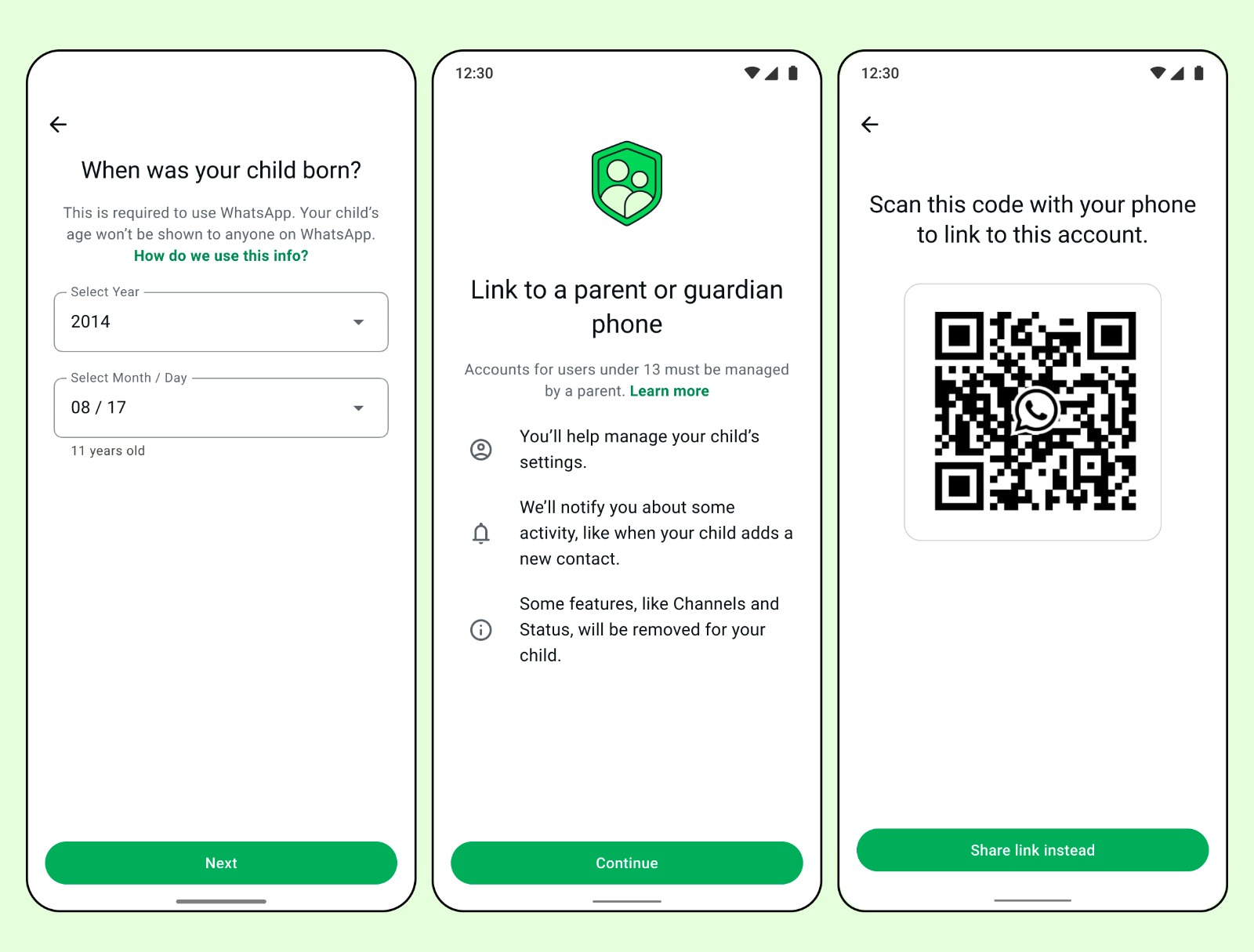

WhatsApp introduced parent-supervised accounts for users under 13 on Wednesday, allowing access only to messaging and calling without ads. Although the app is rated 13+ on the App Store and Play Store, pre-teens often use it to communicate with parents, prompting this feature based on parental feedback.
Meta explained that setting up an account for a pre-teen requires authentication via QR code using both the parent’s and child’s devices. Parents can configure alerts for activities on the managed account, receiving notifications when pre-teens add, block, or report a contact by default.
There is also an option for activity alerts, such as changes in name or profile picture, chat requests, group activities, and more, secured by a six-digit PIN that parents control.
“We’ve heard from parents wanting to message their pre-teens on WhatsApp,” the company stated, emphasizing that parent-managed accounts provide additional control for these communications.
WhatsApp clarified that managed accounts lack access to features like Meta AI, Channels, or Status and can’t enable disappearing messages for direct chats. All conversations remain end-to-end encrypted.
Pre-teens get context cards about messages from unknown contacts, which include group commonalities and country information. They can mute unknown calls by default, with images from unknown contacts blurred.
Managed account users see chat requests in a separate, PIN-protected folder, and group invites also require the PIN. Parents receive information about groups before accepting invites.
As pre-teens age, they’ll be notified about converting to a standard account, with plans to let parents delay this by 12 months. The rollout will begin in select regions, expanding over time.
Meta has previously introduced teen safety controls on Instagram and Facebook. While WhatsApp isn’t a social network, it boasts over 3 billion users worldwide, including children. This initiative coincides with countries like Denmark, Germany, Spain, and the U.K. considering bans on social media access for younger users.