
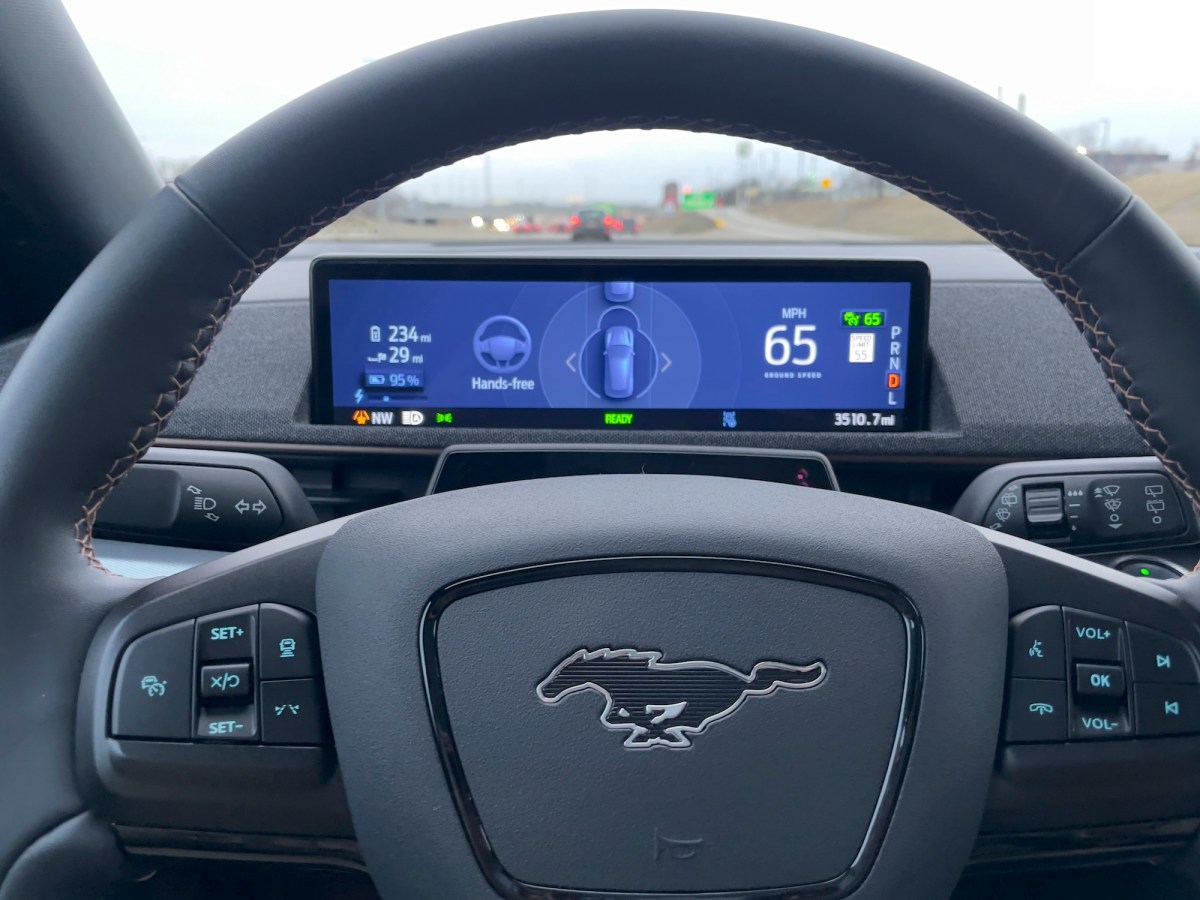

Two drivers were distracted before crashes in 2024 while using Ford’s BlueCruise hands-free system, the National Transportation Safety Board (NTSB) reported Wednesday. The NTSB released documents for each crash and scheduled a public hearing on March 31 in Washington D.C. to discuss findings and potential recommendations to Ford. The NTSB investigates transportation accidents but does not regulate the industry, with a final report expected after the hearing.
The crashes prompted investigations by the NTSB and the National Highway Traffic Safety Administration (NHTSA). NHTSA found BlueCruise had limitations in detecting stationary vehicles under certain conditions and upgraded the investigation in early 2025, sending Ford detailed questions in June, which were answered in August. The investigation continues.
Ford asserts BlueCruise is a “convenience feature” requiring driver readiness to take control, warning it’s not a crash warning or avoidance system. The NTSB hearing will likely focus on communication about the systems’ intended purposes and proper usage. Distracted driving is an ongoing issue in investigations of other systems, such as Tesla’s Autopilot.
NTSB chairman Robert Sumwalt highlighted issues like over-reliance on technology, distraction, and lack of policies against cell phone use, contributing to accidents, as observed in previous incidents like a 2018 Autopilot crash.
In the first 2024 crash in San Antonio, Texas, a driver using BlueCruise collided at 74 mph with a stationary vehicle, resulting in a fatality. The Ford’s monitoring system recorded the driver distracted before the crash. He was looking at the infotainment screen for directions, possibly nodding off before the crash.
The second crash in Philadelphia involved a BlueCruise user colliding with two stopped vehicles on Interstate 95, resulting in two fatalities. The driver, Dimple Patel, was intoxicated and later charged with DUI homicide. The monitoring system showed her eyes on the road but possibly holding a phone.
Ford has not responded to questions about potential monitoring shortcomings. Modern Ford vehicles have forward-collision warning (FCW) and automatic emergency braking (AEB) systems, which are separate from BlueCruise and are supplemental, requiring driver attention. Ford acknowledges sensing technology limits, meaning current systems may not confidently detect collision targets under certain conditions. The NTSB noted no braking occurred in either crash.