

It seems like 5G was just launched yesterday, yet we’re already turning our attention towards 6G. Here’s all you need to know about it.
Following an extensive rollout of 5G, we have reached a stage where flagship devices and networks no longer have to promote the current cellular technology as a selling point — it has become the norm. Consequently, we’re witnessing improvements in 5G coverage across the country, and new devices such as smartwatches are beginning to access the network as well. While you may have just adapted to using 5G over 4G LTE, I’m here to inform you that 6G is much nearer than you realize.
At MWC 2026, top industry figures like Qualcomm and Nvidia presented their insights into the forthcoming 6G mobile network, alongside a myriad of business collaborators. For the typical consumer, the development of 6G infrastructure and the cooperation of companies may not seem thrilling. What you want to understand is what capabilities 6G will bring. We now have that information, and it’s genuinely thrilling. Here are three innovative types of experiences the 6G mobile network will offer, along with their implications for you.
6G will enable low-latency connected AI experiences
These days, everything revolves around artificial intelligence, and 6G is no different. However, there are indications that the AI-driven world we are creating will require more from our mobile networks, which is where 6G comes into play. Specifically, global wide area network (WAN) traffic is anticipated to surge by three to seven times by 2034 in comparison to traffic data from 2023. AI is projected to comprise about 30% of all network traffic.
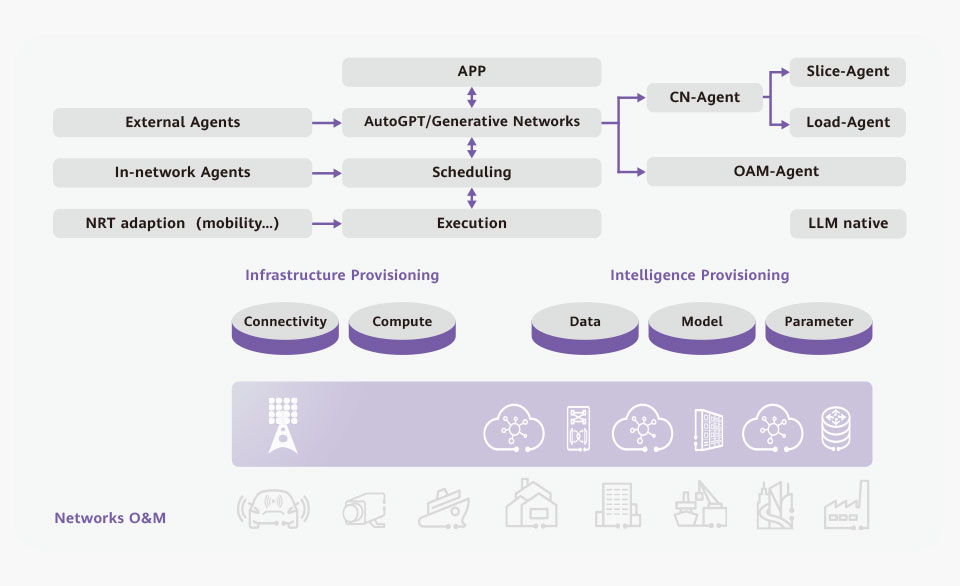
The AI revolution will necessitate quicker, low-latency connections — thus the push for deploying 6G — but it encompasses more than mere traffic increases. Industry experts envision a future where AI agents take center stage within mobile ecosystems. Currently, your phone stands at the core of your tech network, linking with earbuds, smartwatches, tablets, laptops, and more. In future scenarios, AI agents could manage these hardware categories, interconnecting them all with streamlined software.
That seems rather clever, but if AI agents are interacting with multiple wireless devices simultaneously, they will require rapid connections. This is why 6G is being designed to meet these traffic and speed requirements. We anticipate that 6G will provide five times the traffic capacity of 5G, along with a 50% enhancement in spectral efficiency for both uplink and downlink connectivity.
In straightforward terms, this implies that your AI devices will be able to connect with one another and with cloud servers faster than ever before. 6G will facilitate connected experiences that are currently limited by latency issues.
6G will popularize XR and spatial computing
In terms of connected experiences, 6G will significantly contribute to making mixed-reality XR experiences widespread. Right now, gadgets like Meta Ray-Ban Display or Samsung Galaxy XR are hindered by the amount of data that can be transferred to provide top-quality video, AI processing, and gaming performance. Once it arrives, 6G will enhance these experiences by enabling higher uplink speeds that can support multiple 4K or 8K video streams.
As most XR glasses and headsets depend heavily on streaming, tethering, or cloud processing for functionality, a swift and low-latency mobile network such as 6G could transform use cases like game streaming or remote desktop control into practical applications. It’s all about minimizing the wait time for your devices to communicate with your phone and the cloud for a response. Therefore, when you gaze at something and pose a question while donning camera-equipped smart glasses, the answer will feel almost instantaneous upon the arrival of 6G.
6G will enhance public infrastructure over the next decade
6G will also foster a sensory network capable of employing RF signals and drones to map environments, leading to new types of infrastructure, such as networks for self-driving cars. As self-driving car technologies like Waymo gain traction, a rapid, low-latency network will be essential to link vehicles to control stations. You’ll also need to process data from sensors, including cameras, radar, or LiDAR, almost instantly, and 6G will facilitate that.
Robotics represents another emerging technology that’s on the horizon, with firms like Tesla fully investing in humanoid robots that can be operated remotely. Similar to self-driving cars, robots will require a quick and effective network to function correctly. The most significant offering of 6G may lie in its capacity upgrade, as new applications for mobile networks like AI, self-driving vehicles, and robotics will lead to increased congestion. 5G lacks the speed and capacity necessary to handle the projected traffic surges.
6G aims to address both of these challenges, and you can look forward to advancements in autonomous vehicles, robotics, AI, and spatial computing coinciding with the enhanced mobile network.