

Ask us how we know.
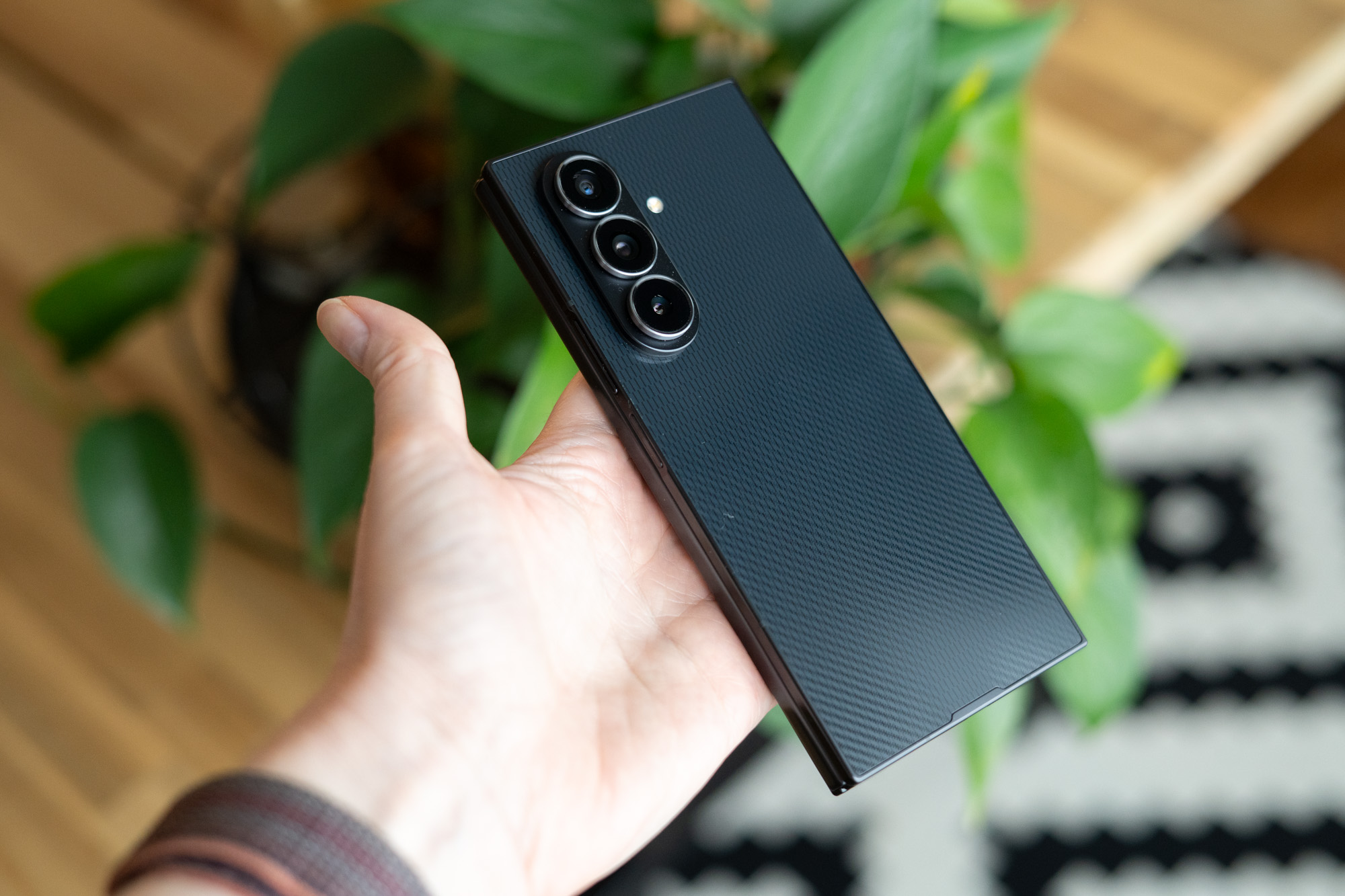
I had to buy Samsung’s Galaxy Z TriFold from eBay for $4,399 because Samsung doesn’t seem to want anyone to actually have this phone. I’m even afraid to turn it on.
Turning it on doesn’t help much. Whenever I tap “start” to set it up, a prompt asking for a “USIM” appears and won’t let me proceed without one. I don’t trust the phone enough to insert a SIM card. The phone still demands a SIM, and we’re at a standstill.
Theoretically, Samsung’s ambitious TriFold has been on sale in the US since January 30th for $2,899, but it’s been nearly impossible to acquire one. Normally, for a phone launch, we’d use a review unit loaned by the manufacturer. However, Samsung PR didn’t provide The Verge with a TriFold review unit. We were resigned to purchasing our own, but it sold out within minutes upon release.
Weeks passed—weeks where I futilely asked Samsung’s PR if there was one I could borrow—and the TriFold remained out of stock. I even called retail stores; they didn’t have any to sell. The phone briefly restocked in February but sold out again before we could complete the corporate credit card details. I suspect there aren’t many of these nearly $3,000 phones selling in minutes; the scarcity feels like a feature of releasing limited numbers, rather than a bug.
Desperately, we turned to eBay. We sifted through sellers without ratings who seemed to want to resell an expensive phone they recently bought for minimal profit. We settled on Moderntek, a seller with many positive ratings and seemingly several TriFolds to sell at $4,399 each. (We don’t recommend buying it here or at all.) Notably, while the TriFold has been available longer elsewhere, it’s not abundant anywhere. It’s listed as out of stock on Samsung’s Korean, Chinese, and Taiwanese sites.
We were told the phone would arrive in early March; early March came, and it hadn’t shipped yet. After contacting the seller, we received a confusing message about logistical issues and overlooked orders. Suddenly, it was expected to arrive in a few days, shipped from Scottsdale, Arizona, instead of Hong Kong as the initial tracking suggested.
The package arrived on Monday in a FedEx bubble mailer. Two seals—one in Chinese and an English one stating, “DO NOT ACCEPT IF SEAL IS BROKEN”—covered a box seam. The box paper bubbled beneath the sticker, giving off an alarming vibe.
I cut the seals and opened the box. There it was: the TriFold I’d been eager to handle. The protective film on the inner screen peeled off easily, which I could see was due to hair and crumbs stuck to the adhesive. Samsung surely doesn’t ship phones from the factory like this.
Another unpleasant surprise awaited: when powered on, the phone was already set up. An unrecognized app immediately asked for dubious permissions. I denied and performed a factory reset. The phone complied but now insists a SIM is necessary for setup. There’s no apparent way to bypass this, and I’ve set up numerous Android phones without a physical SIM—I don’t even currently have one due to eSIM.
So here I am. Do I have a $4,400 phone filled with malware? Interactions with the seller and some quick Googling suggest this isn’t an elaborate phishing scheme—probably just eBay bait-and-switch tactics, perhaps aiming for a hefty restocking fee. I asked Samsung to verify details about the shipped model; no answers yet.
This whole frustrating experience led me to one conclusion: Samsung doesn’t really want to sell TriFolds. If they did, they’d simply make more and sell them. Samsung wants us to *want* a TriFold. It serves as aspiration, making the $2,000 Z Fold 7 look like a bargain. That’s its role; if its job was to truly exist, it would be available. Were it a groundbreaking technological marvel, every tech reviewer would have one—not just a few influencers. Meanwhile, I’m stuck with an expensive paperweight and a “Money Back Guarantee” claim to file with eBay.
Photography by Allison Johnson / The Verge.