
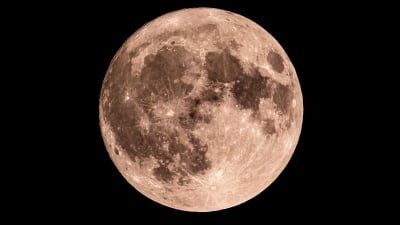

We are gradually losing sight of the Moon. With the New Moon approaching in a few days, the Moon is diminishing into a slim crescent, with its illuminated surface fading each night. There’s still a small portion of it lit, so continue reading to discover what’s visible.
**Current Moon Phase**
As of Saturday, March 14, the Moon is in the Waning Crescent phase. According to NASA’s Daily Moon Guide, 24% of the Moon will be lit tonight.
Though visibility is lower, some features can still be spotted. With bare eyes, identify the Aristarchus Plateau and the Kepler Crater. Using binoculars or a telescope, view the Grimaldi Basin and the Gassendi Crater.
**When is the next Full Moon?**
In North America, the subsequent Full Moon is expected on April 1.
**Understanding Moon Phases**
According to NASA, the Moon takes roughly 29.5 days to orbit Earth, during which it transitions through eight distinct phases. While we always view the same side of the Moon, the portion illuminated by the Sun varies as it orbits, causing its appearance to change from full to half-lit, or to a thin crescent at different points. These dynamic appearances are known as lunar phases, categorized into eight stages:
– **New Moon:** The Moon is positioned between Earth and the Sun, rendering the side facing us invisible.
– **Waxing Crescent:** A slender light appears on the right side (Northern Hemisphere).
– **First Quarter:** Half of the right side is illuminated, resembling a half-Moon.
– **Waxing Gibbous:** More than half is lit, nearing fullness.
– **Full Moon:** The entire face of the Moon is illuminated and fully visible.
– **Waning Gibbous:** Illumination diminishes from the right side (Northern Hemisphere).
– **Third Quarter (Last Quarter):** Appearing as half-Moon, with the left side lit.
– **Waning Crescent:** A thin light remains on the left before fading again.