

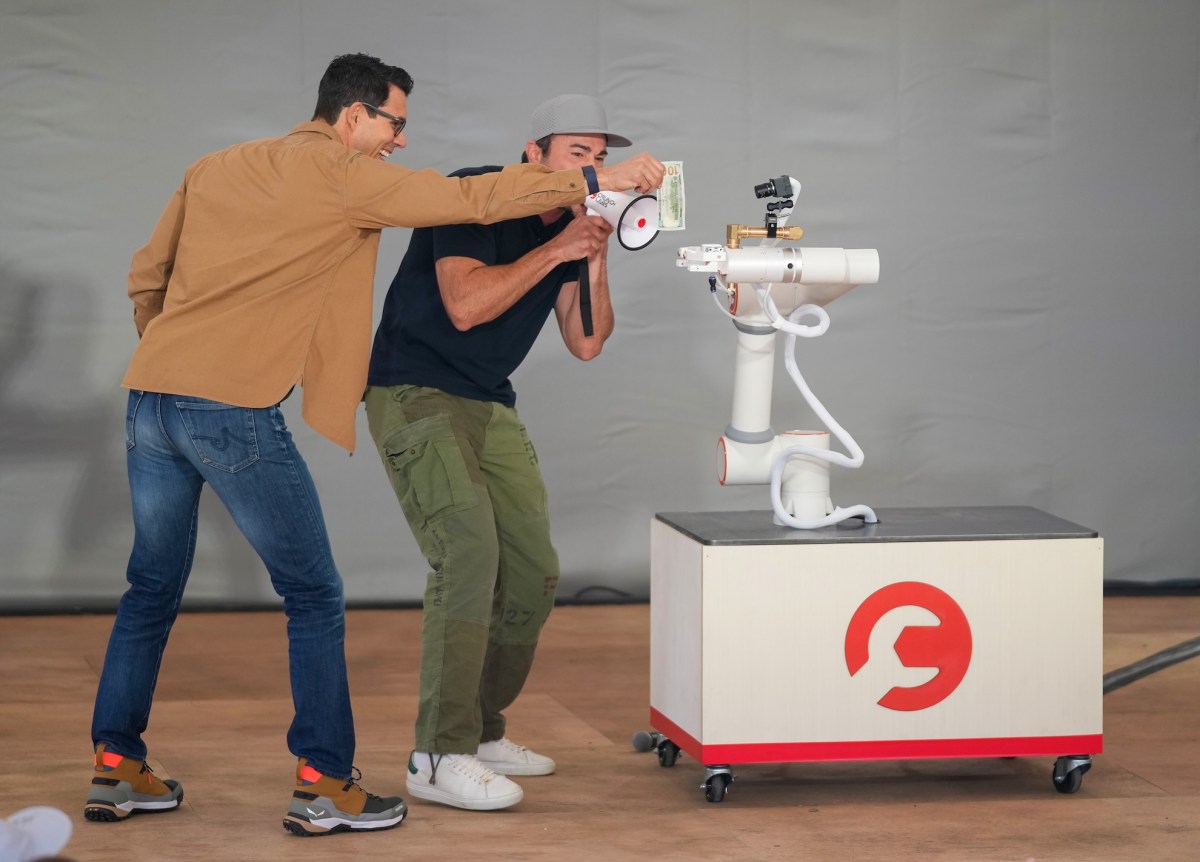
If you’re unaware, Rivian founder and CEO RJ Scaringe has started a new venture—his third—and this one is dedicated to robotics.
The entrepreneur is most renowned for Rivian, which gained attention in 2018 after showcasing an electric truck featuring its now-renowned gear tunnel.
The publicly-listed company is nearing the release of its pivotal EV, a mid-sized SUV named the R2. This vehicle is less costly to produce than the R1, with Scaringe claiming it’s “roughly half” the cost, and it offers greater technological capabilities. It will also be more affordable for customers, with the initial R2 model priced at $57,990, 20% cheaper than the base R1T pickup.
Scaringe also launched Also, a micromobility startup that began within Rivian and spun out last year with VC investment. Rivian retains a minority stake in Also, which introduced a pedal-assist modular electric bike and cargo quad vehicle last October, with Scaringe being heavily involved.
Now, Scaringe has ventured into robotics with his aptly named startup Mind Robotics. Despite not originating within Rivian, Mind Robotics could become a customer. The company, founded by Scaringe, recently raised a $500 million Series A round led by venture firms Accel and Andreessen Horowitz, giving it a valuation of approximately $2 billion.
I spoke with Scaringe at South by Southwest, where his company is a primary sponsor, to discuss his projects. The Q&A below, edited for brevity and clarity, centers on our conversation about robotics and his new startup’s innovative approach.
Techcrunch event
San Francisco, CA
|
October 13-15, 2026
Are you done spinning off companies?
Three companies? (pause) Probably.
Are you sure about that?
Yeah. I mean, yeah. (nods in agreement) Also [the ebike company] is here, so that’s cool. It’s nice to see. It’s cool to see the brands co-existing, which makes me happy.
Mind [Robotics] is something I’ve been working on for a while. Also was unique because it was built within Rivian, and that we spun it out. Mind … I started a whole new company, Rivian’s like a partner in it. I’m wildly bullish on it. It really benefits Riven, but I think it has the potential to be a very large business, just given the scale of what’s happening.
When did you start working on Mind?
So, Mind is an interesting story and it actually comes back to R2.
About two years ago, we were building a lot of confidence in R2. So if we’re confident in R2, that means we think there’s gonna be a lot of volume. If we think there’s gonna be a lot of volume, it means we think we’re going to need a lot of plants [factories].
And so effectively, I said, ‘Boy, if we’re gonna have to build four or five plants over the next decade, that means we’re going to spend many, many billion dollars in capex. What are these plants going to look like? And we don’t want to build a bunch of plants and then have them immediately be outdated.’
I initiated a study on the future of manufacturing and concluded that traditional industrial robotics will persist, yet human-like robotic skills will be crucial.
We already had a strong thesis around AI in the physical world. I met with essentially every company that’s working on some form of robotics that can do human-like skills.
I broadly categorize it as there’s companies that fit into the category of existing industrial robotics companies. And I came to the