
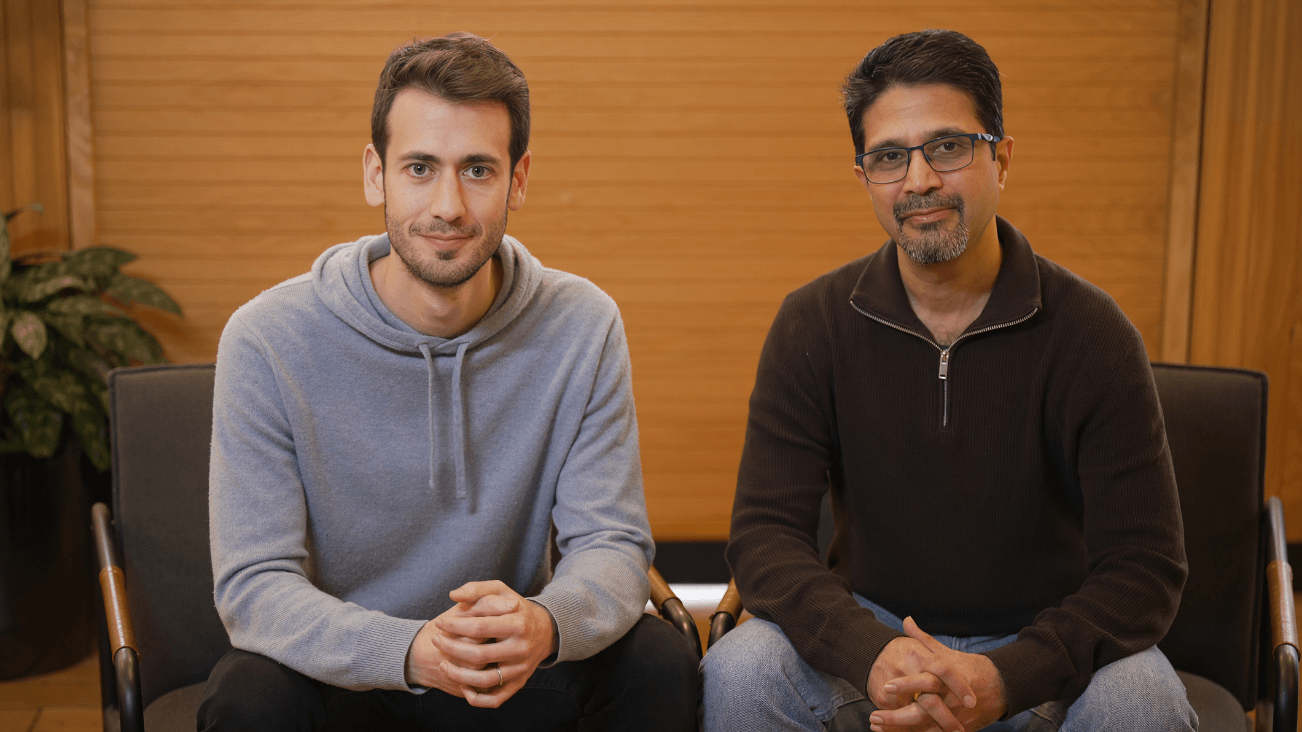

The San Francisco startup steps out of stealth mode with backing from Mayfield, presenting a vision that sees ad creative as a continuous learning loop rather than a quarterly task.
B2B marketing teams are all too familiar with the issue. A new campaign kicks off, the creative feels fresh, the targeting seems spot-on, but soon it loses steam. Audiences lose interest, and click rates drop.
The agency returns for a creative update, and the cycle repeats. Matt Jayson refers to this as “decaying ads,” describing it as a flaw in the way digital advertising is designed: campaigns that start to lose effectiveness upon launch due to a sluggish feedback loop between consumer responses and ad messages.
On Wednesday, the startup Multiply emerged from stealth, securing $9.5 million in funding to address this issue. The funding round was led by Mayfield, with contributions from Sorenson Capital, Instacart co-founder Max Mullen, and Josh Woodward, Google’s VP of Labs and Gemini, known for creating NotebookLM and managing Google’s flagship AI app.
Key players from HubSpot, Braze, Brex, Sierra, and Common Room also participated in the round.
Multiply’s proposition is that contemporary B2B firms possess the data necessary to enhance advertising but aren’t fully utilizing it. Records of sales calls, CRM pipelines, and closed-won deal data offer precise insights into customer purchasing behavior.
Multiply’s platform connects directly to these data sources, employing AI agents to transform them into continually improving ad campaigns on Google Search and LinkedIn.
Each week, hundreds of structured experiments run simultaneously, tweaking messaging, audiences, and creative, with successful strategies being amplified and ineffective ones automatically phased out.
The agent structure comprises five elements. A Customer Insights Agent derives language from sales calls to tailor ad copy. An ICP Agent examines closed-won deals to refine audience targeting.
A Quality Score Agent optimizes keyword alignment and copy to fit Google’s ranking signals. A Creative Design Agent updates imagery weekly. An A/B Testing Agent manages experiments and determines what works.
Human media buyers oversee the process, ensuring brand integrity and compliance in what Multiply describes as a hybrid AI-plus-human model.
Jayson, formerly at Google in user acquisition and Brex as Head of Product for core experiences, highlights the gap: insights crucial to securing deals, addressing objections, comparing competitors, and resonating language, don’t feed back into ad campaigns swiftly enough.
His co-founder and CTO, Ashish Warty, spent five years at HackerOne as SVP of Product and Engineering, and has held senior roles at Airship and Dropbox.
“Modern companies already have all the data needed to create radically better ads,” Jayson said in a statement. “Sales conversations, CRM systems, and pipeline outcomes reveal exactly why customers buy, yet those insights rarely make their way into ad campaigns fast enough.”
The timing is strategic on another level. Multiply’s infrastructure is being set up for ChatGPT advertising, a format OpenAI plans to introduce but has not scaled yet.
The expectation is that the same campaign learning systems designed for search and social can be adapted to conversational and AI-driven ad formats as they develop. This forward-thinking perspective will rely heavily on how these platforms decide to structure their ad offerings.
“There is a major shift happening in the $50 billion B2B advertising market,” said Patrick Salyer, a Partner at Mayfield and a Multiply board member, in a statement. “Service-as-Software is redefining how companies grow, and Multiply has built the first AI model for B2B advertising.”
The $50 billion market figure is drawn from Mayfield’s own perspective and has not been verified against independent market research.
Multiply essentially argues that the flaw in the ad agency model is not in creative execution, but in the speed of the feedback process.
Whether a $9.5 million AI stack can resolve this quicker than existing companies can adapt remains to be seen through its