

Recruiters spend significant time making calls and leaving voicemails, repeating the same questions. Ringtime automates this process and has already expanded into real estate.
Recruitment for blue-collar jobs often involves delays. A warehouse worker may apply on Monday, receive no response by Tuesday, and secure a job elsewhere by Wednesday. Recruiters spend their mornings leaving voicemails and asking repetitive screening questions to candidates who might not answer.
Both parties find this process unsatisfactory. Ringtime, a Ghent-based AI startup founded in September 2025, aims to improve the recruiter’s experience.
Ringtime announced a €1.8 million seed round today, led by Volta Ventures, a firm investing in early-stage B2B software companies in the Benelux region. Syndicate One, JK Invest, New School VC, and Allusion also participated.
The funding will support expanding the product team, enhancing marketing, and developing new blue-collar hiring features.
Ringtime’s main product is an AI agent that manages recruitment conversations, both incoming and outgoing. It identifies candidates’ preferred communication channel, selects the language—supporting 22 languages, and decides when to contact them. It conducts conversations, screens, and matches candidates without human recruiters.
This solution targets a segment of the labor market overlooked by traditional HR software: logistics, retail, food processing, and construction workers who infrequently use email or LinkedIn, frequently change employers, and desire a prompt process.
“The labor market for technical profiles is constantly shifting,” said Vincent Theeten, Ringtime’s CEO. “Today someone may work in warehouse logistics, tomorrow in food processing, next month as a driver. Existing hiring tools cater to individuals with stable employment at one employer. Reaching these workers is a major challenge recruiters face.”
Theeten previously founded Cheqroom, a Belgian equipment management software company serving clients like Google, Airbnb, and Fox Sports, raising $15 million in growth capital in 2022.
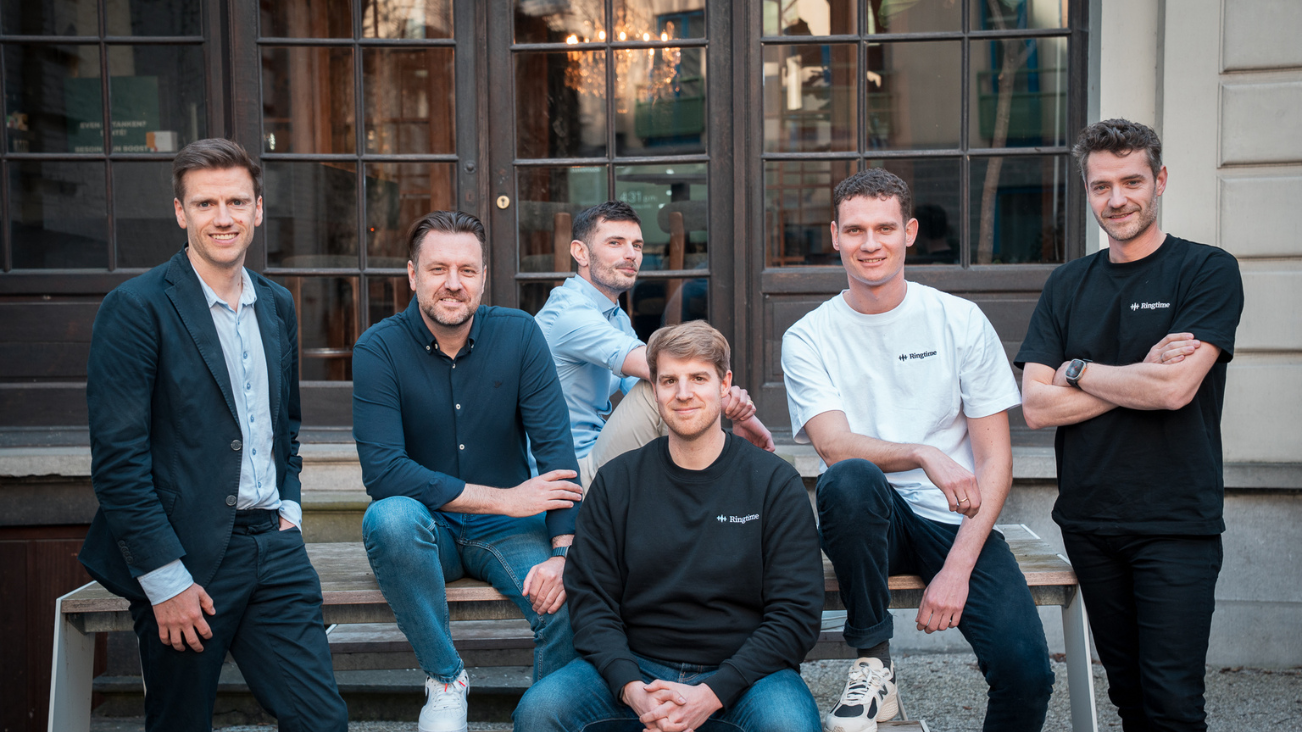
Theeten stepped down as Cheqroom’s CEO in late 2024, succeeded by Jim Hite, and focused on Ringtime, co-founding it with Johan Krijgsman, CEO of ERA Belgium and Alfabet; Michiel Vanhaverbeke; and Diederik Syoen, former Head of Marketing at Cheqroom.
The ERA connection extends beyond backgrounds. Ringtime is already managing property viewings for ERA, allowing prospective buyers to schedule visits automatically outside of office hours and during weekends, without an agent’s involvement.
Krijgsman noted that several properties have been sold with Ringtime fully handling scheduling. This early example shows the company’s plans to expand orchestration beyond recruitment to any sector with high contact volumes and time pressure.
Ringtime reports generating €400,000 in annual recurring revenue, with clients including staffing firms Trixxo Jobs, Synergie Jobs, and House of HR. These figures are based on company communications and not independently verified.
“Ringtime is evolving into a comprehensive, intelligent solution for connecting technical candidates to the right jobs across sectors, languages, and regions,” said Diederik Syoen, co-founder.
“We’re constructing the infrastructure that accelerates the connection of supply and demand faster than the market can achieve on its own.”
Europe faces a significant structural challenge in blue-collar job vacancies. Labor shortages persist in logistics, hospitality, and retail despite, or due to, AI-driven disruptions affecting white-collar jobs. The issue Ringtime addresses is not solely a matching problem, as Theeten suggests.
It is a communication infrastructure challenge: tools for recruiter-candidate connectivity were made for a workforce using email and polished CVs. That’s not the workforce stocking shelves or driving vans.
Ringtime will utilize the new funds to expand into the Netherlands, UK, and Germany. As a six-month-old company, it is an early test of whether an AI-driven voice and messaging layer can deliver the same efficiency gains in physical-world hiring that software has intermittently provided to the office economy. The verdict will emerge faster than a voicemail.