
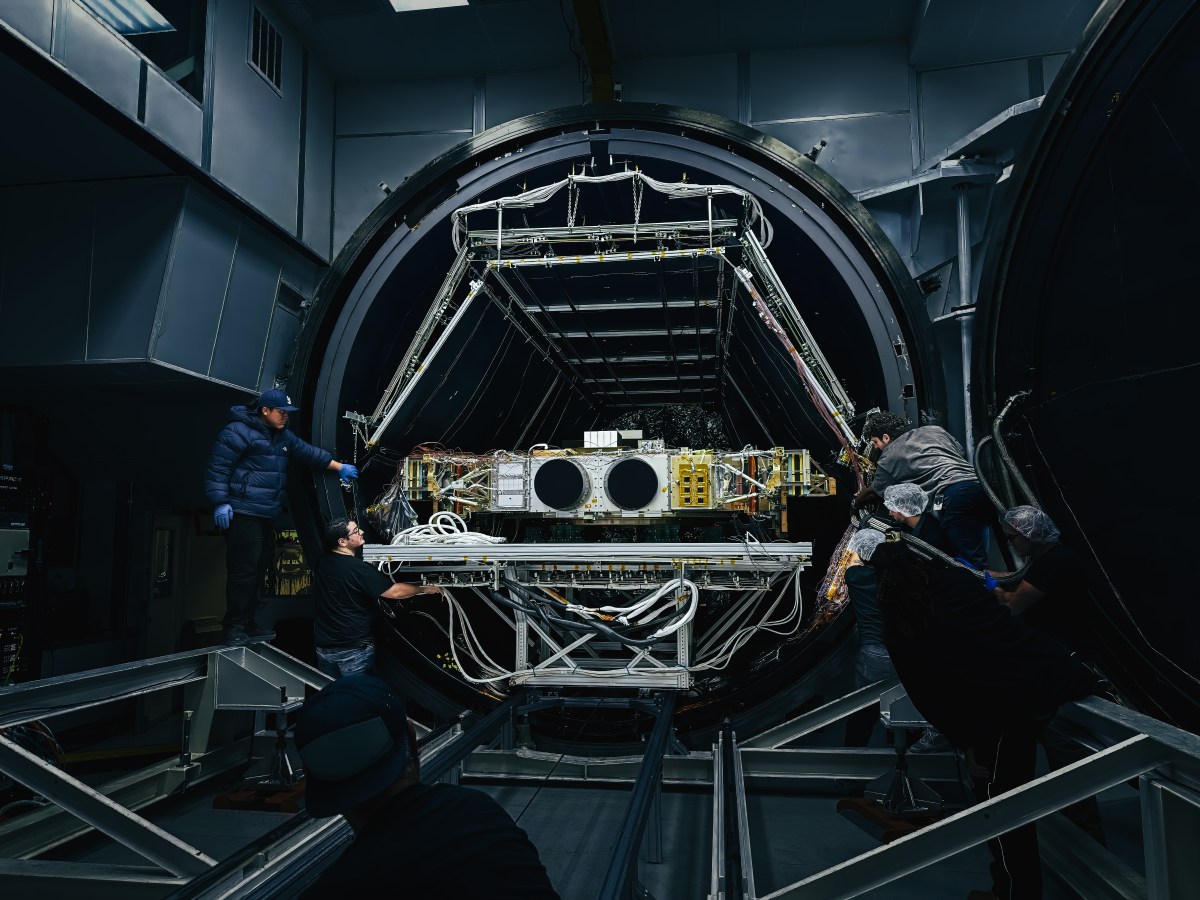

An ambitious satellite company is set to launch one of the most powerful spacecraft ever made in the coming weeks to showcase technology vital for building data centers in orbit.
K2, founded by former SpaceX engineers Karan and Neel Kunjur in 2022, has placed its satellite Gravitas into a SpaceX Falcon 9 rocket, scheduled for launch by the end of this month. Gravitas weighs two metric tons and has a 40-meter wingspan when solar panels are extended.
Gravitas is designed for high power, capable of generating 20 kW of electricity for various payloads like sensors and computers. For comparison, the larger ViaSat-3 provides over 25 kW, while Starlink V2 is estimated at 28 kW, but most satellites generate only a few kilowatts.
“The future is higher power,” says CEO Karan Kunjur. K2 has raised $425 million to realize this vision and was valued at $3 billion by investors in December 2025. This launch marks the company’s first real space operations, initiating what Kunjur calls “the start of our iterative journey.”
The mission will include 12 undisclosed payload modules from various customers, including the Department of Defense, and a 20 kW electric thruster, expected to be the most powerful ever in space.
Kunjur indicates several success measures: Can K2 deploy the spacecraft and generate power? Can it operate its payloads and test its thruster? If successful, can it utilize the thruster to move to a higher orbit?
Kunjur acknowledges the difficulty in launching new spacecraft—85% of components are designed and built in-house—understanding market scrutiny of anomalies. Collecting data to improve future satellite designs is key; K2 aims to launch eleven satellites in two years, combining demonstration and commercial missions. By 2028, Kunjur anticipates producing satellites for customers to establish networks of high-powered space vehicles.
As satellites become more significant in the economy, power closes new business cases. Kunjur expects the first impact on communications networks—more power means better throughput and less jamming susceptibility. For orbital data processing, high-powered satellites are crucial for advanced processors.
However, the challenge for data centers and large satellites is the cost of launching them. K2’s initial strategy involved the Starship, a massive rocket by SpaceX potentially lowering orbit costs. Its operational timeline remains uncertain.
The increasing demand for orbital power gives K2 a unique positioning. Massive networks like Starlink, Amazon LEO, and Pentagon plans for a vast missile defense system highlight the need for powerful satellites.
K2 argues that even at $7.2 million launch costs on Falcon 9, Gravitas’s $15 million price point is more economical than traditional contractors’ powerful satellites and outperforms similarly priced smaller counterparts.
Once bigger rockets are operational, Kunjur states the team is ready with larger options.
“We’re building the components to be a first mover when Starship and New Glenn become available,” he told TechCrunch. K2 has plans for a 100 kW satellite laid out on the factory floor, spanning the entire building.