
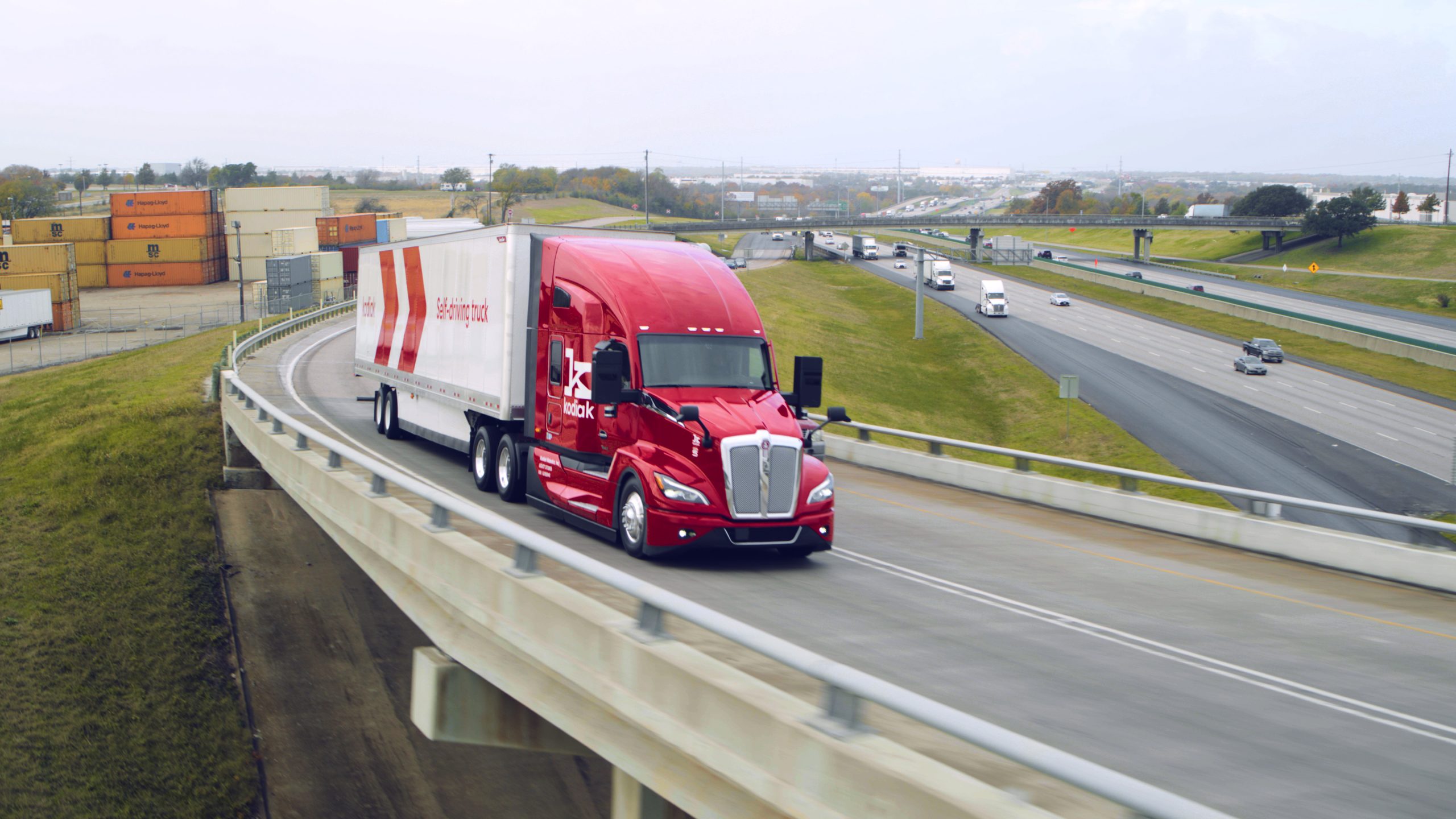

The company aims to commence fully autonomous long-distance freight operations by the end of 2026.
This year appears pivotal for autonomous trucks. Alongside Aurora’s strategy to deploy numerous autonomous rigs and Waabi’s expansion into robotaxis, Kodiak AI is set to launch its driverless freight service by late 2026. Though robotaxis often make headlines, autonomous trucks are steadily progressing.
However, according to Kodiak AI CEO Don Burnette, launching autonomous trucks is only part of the challenge. While competitors focus on AI, perception, and mileage, Kodiak emphasizes operational business matters, including truck ownership, required uptime, and freight logistics.
Burnette highlights that ensuring trucks operate safely is fundamental, but customers prioritize efficiency and operational integration.
Founded in 2018 by Burnette, an ex-Waymo engineer, and Paz Eshel, Kodiak AI develops self-driving trucks for highways and industrial purposes, including defense. In 2025, its trucks began driverless deliveries in the Permian Basin and now operates 20 trucks there. It became a public company via a reverse SPAC merger in September 2025.
Now ready for broader deployment, Kodiak operates in industrial and off-road scenarios, offering greater opportunities than road-based autonomy. Such environments are ‘unstructured’ and complex, preparing the trucks for ‘structured’ settings like highways.
“We plan to remove drivers by year-end,” Burnette stated. “The product’s worth is in its driverless capability.”
Completing a safety case is crucial before deployment, involving data collection, simulations, and risk management. The team’s Waymo background informed their stringent safety practices.
Kodiak’s business model diverges from others. Contrary to firms expecting OEMs to create autonomous-ready trucks, Kodiak, with partners like Roush Industries and Bosch, develops aftermarket solutions for scalable, compliant automotive trucks. Currently, the 20 trucks delivered are customer-owned.
This approach contrasts with peers like Waymo. When customers own the vehicle, they focus on utilization, uptime, and revenue, raising the standard for reliability.
“When customers own it, it must perform consistently,” Burnette insisted. “They expect continuous performance, necessitating hitting that benchmark before sales.”
When companies own the trucks, they can manage deployments without addressing real-world issues.
“Those trucks are theirs,” Burnette remarked about competitors. “Even if they work part-time, the victory is theirs, but customers require a functional product.”
Burnette is candid about competitors. Asked about Kodiak’s potential venture into robotaxis like Waabi, he questioned, “Did Wabi have a product before existing?” He believes Kodiak leads in real-world deployment and operational integrity. He suggests many firms highlight impressive tech without achieving a customer-owned product.
“They make great videos…snazzy visuals,” Burnette said of competitors.
Yet, many haven’t tackled the ‘third pillar’: real-world autonomy integration involves embedding driverless trucks into operations and managing logistics, communication, and monitoring needs. While others focus on performance, Kodiak delivers complete system integration.
“Nobody talks about this,” he states.