

Fusion startup Helion is reportedly negotiating to supply power to OpenAI, with both companies supported by Sam Altman.
The agreement, as reported by Axios, is in the preliminary phase and could provide OpenAI with 12.5% of Helion’s production — equivalent to five gigawatts by 2030 and 50 gigawatts by 2035. OpenAI’s partner Microsoft arranged a similar agreement with Helion in 2023 to begin purchasing power in 2028.
Should Axios’s projections hold true, it implies that Helion anticipates a swift escalation of its fusion power plant’s production. Each reactor is projected to produce 50 megawatts, requiring the construction of 800 reactors by 2030 and a further 7,200 by 2035.
TechCrunch’s inquiries to the company went unanswered.
Helion is pushing to develop its first commercial-scale reactor by this timeframe. Success would place the company significantly ahead of rivals who aim to start commercial operations in the early 2030s.
The company secured $425 million last year from investors including Altman, as well as Mitril, Lightspeed, and Softbank.
Instead of adopting the traditional methods employed by most fusion startups, which generate electricity via steam turbines converting heat from fusion reactions, Helion is innovating with a design that utilizes magnets to directly convert fusion energy into electricity.
Inside Helion’s distinctive hourglass-shaped reactor, fusion fuel is transformed into plasma at each end and propelled towards each other with magnetic fields. Their collision in the center is further compressed by another set of magnets until fusion occurs. The ensuing reaction exerts force on the magnets, directly transforming that energy into electricity.
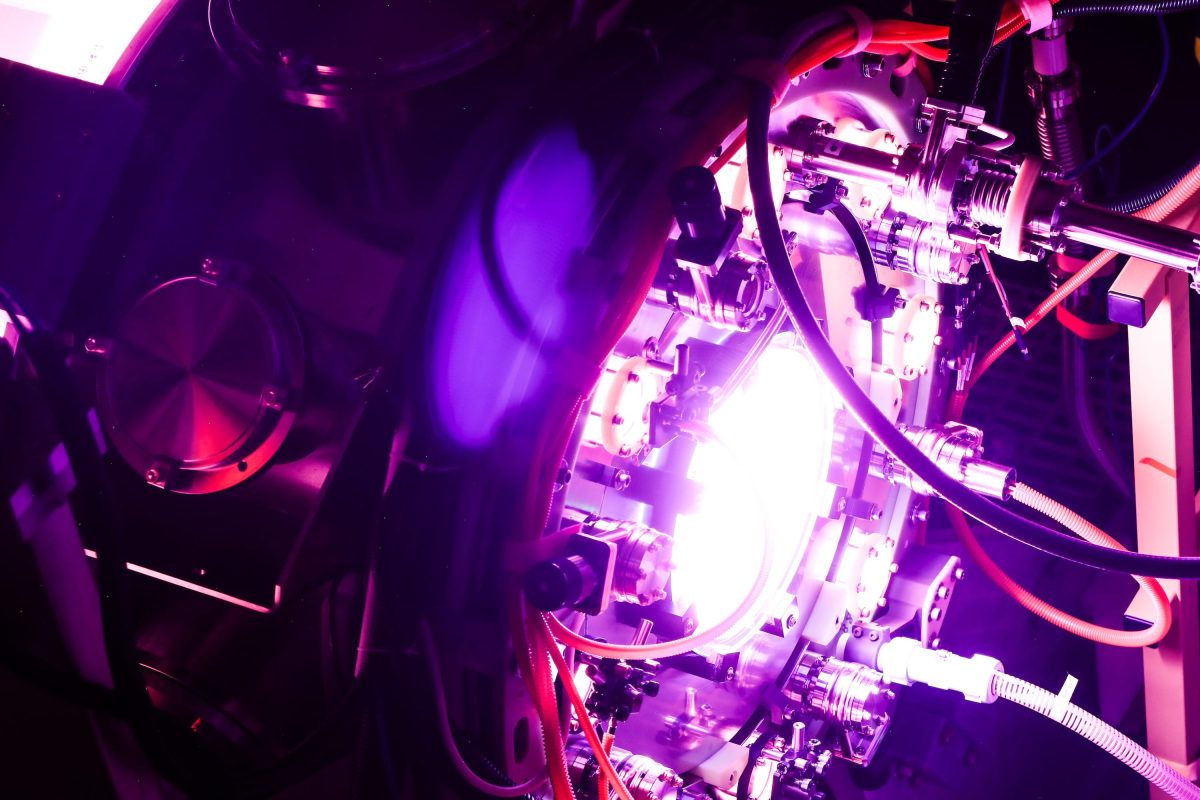
Helion is presently testing its Polaris prototype ahead of launching into the commercial sector. In February, plasmas generated inside the reactor reached 150 million degrees Celsius, nearing the 200 million degrees Celsius anticipated for commercial operation.
Despite Altman reportedly stepping down as Helion’s board chair and recusing himself from negotiations, his influence remains evident.
Altman also stepped down last year as board chair of Oklo, a startup based on small modular nuclear reactors that merged with his acquisition company, AltC. This was to allow Oklo to establish strategic associations with leading AI companies, potentially OpenAI, according to a statement by Caroline Cochran, Oklo’s co-founder and COO, given to CNBC.