

Artificial General Intelligence (AGI) remains a dynamic concept within the AI field. As leading firms invest heavily in this area, the ever-evolving criteria for AGI blur lines between current capabilities and aspirational milestones.
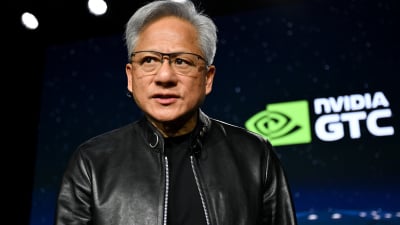
NVIDIA’s CEO, Jensen Huang, a significant figure due to the company’s dominance in AI through its GPU hardware, recently articulated his belief in the present attainment of AGI. This claim was made during an extensive dialogue with podcaster Lex Fridman, where topics spanned from data infrastructure to global issues and AGI’s status. Huang argues that AGI has been realized but acknowledges this assertion’s ambiguity largely rests on the specific parameters set for AGI.
Huang’s perspective, echoed in events such as the 2023 New York Times DealBook Summit, defines AGI as software meeting human intelligence metrics competitively. He anticipated AI reaching this stage within five years. Fridman expanded this definition to envision AGI as an AI that could establish and operate a billion-dollar tech venture, inquiring about the feasibility of such within the two-decade timeframe amidst the rise of agentic AI like OpenClaw.
Huang, however, posits the immediate existence of AGI, albeit through a narrow lens. His interpretation suggests that achieving significant one-time business success, not sustained growth or intricate management, suffices for AGI.
In Huang’s view, the bar isn’t high: an AI generating a widely used, short-lived app echoing early web ventures in simplicity suffices. Thus, while current AGI may superficially meet some benchmarks, it falls short of transformative capabilities akin to creating a robust, enduring corporation like NVIDIA. This reveals that the operationalization and profound impact of AGI remain aspirational.