

A cow with a GPS collar might not sound like a $2 billion idea, but for ranchers who have used virtual fences on 60,000 miles of American pastureland in under two years, it seems to be just that.
Halter, an agtech company from New Zealand, announced on Monday it raised $220 million in Series E funding, reaching a $2 billion valuation. The round was led by Founders Fund, Peter Thiel’s firm, which backed Halter initially in its Series A round in 2017. Existing investors Blackbird, DCVC, Bond, Bessemer Venture Partners, NewView, Ubiquity, Promus, and Icehouse Ventures participated.
The raise is one of the largest in the global agtech sector and values a company focused on making solar-powered collars for cattle.
Halter’s GPS-enabled collars use audio cues and light vibrations to manage herds within virtual boundaries. Ranchers can adjust fence lines from a smartphone, moving cattle across land without traditional infrastructure. The technology replaces one of the oldest and most expensive parts of ranch infrastructure with software.
The company has sold one million solar-powered collars and serves over 2,000 ranchers and farmers in New Zealand, Australia, and the United States. Since its US launch in 2024, American ranchers have created 60,000 miles of virtual fencing through the platform, up significantly from 11,000 miles in November 2025.
The new funding will support Halter’s expansion in its current markets and entry into two new ones. Ireland and the United Kingdom are expected to start later this year, with early deployments already in Canada and further expansions being considered in North and South America.
Halter plans its biggest hiring drive, with over 200 new positions in product, engineering, and customer roles at its Auckland headquarters. The company is also investing in animal health monitoring and pasture management, enhancing its core virtual fencing system to serve as a comprehensive livestock management solution.
In June 2025, Halter raised $100 million in a Series D led by Bond at around a $1 billion valuation, achieving unicorn status outside a major tech hub. Less than a year later, the valuation has doubled.
This growth reflects more than just hype. Halter operates in the trillion-dollar livestock management sector, which remains among the least digitized industries globally. The virtual fencing market was almost non-existent five years ago, yet now it draws interest from the same investors as SpaceX, Palantir, and Stripe.
Amin Mirzadegan, a partner at Founders Fund, highlighted that adoption often challenges deep tech agriculture companies. Halter, however, has developed a product that ranchers not only use but have integrated daily into their operations.
Agriculture technology has historically promised much but achieved modest adoption. The sector drew significant venture capital in the early 2020s, but many approaches struggled to scale. Virtual fencing addresses a clear, immediate need by replacing physical infrastructure, yet it must still gain the trust of a conservative industry typically reliant on posts and wire.
Halter’s strategy has been to immerse itself in ranch operations rather than maintaining distance. The company has field teams working closely with customers, a labor-intensive model that encourages adoption but must scale efficiently across multiple countries.
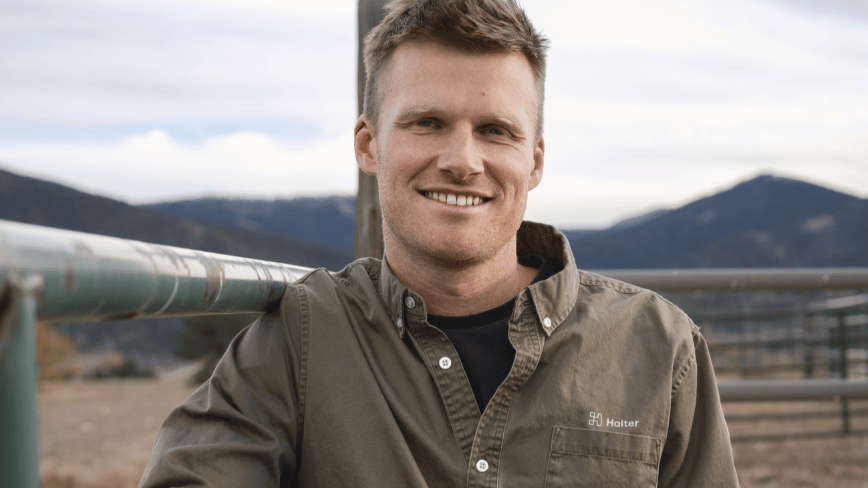
Craig Piggott, founder of the company, now leading it from Boulder, Colorado, described the funding round as primarily benefitting the existing product users. The capital allows Halter to reach more ranchers quickly.
The sustainable $2 billion valuation depends on whether Halter’s reach results in critical, recurring use that turns a clever piece of hardware into an industry standard. A million collars sold indicate potential, but the next million will provide further insights.